Table of Contents >> Show >> Hide
- Meet the Designer Who Treats Materials Like Main Characters
- What Exactly Is “FLAX LIGHT”?
- Why Flax? Because “Natural Fiber” Isn’t Just a VibeIt’s Engineering
- The Bigger Idea: A Lamp That Teaches You How Things Get Made
- How FLAX LIGHT Behaves in Real Interiors
- Why Designers Keep Talking About It: Sustainability Without the Lecture
- From Rope Lamp to Bio-Based Furniture: The Flax Universe Expands
- Buying, Styling, and Living With FLAX LIGHT
- Experiences: What It Feels Like to Encounter (and Live With) FLAX LIGHT
- Conclusion: A Small Light With a Big Argument
Some lamps arrive in a cardboard box. FLAX LIGHT arrives with a whole backstoryfield, fiber, craft, and
a quiet challenge to the way we usually buy “stuff.” It’s lighting that doesn’t just illuminate your room; it
illuminates the supply chain.
Designed by Dutch designer Christien Meindertsma, FLAX LIGHT looks deceptively simple: a length
of flax rope that becomes a cord, a line, a gesture. But the real drama is in what you don’t see with
most productswhere materials come from, who processes them, what disappears when production becomes anonymous,
and how design can make those invisible steps visible again.
Meet the Designer Who Treats Materials Like Main Characters
Christien Meindertsma’s work has a recognizable pattern: she chooses an everyday material (or an everyday object),
then follows it with the intensity of a detective and the curiosity of a kid at a science museum. Instead of
treating “raw materials” as background scenery, she makes them the plot.
That mindset matters for FLAX LIGHT because the lamp is not just a styling moment. It’s a material story you can
live with. The rope isn’t pretending to be anything else. It’s not hiding behind plastic sheathing or a glossy
finish. It’s flaxhonest, tactile, slightly stubborn, and proud of it.
If you’re used to design that starts with a mood board, Meindertsma’s approach can feel refreshingly reversed:
she starts with the material’s reality, then lets form follow the facts. (Basically: “Less Pinterest, more
provenance.”)
What Exactly Is “FLAX LIGHT”?
“FLAX LIGHT” is best understood as part of Meindertsma’s broader flax-based body of workoften discussed as a
Flax series created with design publisher Thomas Eyck. In different write-ups
and product listings, you’ll see related names such as Flax Lamp, Flax Lamp Extension Cord,
and Flax Five Light (a multi-drop version).
The Signature Move: A Cord That’s Also a Material Statement
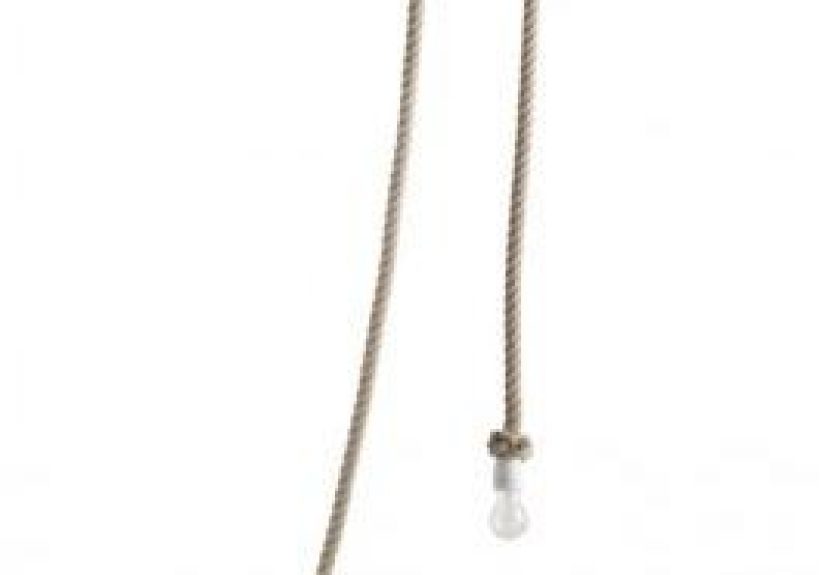
The core idea is wonderfully literal: flax rope becomes the cord, the cord becomes the visual feature, and the
lamp becomes a kind of hanging line drawing in space. The point isn’t to disguise the “functional” partit’s to
elevate it.
In at least one widely cited version, the lamp uses five meters of flax rope. That length is not
random; it invites draping, looping, knotting, and experimenting with heightmaking the lamp feel more like a
flexible installation than a fixed fixture.
From One Drop to Many Drops
If you’ve seen photos of a cluster of bulbs hanging at slightly different heights, you’ve likely encountered the
“Five Light” interpretation of the same concept. It turns the flax cord into multiple vertical lineslike a
gentle rainstorm you actually want indoors.
The variations don’t dilute the concept; they show how one material decision can generate a whole family of
lighting: single pendant, multi-drop, and even “extension cord as design object.”
Why Flax? Because “Natural Fiber” Isn’t Just a VibeIt’s Engineering
Flax (Linum usitatissimum) is cultivated for both seed (hello, flaxseed) and
fiber (hello, linen). Historically, flax fiber has been used for textiles, rope, and other
tough, practical applicationsexactly the kinds of uses that match a lamp cord’s daily demands.
Flax in Plain English
- It becomes linen. Flax fibers from the stem can be processed into yarn and woven into linen.
- It has rope credibility. Flax has long been used in rope-making because it can be durable and strong.
- It’s processed, not “manufactured out of nowhere.” Traditional steps like retting and fiber separation are part of its story.
- It plays well with modern sustainability goals. Flax can be used in composites and other applications that reduce reliance on fiberglass or purely fossil-based materials.
So Why Does It Feel So Different in a Room?
Because flax has texture you can read with your eyes. Unlike a smooth plastic cord, flax rope has visible twist,
subtle variation, and a kind of quiet warmth. It signals “made” rather than “molded,” and it brings a human scale
to a part of lighting we usually ignore.
Think of it this way: most cords are the design equivalent of background music in an elevatorpresent, necessary,
and spiritually forgettable. FLAX LIGHT turns the cord into the lead singer. (And honestly? It has stage
presence.)
The Bigger Idea: A Lamp That Teaches You How Things Get Made
FLAX LIGHT isn’t a random experiment with rope. It belongs to a deeper investigation into flax as a local
resource and as a supply chain. In Meindertsma’s flax work, the material isn’t just sourced; it’s followed
field to fiber to finished object.
Local Production, Global Pressure
One reason flax became such a compelling subject is that it sits at the intersection of tradition and modern
industry. There’s a long history of flax processing in parts of Europe, but modern manufacturing and global
commodity flows can pull raw materials far from their origins, separating farmers from makers and makers from
consumers.
In other words: flax can become just another anonymous input… unless a designer insists on keeping the story
intact.
Making “Invisible Labor” Visible
When a lamp looks minimal, it can hide complexity. FLAX LIGHT does the opposite: it uses a minimal form to point
directly at the labor, craft knowledge, and material handling that modern products often conceal.
That’s why the rope matters so much. It’s a physical reminder that materials are processed by people with skills,
and that those skills can disappear if no one makes room for them in contemporary markets.
How FLAX LIGHT Behaves in Real Interiors
A good light fixture does two jobs: it shapes illumination and it shapes the mood of a space. FLAX LIGHT
adds a third job: it shapes conversationbecause people notice it and ask why your cord looks like it could tow a
tiny boat.
Where It Looks Especially Good
-
Kitchen islands and dining tables: The rope reads as casual and tactile, balancing hard surfaces
like stone, tile, or stainless steel. - Reading nooks: A single drop can feel sculptural without visually “heavy” shades.
- Lofts and high ceilings: Long cord length becomes a feature, not a problem.
- Minimalist rooms that need one organic note: Flax brings warmth without turning the space into a boho theme park.
Light Quality: Choose Your Bulb Like You Choose Your Coffee
The flax cord sets a natural tone, so many people prefer warm-white LED bulbs for a cozy glow. Clear bulbs can
look crisp and graphic; frosted bulbs soften the effect. If you’re placing it above a table, consider a bulb
shape that feels intentional (not “whatever was on sale in aisle seven”).
Safety note (because electricity deserves respect): always use bulbs within the fixture’s recommended specs, and
if you’re doing anything beyond basic plug-in use, involve a qualified electrician. A lamp can be playful; a
wiring mistake is not.
Why Designers Keep Talking About It: Sustainability Without the Lecture
A lot of “sustainable design” messaging is either guilt-driven (“Look what you’ve done!”) or vague (“Eco-friendly!”
with zero receipts). FLAX LIGHT is compelling because the sustainability lives in the structure of the object:
What It Gets Right
- Material clarity: You can tell what it’s made of without reading a label.
- Craft continuity: Rope-making isn’t treated as a quaint hobbyit’s integrated into a modern product language.
- Longevity through meaning: Objects people feel connected to are less likely to be replaced.
- A pathway to bio-based thinking: The lamp is a gateway into bigger conversations about fibers, composites, and circularity.
In the best version of sustainable living, you don’t need a spreadsheet to justify the choice. You pick something
because it’s beautiful, functional, and honestand then sustainability is the bonus, not the burden.
From Rope Lamp to Bio-Based Furniture: The Flax Universe Expands
FLAX LIGHT sits in the same constellation as Meindertsma’s more research-heavy flax workincluding projects that
trace flax processing and explore flax-based composites in furniture. This is where “a nice lamp” becomes “a whole
philosophy.”
Exhibitions That Put Process on Display
In the late 2010s, exhibitions such as Everything Connects highlighted how raw flax can be transformed
into objectsincluding furnitureand how complex “simple materials” become once you map every step. In other
words, the gallery wasn’t just showing outcomes; it was showing the messy middle: the processing, the sorting,
and the industrial realities behind everyday goods.
The Museum-Level Proof Point
When a major museum collects a piece, it’s a signal that the work isn’t only trend-drivenit has design-historical
weight. Meindertsma’s flax-related work has been discussed in museum contexts alongside broader conversations
about materials, sustainability, and modern production.
The big takeaway for FLAX LIGHT is simple: it’s not a one-off novelty. It’s part of a sustained investigation
into what happens when designers stop treating materials as anonymous commodities and start treating them as
relationships.
Buying, Styling, and Living With FLAX LIGHT
If you’re considering FLAX LIGHT (or any of its closely related versions), it helps to think like a stylist
and like a practical human who enjoys not tripping over cords.
Quick Checklist
- Placement: Where can the cord hang freely without becoming a cat toy or a forehead hazard?
- Height: Do you want a dramatic drop or a tighter, cleaner look?
- Bulb style: Warm vs. neutral light; clear vs. frosted; shape that complements the rope.
- Cleaning: Natural fibers can hold dustplan for gentle maintenance.
- Room vibe: It pairs especially well with wood, plaster, linen textiles, and matte finishes.
Most importantly: treat it like a piece of design, not like a disposable accessory. The whole point is that it’s
rooted in material realityso let it live like it belongs.
Experiences: What It Feels Like to Encounter (and Live With) FLAX LIGHT
The first experience most people have with FLAX LIGHT is a tiny moment of confusionfollowed by delight.
Confusion because your brain has been trained to think “cord = ignore.” Delight because your brain suddenly
realizes the cord is the whole performance.
Imagine walking into a room where FLAX LIGHT is installed above a dining table. Before you even notice the bulb,
you notice the line: a thick rope dropping from the ceiling like a drawn stroke. It’s not polished. It’s not
pretending to be invisible. It’s simply there, with the confidence of something that doesn’t need a glossy finish
to feel premium. The room gets an instant sense of material warmthalmost like the visual equivalent of putting
on a sweater that actually fits.
Up close, the rope has the kind of texture that makes you want to reach out (and then you remember: “hands off,
I’m a civilized person”). You can see the twist, the slight irregularities, the proof that this started as a
plant. It’s surprisingly grounding. In a world of ultra-smooth, high-sheen objects, FLAX LIGHT feels like a
reminder that “natural” can still be modernwithout turning into rustic cosplay.
Living with it day to day adds new layers. In the morning, when the sun is already doing most of the work, the
rope reads like sculpture. It’s a vertical element that breaks up blank space, especially in rooms with high
ceilings or large white walls. In the evening, the light flips the script: the bulb becomes the bright point, and
the rope becomes the soft frame around itlike a stage rig that’s finally earning its keep.
One of the best “real life” experiences is the way people talk about it. Guests don’t just say, “Cool lamp.”
They ask, “What is that cord made of?” and suddenly you’re discussing flax, linen, and why anyone would make an
extension cord beautiful on purpose. It’s a design object that invites curiosity instead of demanding
admiration. (And yes, it’s also a great test of which friends are secretly design nerds.)
Then there’s the playful side: because the cord is long and visually present, you can style it differently
depending on the room. Draped in a gentle curve, it feels relaxed and casual. Pulled straighter, it feels more
architectural. In a corner reading setup, the rope can echo other natural textureslinen curtains, a wool throw,
a wood side tablecreating a small “materials choir” where everything harmonizes instead of competing.
Practical reality shows up too, because it always does. Natural fibers can attract dust, especially in kitchens
or near open windows. But the maintenance isn’t complicated: it’s the same kind of gentle care you’d give a
woven basket or a fabric shadenothing dramatic, just regular attention. In a way, that’s part of the experience:
FLAX LIGHT encourages a relationship with objects where you notice them, maintain them, and keep themrather than
replacing them the second a trend shifts.
Over time, the biggest experience FLAX LIGHT offers is subtle: it changes what you notice. After living with a
lamp that celebrates its material, you start noticing how many objects in your home hide theirs. You start asking
better questions. And you realize that the most “modern” thing a product can do isn’t look futuristicit’s be
honest about how it came to be.