Table of Contents >> Show >> Hide
- Quick take: Should you buy the Nest Mini in 2023?
- What you’re actually buying (and why it still matters in 2023)
- Design: The tiny fabric UFO that learned interior design
- Setup & day-to-day use: Simple enough to do before your coffee kicks in
- Sound quality: Surprisingly bold… until physics shows up
- Google Assistant performance: Fast, helpful, and occasionally sassy
- Smart home control in 2023: The best $50 “light switch” you’ll ever buy
- Privacy: The part everyone thinks about but nobody wants to read
- Nest Mini vs. Echo Dot vs. HomePod mini (2023 reality check)
- Who should buy the Google Nest Mini in 2023?
- Who should skip it?
- Verdict: Google Nest Mini in 2023
- Real-world experiences (the stuff you actually care about)
In 2023, the Google Nest Mini is the smart speaker equivalent of that friend who shows up to the party in sweatpants
and still somehow looks put-together. It’s small, cheap (often very cheap), and it does a surprising amount:
plays music, answers questions, runs routines, controls smart home gear, and politely pretends it didn’t hear you ask,
“Hey Google, what does ‘retrograde’ mean?” for the sixth time today.
The twist: the Nest Mini isn’t a shiny new 2023 gadget. It’s the second-gen model that’s been around a whilebut it’s
still widely sold, heavily discounted, and (crucially) still one of the easiest ways to put Google Assistant in every room
without taking out a small loan. So the real question for a 2023 review is simple:
Is it still worth buying?
Quick take: Should you buy the Nest Mini in 2023?
Yesif you want an affordable Google Assistant speaker, a “kitchen helper” for timers and music, or a starter hub
for smart lights and routines. Maybe notif you care most about big, room-filling audio, need a portable speaker,
or want modern smart-home radios like Thread built in.
What you’re actually buying (and why it still matters in 2023)
The Google Nest Mini (2nd gen) is a compact smart speaker designed for voice control first and music second. It’s built to live
on a counter, shelf, or even a wall, handling everyday tasks like weather, reminders, and smart home commands while streaming
audio from popular services.
Highlights at a glance
- Budget-friendly Google Assistant speaker (often discounted below MSRP)
- Improved sound vs. the original Mini with noticeably stronger bass for its size
- Wall-mount friendly design for freeing up counter space
- Better “hearing” for voice commands across the room
- Smart home control + routines + multi-room audio
- Physical mic mute switch for privacy peace-of-mind
Design: The tiny fabric UFO that learned interior design
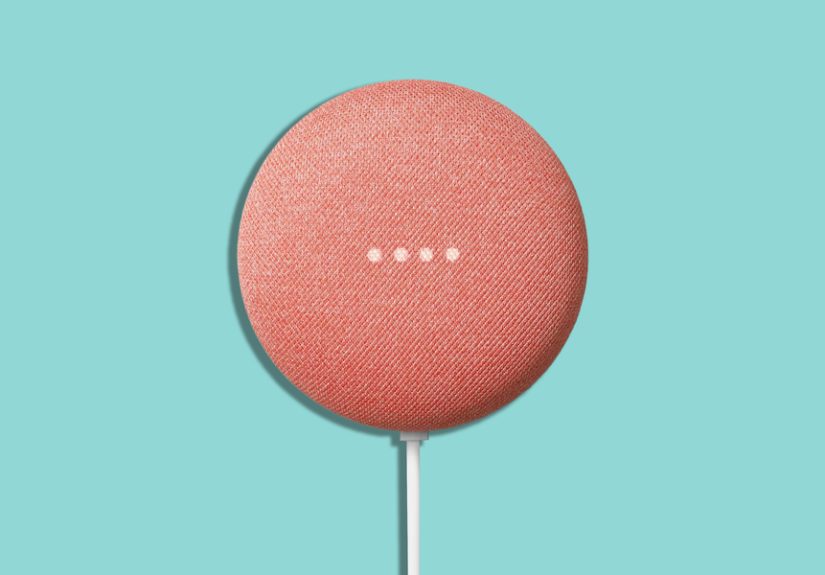
The Nest Mini is basically a hockey puck wearing a sweaterin a good way. The fabric top blends into most rooms, and it comes
in multiple colors, so you can either match your decor or intentionally choose something loud enough to be found when it
inevitably gets buried under mail.
Controls that make sense (mostly)
You get touch controls for play/pause and volume, plus the familiar four-dot LED lights that tell you when Google Assistant is listening.
The most important control is the hardware microphone mute switch. Flip it, and the speaker stops listeningno app,
no settings menu, no “I swear I’m not recording you” vibes required.
The best design feature: the wall mount notch
A small but genuinely useful upgrade is the built-in hanging notch, which lets you mount it on a wall with a standard screw.
In practice, that means you can stick it in spots where you actually need a voice assistantlike near the front door or above
a kitchen counterwithout sacrificing surface space.
Setup & day-to-day use: Simple enough to do before your coffee kicks in
Setup is done through the Google Home app. You plug it in, pair it, pick a room, and optionally train Voice Match so it knows who’s speaking.
The whole process is quick, and once it’s set up, daily use is exactly what you’d expect from a modern smart speaker:
you talk, it answers, and occasionally it misunderstands you in a way that makes you question your accent, your diction, and your life choices.
Placement tips that actually improve performance
- Give it a clear line of “hearing”: avoid stuffing it behind a coffee maker or under cabinets.
- Keep it near power: it’s not portable, and the cable length isn’t infinite.
- Try the wall: some reviewers found it sounds better mounted because the wall can add resonance.
Sound quality: Surprisingly bold… until physics shows up
Let’s get the honest truth out first: the Nest Mini is not here to replace your soundbar or your beloved bookshelf speakers.
It’s a small smart speaker, and small speakers will always have limitsespecially in deep bass.
That said, the Nest Mini’s sound is one of the main reasons it’s still relevant in 2023. Google pitched it as having stronger bass than the
original Mini, and many reviewers agree it sounds richer and clearer than the older model. For casual listeningSpotify while cooking,
a podcast while doing laundry, lo-fi beats while pretending you’re “deep working”it’s more than adequate.
What music sounds like on the Nest Mini
- Vocals: generally clear and easy to understand at normal volumes
- Podcast/dialogue: good enough, though it can sound a bit “small” or boxy depending on the voice
- Bass-heavy tracks: improved for the size, but you won’t feel that deep sub-bass rumble
- Max volume: can get loud for its size, but distortion/compression may creep in when you push it
A simple upgrade that helps: stereo pairing and multi-room audio
One Nest Mini is fine. Two Nest Minis (stereo paired) is where it starts to feel like a real “system”especially in a bedroom or office.
Add them to a multi-room group and you can get synchronized audio across the house, which is great for parties, cleaning sprees,
or dramatically walking from room to room while your playlist follows you like a movie soundtrack.
Google Assistant performance: Fast, helpful, and occasionally sassy
The Nest Mini is built for Assistant-first living: questions, reminders, timers, routines, and smart home commands.
In 2023, Google Assistant remains one of the strongest voice assistants for general knowledge queries and
“do something useful” requestslike converting measurements, setting multiple timers, or controlling Chromecast devices.
Hearing you across the room
The Nest Mini uses multiple microphones designed for far-field voice pickup. In real-world terms, it’s usually pretty good at catching
“Hey Google” even with music playingthough like any smart speaker, it can struggle with loud background noise, open windows,
or the world’s most enthusiastic blender.
Speed and responsiveness
Compared with older budget smart speakers, the Nest Mini generally feels quick. Some reviews point to on-device processing for certain tasks,
which can reduce latency for common commands. In day-to-day use, that translates to fewer awkward pauses where you wonder if it heard you or
if it’s quietly judging you.
Smart home control in 2023: The best $50 “light switch” you’ll ever buy
If you’re buying the Nest Mini primarily for music, you’ll be happy. If you’re buying it for smart home control, you’ll probably be thrilled.
Voice control for lights, plugs, thermostats, and routines is where small smart speakers earn their keep.
What it’s great at
- Lights & plugs: “Turn on the living room lights” is the gateway drug of smart homes.
- Routines: a single command can trigger multiple actions (lights, music, weather, calendar).
- Broadcast/intercom: send messages to other Google speakers in the house.
- Room-based control: if you assign devices to rooms correctly, commands become more natural (“turn off the lights”).
Where it’s limited
- No battery: it stays plugged in, always.
- No audio-out port: you can’t easily hardwire it to bigger speakers.
- Not a modern smart-home radio: if you specifically want Thread border-router features, look at other devices.
Matter in 2023: a helpful step, not a magic wand
Matter support is a big deal in the smart home world because it aims to make devices work more smoothly across platforms.
In the 2023 context, what matters most is this: Nest speakers can help you control compatible Matter devices more easily,
but your overall experience still depends on the specific gadgets you buy and how your home network behaves.
(Smart homes are like group projects: one unreliable participant can ruin everyone’s vibe.)
Privacy: The part everyone thinks about but nobody wants to read
Smart speakers are convenient… and inherently a little creepy if you think about them too hard at 2 a.m.
The Nest Mini tries to make privacy feel manageable with a physical mic mute switch and clear visual indicators
when it’s listening.
Practical privacy habits (that don’t require a tinfoil hat)
- Use the mic mute switch when you’re not using it (especially in bedrooms or offices).
- Review voice activity settings in your Google account periodically.
- Keep it out of “sensitive” rooms if you don’t need voice control there.
Nest Mini vs. Echo Dot vs. HomePod mini (2023 reality check)
These three are the usual suspects when people shop for a mini smart speaker. Your best choice depends less on raw sound
and more on which ecosystem you already use every day.
| Speaker | Best for | Why you’ll like it | Why you won’t |
|---|---|---|---|
| Google Nest Mini | Google users, smart-home starters, room-by-room Assistant | Great value, solid Assistant, easy multi-room, practical wall mount | No audio-out, bass is still limited, not portable |
| Amazon Echo Dot | Alexa households, Amazon-heavy smart homes | Strong smart-home integrations, lots of skills, often discounted | Ecosystem differences, voice assistant preference varies |
| Apple HomePod mini | Apple households, HomeKit-first setups | Great integration with iPhone/iCloud features, polished experience | Best when you’re fully in Apple’s ecosystem |
Who should buy the Google Nest Mini in 2023?
- You want a cheap Google Assistant speaker for a bedroom, kitchen, or office.
- You’re building a smart home slowly (lights first, then plugs, then routines, then world domination).
- You already use Google services like Google Calendar, Google Maps, or Chromecast.
- You want an easy multi-room setup without spending big on audio gear.
Who should skip it?
- Audio-first people who want serious bass and wider stereo sound.
- Anyone who needs portability (no battery = no beach playlist heroics).
- People who want wired audio flexibility (no 3.5mm output is a deal-breaker for some setups).
Verdict: Google Nest Mini in 2023
The Google Nest Mini remains one of the best budget smart speakers you can buy in 2023especially if you live in Google’s ecosystem.
It’s compact, surprisingly capable, and genuinely useful for smart home control, routines, and everyday questions. Audio is solid for its size,
and two Minis together can sound far more impressive than one.
Think of it as a tiny household assistant that also happens to play music. It won’t replace your “serious” speakers, but it’ll absolutely earn its spot
in the kitchen, bedroom, or hallwayquietly making your day easier and your lights more obedient.
Real-world experiences (the stuff you actually care about)
Here’s what living with a Nest Mini tends to feel like in 2023, based on common use patterns, reviewer testing, and the kinds of routines people
build once a voice assistant moves in and starts paying rent in electricity.
Morning: “Hey Google, make me a functioning adult.”
The Nest Mini shines in the morning because it’s fast, hands-free, and (unlike your phone) it’s not also a portal to doomscrolling.
A typical flow looks like this: you ask for the weather, your commute, and a reminder about that meeting you definitely didn’t forgetyour brain just
politely filed it under “later panic.” If you set up a simple routine, one command can turn on lights, tell you the forecast, and start a playlist.
The experience is less “futuristic smart home” and more “I can’t find my socks, but at least my lights obey me.”
Kitchen life: timers, conversions, and the secret power of “broadcast”
In the kitchen, the Nest Mini becomes a tiny manager who never sleeps. Multiple timers are the obvious win (pasta, oven, “check the thing you forgot”),
but the underrated feature is quick conversions: tablespoons to cups, Fahrenheit to Celsius, and whatever strange measurement your favorite food blog
swears is “simple.” If you have more than one Google speaker, broadcast is where it gets addictivecalling everyone to dinner without yelling feels
like cheating in the best way.
Work-from-home: the polite background buddy
In a home office, the Nest Mini is best used as a “low-stakes assistant.” It’s great for calendar reminders, quick facts, and playing music at reasonable
volumes. The sound works well for background listeningthink chill playlists or podcasts while you do admin tasks. If you’re on calls all day, you’ll
appreciate the mic mute switch: flip it during meetings for peace of mind, then turn it back on when you actually want voice control again.
Evening: smart lights and lazy convenience
The “evening glow-up” is where people fall in love with smart speakers. Turning off lights from bed is the classic move, but routines can get fancy:
dim lights, turn on a lamp, start ambient music, and set a sleep timer. The Nest Mini is also handy for controlling Chromecast-compatible devices
pausing TV, adjusting volume, or starting a showwithout hunting for a remote that has definitely teleported into another dimension.
The occasional annoyances (because reality exists)
No smart speaker is perfect. Wi-Fi hiccups can cause delays, Bluetooth can be finicky depending on your phone and environment, and sometimes it hears
“Hey Google” when the TV says something vaguely similar. Also, if you crank the volume, you may notice the limits of a small speakerbass won’t suddenly
turn into nightclub thump, and audio can compress a bit at the top end. The good news: for the price (especially when discounted), those issues are usually
tolerable trade-offs.
What makes it feel “worth it”
The Nest Mini earns its keep through a thousand tiny conveniences: quick timers, instant music, hands-free lights, reminders you don’t have to type,
and routines that make your home feel more responsive. In 2023, it’s less about flashy new hardware and more about a reliable little helper that’s
still one of the easiest recommendations for anyone who wants Google Assistant in their home without overspending.