Table of Contents >> Show >> Hide
- Why the first spring flowers hit you right in the feelings
- Meet the early bloomers you’re most likely to fall in love with
- Where to find your “first spring flowers” moment
- How to photograph spring flowers so your post gets the love it deserves
- How to share your “Hello, Pandas!” spring flower photo (and make people smile)
- Be kind to blooms: simple rules for wildflower ethics
- Want more spring flowers next year? Plant now, brag later
- Final thoughts: your photo is proof that spring showed up
- Extra: of spring-flower experiences (because we all need more of this energy)
There’s a specific kind of joy that only shows up when winter finally loosens its grip: you’re walking outside in a jacket you’re hoping is “optional,” the sun
feels like it remembers you, and thenboomtiny flowers appear like nature’s confetti cannon. The first spring blooms don’t just look pretty; they feel like a
personal message from the universe that says, “Congrats. You survived the gray season.”
That’s why this “Hello, Pandas!” prompt is so irresistible: it’s simple, sweet, and basically guaranteed to make strangers on the internet say, “Aww,” in unison.
In this guide, we’ll dig into what those first spring flowers are (and why they show up when they do), where to find them across the U.S., how to photograph them
like you know what you’re doing, and how to share your shot in a way that sparks a happy little comment storm.
Why the first spring flowers hit you right in the feelings
They’re a visual “season change” you can actually trust
Weather can be a liar. One warm afternoon in February doesn’t mean spring is here; it means the atmosphere is being dramatic. Flowers, on the other hand, are
excellent truth-tellers. Many early bloomers respond to temperature patterns and day lengthso when they appear, it’s often a real sign that the seasonal shift is
underway, not just a random warm spell.
They’re small, but they’re powerful mood cues
Humans are wired to notice color and noveltyespecially after months of bare branches and monotone skies. Research associated with Rutgers has linked flowers with
positive emotions and increased life satisfaction, which helps explain why spotting a single crocus can feel like winning a tiny, legal lottery.
They’re part of a bigger spring “schedule”
Spring doesn’t arrive everywhere at once. In the U.S., it rolls in like a slow parade. Scientists track this progression using indicators like “first leaf” and
“first bloom” models to map how spring moves across regions. Translation: if your cousin in Georgia is posting blooms while you’re still staring at slush in
Michigan, no one is “wrong.” Spring is just taking the scenic route.
Meet the early bloomers you’re most likely to fall in love with
The first spring flowers generally come in two categories: garden favorites (often bulbs that were planted months ago and are now cashing in on their patience),
and wildflowers (including spring ephemeralsplants that sprint through their life cycle before trees leaf out and shade the forest floor).
Classic early garden flowers (aka the “reliable overachievers”)
-
Crocus: One of the earliest splashes of color in many yardsoften purple, yellow, or whitesometimes popping through late snow like it has
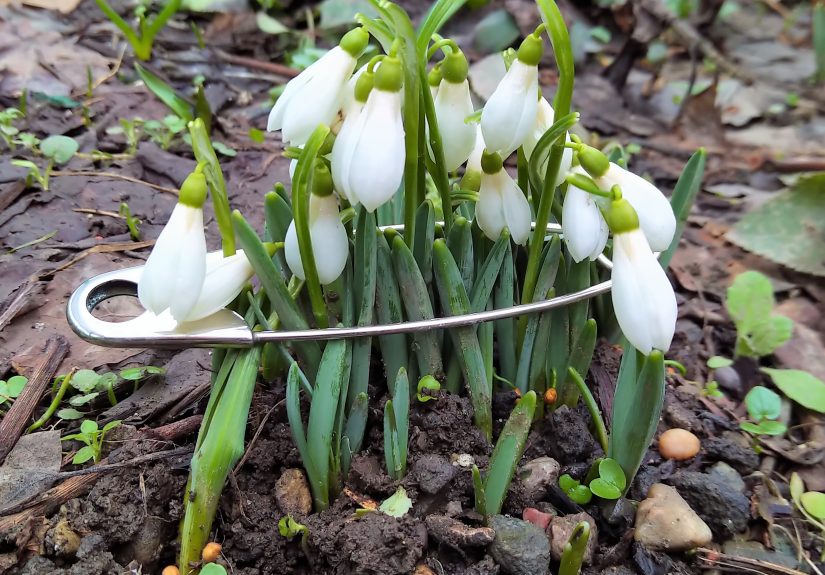
places to be. - Snowdrops: Tiny white bells that feel like the first whisper of spring rather than a shout.
- Daffodils: Bright, cheerful, and famously hardy in many regions. They’re basically spring’s official hype squad.
- Hyacinths: Colorful, fragrant, and dramaticin a good way. One whiff and your brain starts planning picnics.
- Glory of the snow and grape hyacinth: Small blooms that look best in clusters, like someone spilled a bag of blue candy across the lawn.
- Hellebores (Lenten rose): Early-blooming, shade-tolerant, and quietly elegantlike the flower equivalent of a good wool coat.
Botanic garden seasonal notes often highlight many of these in early spring, especially crocuses, snowdrops, hyacinths, daffodils, and grape hyacinthbecause
they’re consistent performers when winter is still trying to make a comeback.
Spring ephemerals (forest-floor magic with a short runway)
If you’ve ever walked through a woodland in early spring and found the ground dotted with blooms like a secret, you’ve met spring ephemerals. They appear early,
flower fast, and often fade back by early summer. They’re not being flakythey’re being strategic. They bloom before the tree canopy fully leafs out, when sunlight
still reaches the forest floor.
- Virginia bluebells: Soft, nodding blue-to-pink blossoms that can turn a woodland trail into a fairytale scene.
- Bloodroot: White flowers with a brief bloom window; the name sounds spooky, but the flower looks angelic.
- Trillium: Iconic three-petaled blooms (or three-part structure) often associated with rich woodlands.
- Trout lily: Yellow blooms with mottled leaves, often carpeting the forest floor in the right conditions.
- Dutchman’s breeches: Tiny white flowers that really do resemble little pants on a clothesline (nature has jokes).
- Spring beauty: Delicate pink-and-white flowers that live up to the name without trying too hard.
Fun plant-nerd detail: some ephemerals, including trillium relatives and other woodland natives, can rely on ants to disperse their seedsone more reminder that
spring is a full cast production, not a solo act.
Where to find your “first spring flowers” moment
Your own yard (even if you swear you “don’t garden”)
Many first blooms come from bulbs planted the previous fallsometimes by you, sometimes by a previous homeowner, sometimes by a neighborhood squirrel with a
suspicious sense of landscaping. Check the sunniest edges of your yard first: near sidewalks, south-facing walls, and spots where snow melts faster.
Neighborhood walks: the underrated bloom safari
Early flowers often show up in predictable places: along fences, in foundation plantings, and in those tiny strips of soil between a driveway and the sidewalk.
If you see a clump of daffodils behind a mailbox, that’s not randomit’s a micro-celebration.
Parks, nature preserves, and woodland trails
For wildflowers and ephemerals, look for deciduous woodlands, creek corridors, and protected natural areas. Different regions peak at different times, so it can
help to follow local nature centers, conservancies, or parks departments that post “what’s blooming” updates. In national parks and many protected areas,
wildflowers are protectedmeaning the best souvenir is a photo, not a picked bouquet.
Use spring tracking tools like a weather app for flowers
Spring timing varies year to year. In addition to local forecasts, you can pay attention to regional “spring onset” indicatorslike first leaf and first bloom
mapsto get a sense of whether your area is early, late, or right on schedule. It’s like checking the oven window instead of opening the door: less guesswork,
more accuracy.
How to photograph spring flowers so your post gets the love it deserves
You don’t need a fancy camera to capture a “wow” flower photo. You need decent light, a stable hand, and the willingness to squat down like you’re searching for a
lost contact lens (it’s fine, we’ve all been there).
1) Get the “whole plant” shot and the “wow detail” shot
If you’re sharing purely for vibes, one good close-up can be enough. But if you want people to help identify the flower (or you want to remember it later), take
a quick sequence: the whole plant in context, a close-up of the bloom, and a shot of leaves/stems. Nature ID communities recommend capturing multiple angles and
key features so the plant can be recognized beyond “pretty purple blob.”
2) Light matters more than gear
- Overcast days are secretly great for flowers because the light is soft and reduces harsh shadows.
- Morning and late afternoon give warm, flattering light that makes petals glow.
- Windy days are your enemy. If it’s breezy, try a faster shutter (camera) or simply take a burst of photos (phone) and pick the sharpest.
3) Background cleanup: the easiest “pro” trick
Before you tap the shutter, scan the background for distractionsbright mulch, a neon dog toy, or (my favorite) a random plastic fork. Shift a few inches left or
right until the flower stands out. If you’re photographing for identification, some people even place a neutral object behind the subject (without damaging the
plant) to reduce visual clutter.
4) Focus like you mean it
Tap the flower’s center on your phone screen to lock focus. If you’re close, depth of field gets shallowmeaning the flower’s nose might be sharp while the petals
blur. That can look artsy, but if you want detail, step back slightly or use your phone’s macro mode carefully.
5) Add a “scale clue” so viewers feel like they’re there
Without turning your photo into a science lab, include something for size reference when it makes sense: a gloved fingertip near (not touching) the bloom, a leaf,
or a familiar object in the background. This also helps with plant ID and makes the photo more story-like.
How to share your “Hello, Pandas!” spring flower photo (and make people smile)
Write a caption that feels like a mini story
The best posts don’t just say “flower.” They say something like:
- “Spotted these crocuses next to the drivewayaka the exact spot winter tried to ruin.”
- “First daffodil of the year. My brain instantly played the soundtrack to ‘spring cleaning’ and I did not consent.”
- “Virginia bluebells on a creek traillooked like the ground was softly glowing.”
Include the location in a broad, privacy-friendly way
“Central Ohio,” “outside Seattle,” “upstate New York,” or “north Texas” is enough. It helps readers connect and compare seasonal timing without turning your post
into a GPS breadcrumb trail.
If you don’t know the flower, say so
Mystery invites comments. Try: “I think this is a snowdropcorrect me if I’m wrong!” You’ll get helpful replies and at least one person who says, “Actually…”
(and honestly, that’s part of the internet’s charm).
Be kind to blooms: simple rules for wildflower ethics
If you’re photographing in parks or natural areas, treat flowers like tiny celebrities: admire them, don’t grab them. Staying on established trails prevents
trampling fragile plants, and many protected areas prohibit picking wildflowers. The goal is to leave the scene so the next person can have the same joyful “first
bloom” moment.
Want more spring flowers next year? Plant now, brag later
Know your zoneand your frost reality
USDA Plant Hardiness Zones help you understand what perennials typically survive winter minimum temperatures in your area, but planting timing is often better
guided by local frost dates and actual conditions. Zones are a useful map; frost dates are the calendar you actually live by.
Plant spring bulbs in fall (your future self will be thrilled)
Many spring favorites need a cold period and are typically planted in autumn so they can establish roots before winter. General guidance is to plant bulbs at a
depth around two to three times the bulb’s height, in well-draining soil, with the pointed end up. Then you wait, forget about them, and suddenly your yard throws
you a surprise party in March or April.
Support early pollinators with early blooms
Early spring flowers matter to insects, too. Some pollinators emerge when floral resources are scarce, so having overlapping bloom times helps. Consider
pollinator-friendly native plants for your region and early-season options like native willows or blueberries in landscapes where they make sense. Even a small
patch can become a spring pit stop for busy pollinators.
Choose “right plant, right place” and you’ll do less work
Match plants to your light and soil. Woodland natives want shade and leaf litter; sun-loving bulbs want brighter spots and drainage. When plants are happy where
they’re planted, you spend less time “fixing” them and more time taking brag-worthy bloom photos.
Final thoughts: your photo is proof that spring showed up
The first spring flowers aren’t just prettythey’re a seasonal milestone. They mark the shift from survival mode to “maybe I’ll open a window today.” Whether your
first happy bloom is a brave crocus, a whole parade of daffodils, or a patch of woodland bluebells, sharing it is a tiny act of community building. It tells other
people: spring is real, color is coming back, and yesjoy can be as small as a flower pushing through cold ground.
Extra: of spring-flower experiences (because we all need more of this energy)
One of the funniest things about “first spring flowers” is how personal the moment feels, even though it happens to basically everyone with eyeballs. In Chicago,
someone spots a single crocus outside an apartment building and reacts like they’ve discovered a rare treasure. In North Carolina, a family hikes a familiar trail
and suddenly the forest floor is sprinkled with trilliumlike nature redecorated overnight while everyone was sleeping. Out in the Pacific Northwest, a person
takes a photo of a daffodil glowing in drizzle and captions it, “Yes, it’s raining. No, I’m not upset. Look at her.” And honestly? Valid.
The experience usually starts with a walk that wasn’t supposed to be a walk. You step outside for something boringtrash, mail, “just checking the weather”and
then your brain catches a color that hasn’t been around in months. Yellow. Purple. That soft, impossible blue. You stop mid-step like a cartoon character who
smelled pie. Then you do the universal spring-flower routine: lean in, squint, smile, and immediately pull out your phone. Suddenly you’re crouched on the ground
in public, taking fifteen photos of the same bloom, hoping one of them captures what it feels like to see winter finally losing.
If you grew up in a place with real winters, the first flowers can feel like a reward for patience. You remember scraping ice off windshields, the endless gray,
the “it’s dark at 4:30 PM and I’m emotionally fragile” vibes. So when you see snowdrops or crocuses near a patch of melting snow, it hits like a tiny miracle:
the world is starting again. People call them “signs of spring,” but sometimes they’re more like permission slipspermission to plan a picnic, buy strawberries,
or just believe your mood might improve.
The best part is how these moments connect strangers. Someone posts a photo of Virginia bluebells carpeting a trail, and five people show up in the comments like,
“Where is this?” (and one person says, “Don’t tell the internet,” which is also fair). Another person shares a daffodil blooming beside a sidewalk and writes,
“My neighbor planted these years ago and they come back every spring,” and suddenly everyone is nostalgic about gardens they didn’t even know they loved. And then
there’s always the proud beginner: “I planted these bulbs in fall and forgot about them. Surprise!” That’s not just a gardening success storythat’s a life lesson
about doing one small hopeful thing and letting time handle the rest.
So if your first spring flowers made you happy, share the photo. Share the story. Share the slightly blurry shot taken in a gust of wind. Spring doesn’t require
perfectionjust presence. And if anyone asks why you’re obsessed with a single flower, tell them the truth: it’s not “just a bloom.” It’s the season turning the
lights back on.