Table of Contents >> Show >> Hide
- Why Make Pumpkin Pie with Fresh Pumpkin?
- Ingredients for the Best Homemade Fresh Pumpkin Pie
- How to Make Fresh Pumpkin Purée
- How to Make the Pie Crust
- How to Mix the Pumpkin Pie Filling
- How to Bake Homemade Fresh Pumpkin Pie
- How to Tell When Pumpkin Pie Is Done
- Common Mistakes to Avoid
- Serving Ideas for Fresh Pumpkin Pie
- How to Store Pumpkin Pie
- Final Thoughts
- Experience: What Making Homemade Fresh Pumpkin Pie Really Feels Like
There are two kinds of people in this world: people who love pumpkin pie, and people who have only had bad pumpkin pie. You know the kindgrainy filling, soggy crust, spice levels that taste like someone tripped into the cinnamon jar, and a texture suspiciously close to sweet orange drywall paste. This article is here to prevent all that heartbreak.
A truly great homemade fresh pumpkin pie recipe is rich, silky, warmly spiced, and unmistakably homemade in the best possible way. Making it from fresh pumpkin gives the filling a deeper squash flavor and a more natural sweetness than the standard shortcut version. It also gives you bragging rights, which are not listed in the ingredient section but absolutely count.
Below, you’ll find a from-scratch method that keeps the process practical. We’ll cover the best pumpkin to use, how to make smooth fresh pumpkin purée, how to avoid a soggy bottom crust, and how to get that classic custard filling to bake up creamy instead of cracked. There’s even a longer section at the end on real-life baking experiences, because pie wisdom is often earned one slightly overbaked Thanksgiving at a time.
Why Make Pumpkin Pie with Fresh Pumpkin?
Using fresh pumpkin is not about declaring war on canned purée. Canned pumpkin is convenient and reliable. Fresh pumpkin, though, brings a more delicate, roasted squash flavor that feels a little more personal and a lot more seasonal. It tastes like fall had its life together and baked you dessert.
The trick is choosing the right pumpkin. Huge jack-o’-lantern pumpkins are great for porch drama and tiny tea lights, but they are usually watery, stringy, and not ideal for pie. For the best fresh pumpkin pie filling, use a small sugar pumpkin or pie pumpkin. These have denser flesh, a sweeter taste, and better texture for purée.
Fresh pumpkin also lets you control the moisture and flavor more precisely. That matters because pumpkin pie is, at heart, a custard pie. Custards are fussy little geniuses. Too much liquid and the pie struggles to set. Too much heat and the filling cracks. Get the balance right, though, and you end up with a pie that slices cleanly and tastes like it belongs on a magazine cover and at the center of your table.
Ingredients for the Best Homemade Fresh Pumpkin Pie
For the crust
- 1 1/4 cups all-purpose flour
- 1 tablespoon granulated sugar
- 1/2 teaspoon salt
- 1/2 cup cold unsalted butter, cut into cubes
- 3 to 5 tablespoons ice water
For the fresh pumpkin filling
- 2 cups fresh pumpkin purée, well drained
- 3 large eggs
- 3/4 cup dark brown sugar
- 1/4 cup granulated sugar
- 1 cup evaporated milk
- 1/2 cup heavy cream
- 1 teaspoon vanilla extract
- 1 1/2 teaspoons ground cinnamon
- 1 teaspoon ground ginger
- 1/4 teaspoon freshly grated nutmeg
- 1/8 teaspoon ground cloves
- 1/2 teaspoon salt
- 1 tablespoon maple syrup, optional but lovely
This combination gives you the classic structure of a pumpkin pie custard, with just enough richness to feel luxurious without becoming heavy. The evaporated milk adds body, the cream softens the texture, and the mix of brown sugar and granulated sugar gives the pie depth instead of flat sweetness.
How to Make Fresh Pumpkin Purée
If you want your homemade pumpkin pie from scratch to taste polished, the purée is where the magic starts. Fresh pumpkin needs a little care before it ever meets the pie shell.
- Choose the pumpkin: Use one small sugar pumpkin, usually around 3 to 4 pounds.
- Prep it: Wash the pumpkin, cut it in half, scoop out the seeds, and place the halves cut-side down on a parchment-lined baking sheet.
- Roast it: Bake at 375°F to 400°F for about 45 to 60 minutes, or until a knife slides into the flesh easily.
- Cool and scoop: Let it cool enough to handle, then scoop the flesh away from the skin.
- Purée until smooth: Blend in a food processor until very smooth.
- Drain if needed: If the purée looks loose or watery, let it sit in a fine-mesh sieve or blot it gently with paper towels.
This last step is the one people skip right before wondering why their pie needs an extra geological era to bake. Fresh pumpkin often holds more moisture than canned purée, so reducing that water makes a big difference in texture. If you want an especially silky filling, you can even press the purée through a fine-mesh strainer after blending.
How to Make the Pie Crust
A good crust should be flaky, buttery, and sturdy enough to support the filling without turning limp. In a large bowl, whisk together the flour, sugar, and salt. Cut in the cold butter with a pastry cutter or your fingertips until the mixture looks like coarse crumbs with a few pea-size pieces of butter left. Add the ice water one tablespoon at a time, mixing just until the dough starts to come together.
Press the dough into a disk, wrap it, and chill it for at least 1 hour. Then roll it into a circle large enough for a 9-inch pie plate. Fit it into the plate without stretching it, trim the edges, and crimp as desired. Chill again for 20 minutes so the butter firms back up.
If you want extra protection against soggy crust syndrome, blind-bake the shell. Line the chilled crust with parchment, fill it with pie weights or dried beans, and bake at 375°F for about 15 minutes. Remove the weights, prick the base lightly if needed, and bake for another 5 to 7 minutes until the bottom looks lightly dry rather than raw. Let it cool slightly before filling.
How to Mix the Pumpkin Pie Filling
In a large bowl, whisk the eggs until smooth. Add the brown sugar, granulated sugar, cinnamon, ginger, nutmeg, cloves, and salt. Whisk again. Stir in the pumpkin purée, then add the evaporated milk, heavy cream, vanilla, and maple syrup if using. Mix until fully combined and smooth.
For the smoothest fresh pumpkin pie recipe, use a blender or food processor for a few seconds instead of relying only on a whisk. That extra step helps break down fibrous pumpkin bits and creates a more refined custard. Do not go wild and whip in lots of air, though. This is pie, not a mousse audition.
If your filling still looks rustic in a way that feels less “farmhouse charming” and more “possibly lumpy,” strain it through a fine-mesh sieve before pouring it into the crust. That single move makes a surprisingly elegant pie.
How to Bake Homemade Fresh Pumpkin Pie
Set the pie plate on a baking sheet for easier handling. Pour the filling into the crust and tap the pan gently once or twice to release big air bubbles. Bake the pie at 425°F for 15 minutes, then reduce the heat to 350°F and continue baking for 40 to 50 minutes.
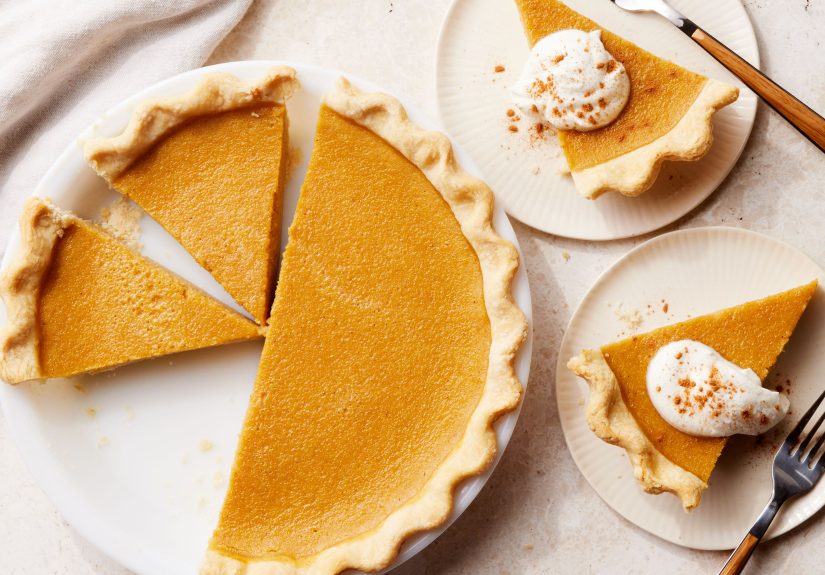
The pie is done when the edges are set and the center still has a slight jiggle. Think confident wobble, not liquid slosh. The filling will continue to set as it cools. If the crust edges begin browning too quickly, cover them loosely with foil or a pie shield.
Cool the pie completely on a wire rack for at least 2 hours before slicing. For the cleanest slices and best flavor, chill it for a few more hours in the refrigerator. Warm pumpkin pie smells wonderful, but chilled pumpkin pie cuts like it has a plan.
How to Tell When Pumpkin Pie Is Done
Many bakers overbake pumpkin pie because they wait for the center to look fully firm in the oven. That is usually a trap. A pumpkin pie is a custard, so it should be removed while the middle still trembles slightly.
Here are the signs you want:
- The outer 2 to 3 inches look set.
- The center moves slightly when the pie plate is nudged.
- A knife inserted near the center comes out mostly clean.
- The filling is not puffed up or pulling away dramatically from the crust.
Overbaking is the fastest route to cracks. And while whipped cream can hide many sins, it is nicer when it is a garnish and not a rescue operation.
Common Mistakes to Avoid
Using the wrong pumpkin
Carving pumpkins contain more water and less flavor. Stick with sugar pumpkins or pie pumpkins for a better result.
Skipping the moisture check
Fresh purée varies a lot. If it seems watery, drain or blot it. A thicker purée makes a creamier pie.
Overmixing the crust
Too much handling develops gluten and turns flaky pastry into a tough disappointment. Mix just until the dough comes together.
Pouring filling into a warm, soft crust
If the crust has lost its chill and the butter is already soft, it is more likely to slump or bake unevenly. Cold dough is your friend.
Overbaking the custard
The center should not look completely firm in the oven. Pull it while it still has a gentle wobble.
Serving Ideas for Fresh Pumpkin Pie
You can absolutely serve this pie with a cloud of whipped cream and call it a successful day. But if you want to dress it up, a little maple whipped cream, crème fraîche, or a dusting of cinnamon works beautifully. Toasted pecans scattered on top add crunch. A tiny pinch of flaky sea salt over whipped cream also makes the flavors pop in a surprisingly grown-up way.
For holiday meals, pumpkin pie pairs especially well with coffee, black tea, or even a not-too-sweet dessert wine. If you want the flavor to lean slightly more modern, a small amount of orange zest in the filling can brighten the spices without making the pie taste citrusy.
How to Store Pumpkin Pie
Because pumpkin pie contains eggs and dairy, it should not sit out all day like a decorative centerpiece pretending to be immortal. Let it cool, then cover and refrigerate it. It will keep well for about 3 to 4 days.
You can also make it ahead, which is one of pumpkin pie’s most lovable traits. Bake it the day before serving, chill it overnight, and add whipped cream shortly before slicing. The flavor actually improves after resting, which is a rare and admirable quality in both desserts and human beings.
If you need to freeze it, cool the pie completely, wrap it well, and freeze it for up to 1 month for best quality. Thaw it in the refrigerator before serving.
Final Thoughts
A great homemade fresh pumpkin pie recipe is not difficult, but it does reward attention to detail. Use the right pumpkin, roast it until tender, purée it until smooth, control the moisture, and treat the filling like the custard it is. Do that, and you’ll get a pie with deep pumpkin flavor, a silky texture, balanced spice, and a crust that actually deserves compliments.
Most important, don’t let perfectionism steal the fun. If the surface cracks a little, if the crimp is more “rustic” than “bakery window,” or if someone smothers their slice in enough whipped cream to qualify as weather, the pie is still homemade and still wonderful. In fact, that’s part of the charm. Pumpkin pie should taste comforting, generous, and just a little celebratory. Fancy is welcome, but delicious is the goal.
Experience: What Making Homemade Fresh Pumpkin Pie Really Feels Like
The first time I made pumpkin pie from fresh pumpkin, I expected a cinematic fall moment. I imagined golden light, a spotless apron, and a pie emerging from the oven while everyone nearby applauded my pioneer spirit. What I actually got was roasted pumpkin sliding around a baking sheet, a sink full of bowls, and the sudden realization that fresh purée is wetter than optimism. Still, that first pie taught me more than any shortcut version ever could.
One of the biggest lessons is that fresh pumpkin pie is a game of patience. The pumpkin needs roasting, cooling, scooping, puréeing, and sometimes draining. None of these steps are hard, but they ask you not to rush. That turns out to be a hidden gift. When you make pie from fresh pumpkin, you stop treating dessert like an errand and start treating it like a process. The kitchen smells better, the pace slows down, and the result feels more connected to the season.
I also learned that texture matters more than drama. A fresh pumpkin can taste wonderful, but if the purée is watery, the filling can stay loose in the center long after the crust starts to brown. Once you experience that problem, you never forget to drain the purée again. It becomes one of those quiet kitchen habits that makes you seem mysteriously competent. People will think you have pie intuition. In reality, you just made a soggy one once and vowed never again.
Another surprise is how personal the spice balance becomes. With fresh pumpkin, the squash flavor can be more delicate than canned purée, which means the spices need to support it rather than flatten it. I’ve had pies that tasted mostly like cinnamon in a crust, and pies where the ginger barged in like it owned the deed. The best homemade versions keep everything in balance. You want the pumpkin, the dairy, the eggs, and the spice to work together so each bite tastes rounded and warm instead of loud.
Fresh pumpkin pie also teaches humility in the most useful way. The surface may crack. The crust may slump a little. The edge you crimped with artistic confidence might emerge looking like a topographic map. None of that matters much once the pie is sliced. In fact, homemade pie often looks more believable than a bakery-perfect one. It tells the truth. Someone made this. Someone rolled the dough, roasted the pumpkin, worried about the center wobble, and stood in the kitchen hoping for the best.
Over time, making fresh pumpkin pie becomes less about the recipe and more about the rhythm. Roast the pumpkin early. Chill the dough long enough. Taste the filling before baking. Watch the pie in the final minutes instead of trusting the timer like it’s your legal guardian. These little rituals build confidence. What seemed fussy the first time becomes almost peaceful by the third or fourth pie.
And then there is the moment that keeps people coming back to this recipe: slicing into a fully cooled pie and seeing that clean, creamy interior. The crust flakes. The filling holds. The smell is buttery, spiced, and unmistakably autumnal. Suddenly every extra step feels justified. Fresh pumpkin pie is not always faster, and it is not always prettier, but it has a kind of earned deliciousness that makes it memorable. It feels handmade in the fullest sense of the word, and that is exactly why so many bakers fall in love with it.