Table of Contents >> Show >> Hide
- At-a-Glance: Lobster Tail Cook Times by Size
- Before You Cook: Thaw, Prep, and Set Yourself Up for Success
- How Long to Boil Lobster Tails
- How to Grill Lobster Tails
- How to Broil Lobster Tails
- Doneness: Temperature, Texture, and Why Lobster Gets Tough
- Serving Ideas (Because Butter Needs a Sidekick)
- FAQ: Lobster Tail Cooking Time Troubleshooting
- of Real-World Lobster Tail Experiences (So You Don’t Learn the Hard Way)
- Conclusion
Lobster tails are the culinary equivalent of white pants: you don’t do it every day, but when you do,
you want it to go really well. The good news is lobster tails aren’t complicatedthey’re just
allergic to overcooking. The line between “buttery and luxurious” and “chewy rubber-band workout” is thin.
This guide gives you clear cooking times and three reliable methods (boil, grill, broil) so you can serve
lobster tails with confidence.
At-a-Glance: Lobster Tail Cook Times by Size
Tail size is usually listed in ounces on the package. Times below assume thawed tails and start counting once
the water returns to a boil (for boiling) or once the broiler/grill is fully hot. Use them as a starting point,
then confirm doneness by texture and temperature.
| Tail Size (each) | Boil | Grill (in shell, cut side up) | Broil (rack 4–5 in. from heat) |
|---|---|---|---|
| 3–4 oz | 3–5 min | 6–8 min | 5–7 min |
| 5–6 oz | ~5 min | 8–10 min | 7–10 min |
| 6–7 oz | 5–6 min | 9–11 min | 8–11 min |
| 8–10 oz | 6–8 min | 10–12 min | 10–13 min |
| 10–16 oz | 8–10 min | 12–16 min | 12–16 min* |
| 16–20 oz | ~10–11 min | 16–18 min | 16–20 min* |
| 20–28 oz | 10–13 min | 18–25 min | 20–28 min* |
*For jumbo tails (10+ oz), broiling straight through can brown the top before the center cooks.
Consider parboiling for 1–2 minutes first, then broiling to finish.
A popular rule of thumb is “about 1 minute per ounce,” and it’s a decent mental shortcut for boiling and broiling.
But real life adds variables: how thick the tail is, whether you’re cooking one tail or a crowd, and whether your broiler
is “gently toasting” or “auditioning for the surface of the sun.”
Before You Cook: Thaw, Prep, and Set Yourself Up for Success
How to thaw lobster tails safely (and quickly)
- Best: Thaw overnight in the refrigerator on a plate.
- Fast: Seal in a leakproof bag, submerge in cold water, and change the water every 15–30 minutes until flexible.
- Avoid: Hot water and microwavesboth can start cooking the edges while the center stays icy.
Butterfly the tail (even cooking, better basting, restaurant vibes)
- Using kitchen shears, cut the top of the shell lengthwise down the center, stopping at the tail fin.
- Spread the shell open and loosen the meat with your fingers.
- Lift the meat up and rest it on top of the shell (keep it attached at the base).
Optional flex: run a skewer lengthwise through the meat before boiling to prevent curling. It’s mostly for looks,
but your dinner photos will thank you.
How Long to Boil Lobster Tails
Boiling is fast and consistentespecially if you want lobster tail meat for salads, rolls, pasta, or anything that gets
sauced, dressed, or tucked into a bun like a delicious secret.
Step-by-step boiling method
- Bring a large pot of water to a rolling boil. Salt it well (think “pleasantly salty,” not “seawater dare”).
- Add thawed lobster tails. Don’t overcrowd; space helps the water return to a boil quickly.
- When the water returns to a boil, start timing based on tail size.
- Remove with tongs when the meat is opaque and firm.
- For cold dishes, use an ice bath for 1 minute to stop carryover cooking, then drain well.
How to know when boiled lobster tails are done
- Look: opaque and pearly (not translucent).
- Feel: firm and springy, not stiff.
- Temp: Many cooks aim for tenderness around 135–140°F and let carryover heat finish; common seafood guidance cites 145°F.
Boiling mistakes that lead to rubbery lobster
- Starting the timer too early: begin counting after the boil returns.
- Overcooking “just in case”: lobster tightens fast when it goes too long.
- Letting it sit hot: pull it, drain it, and serve (or chill) promptly.
How to Grill Lobster Tails
Grilling adds a subtle smokiness and keeps lobster feeling special. The shell acts like a built-in shield, helping the meat stay juicy
even when the heat is high.
Grilling method (easy and forgiving)
- Preheat grill to medium or medium-high (roughly 350–400°F). Clean and oil the grates.
- Butterfly the tails and place the meat on top of the shell. Pat dry; season with salt and pepper.
- Brush with melted butter (or oil), then grill with tails cut side up, lid closed, about 5 minutes for mid-size tails.
- Baste again and continue grilling until opaque and the thickest part reaches your target temperature (often 4–6 minutes more).
Want more char? Use the “split-and-sear” approach
Split tails fully, start meat-side down for 2–4 minutes, then flip to finish. Keep an eye out for flare-upsdripping butter plus fire is
basically a science experiment that ends in smoke.
How to Broil Lobster Tails
Broiling gives you fast browning and a steakhouse-style finish. It’s perfect when you want dramatic results without stepping outsideor
when it’s 20°F and your grill is pretending it doesn’t know you.
Broiling setup
- Move a rack to about 4–5 inches below the broiler and preheat broiler on high.
- Butterfly tails and place on a foil-lined sheet pan.
- Brush with butter; season with salt, pepper, and optional paprika for color.
Broiling time
Use about 1 minute per ounce as a baseline, but trust your eyes and a thermometer because broilers vary wildly.
For larger tails, move the rack down a notch or parboil 1–2 minutes first so the center cooks before the top over-browns.
- 3–4 oz: about 5–7 minutes
- 5–6 oz: about 7–10 minutes
- 7–9 oz: about 10–14 minutes
- 10+ oz: about 12–16+ minutes (often best on a lower rack)
How to keep broiled lobster tails juicy
- Baste once halfway through.
- Pull when the meat is opaque and springydon’t wait for “super brown.”
- Rest 2 minutes before serving so juices redistribute.
Doneness: Temperature, Texture, and Why Lobster Gets Tough
Lobster tail meat is lean. When it overcooks, proteins tighten and squeeze out moisture, turning tender meat into a chewy situation.
That’s why time charts helpbut temperature and texture are the real truth.
If you have an instant-read thermometer, measure the thickest part. Many cooks pull tails around 135–140°F for the sweetest, most tender bite
(carryover heat continues cooking). Food-safety guidance often points to 145°F for seafood. Either way, you’re looking for meat that’s opaque,
firm-but-springy, and juicy.
Serving Ideas (Because Butter Needs a Sidekick)
- Lobster rolls: chop boiled meat, toss with warm butter or a light mayo dressing, pile into toasted buns.
- Lobster pasta: fold grilled or broiled chunks into lemony cream sauce or spicy tomato sauce.
- Lobster salad: chilled boiled meat + avocado + citrus vinaigrette.
- Surf-and-turf: broiled tails alongside steak; suddenly Tuesday feels expensive.
FAQ: Lobster Tail Cooking Time Troubleshooting
Can I boil frozen lobster tails without thawing?
You can, but it’s harder to nail the texture. The outside can overcook before the center fully warms.
If you must, add a few extra minutes and rely on temperature and texturenot just time.
How many lobster tails per person?
A common guideline is one 6–8 oz tail per person for a main course. If tails are smaller, plan on two eachor accept that someone will
“just taste” half of yours.
Does cooking multiple tails change the time?
It can. In boiling, a crowded pot takes longer to return to a boil. On the grill or under the broiler, crowding blocks heat circulation.
Give everything space and add a minute or two if your heat recovery is slow.
What’s the best way to reheat lobster tail meat?
Reheating is tricky because lobster dries out. Warm it gently in butter over low heat for a minute or two, or tuck it into a warm sauce.
Microwaving can work on low power in short bursts, but it’s not the method you brag about.
of Real-World Lobster Tail Experiences (So You Don’t Learn the Hard Way)
Lobster tail cooking is one of those kitchen rites of passage where confidence is greatuntil it turns into overconfidence.
The most common “experience” people have is this: you buy lobster tails, you tell everyone you’re making lobster, and suddenly
your kitchen feels like a stage. That’s exactly when the tails decide to humble you.
The first lesson is thawing. If you forget the overnight fridge thaw, the cold-water bag method can save dinnerbut only if you keep the water cold
and swap it out. Warm water speeds things up, sureright up until the edges of the tail turn opaque while the middle is still stiff.
That half-cooked texture is hard to recover from without overcooking everything else. So the best “pro move” is boring: plan ahead and thaw slowly
whenever you can.
The second lesson is attention. People try to boil tails while making sides, sautéing vegetables, and answering texts about whether “7:00 means 7:00.”
Meanwhile, lobster’s ideal window is short. If you’re boiling, the timer should be loud and unavoidable. If you’re broiling, your eyes should be on the
oven, because the difference between “beautifully browned” and “why is it smoking?” happens fast. Broiling works best with butterflied tails, which cook
more evenly and let you check the thickest part with a thermometer.
Grilling has its own rite of passage: flare-ups. Butter drips, flames jump, and suddenly you’re giving the lobster more fire than it asked for.
That’s why grilling cut-side up is such a forgiving methodthe shell protects the meat and you can baste without sacrificing tenderness.
If you want char, do a quick meat-side-down sear, then flip and finish gently. Keep a spray bottle nearby, and don’t wander off; lobster is not a
“set it and forget it” protein.
The best experience-based tip is to aim for tenderness, not maximum certainty. Many cooks overcook lobster because they’re afraid of undercooking it.
But lobster gives clear signals: the meat turns opaque, firms up, and springs back when pressed. If you’re using temperature, remember carryover cooking
especially after boilingso you can stop a few degrees early. Do that, and lobster tastes sweet and rich instead of tough and squeaky.
Conclusion
If you remember just two things, you’ll win at lobster tails: cook by size and pull early, not late.
Boiling is fast, grilling adds smoky charm, and broiling delivers steakhouse drama without valet parking.
Use the time chart as your launchpad, then trust doneness cues (opaque, springy, juicy) and temperature for the landing.
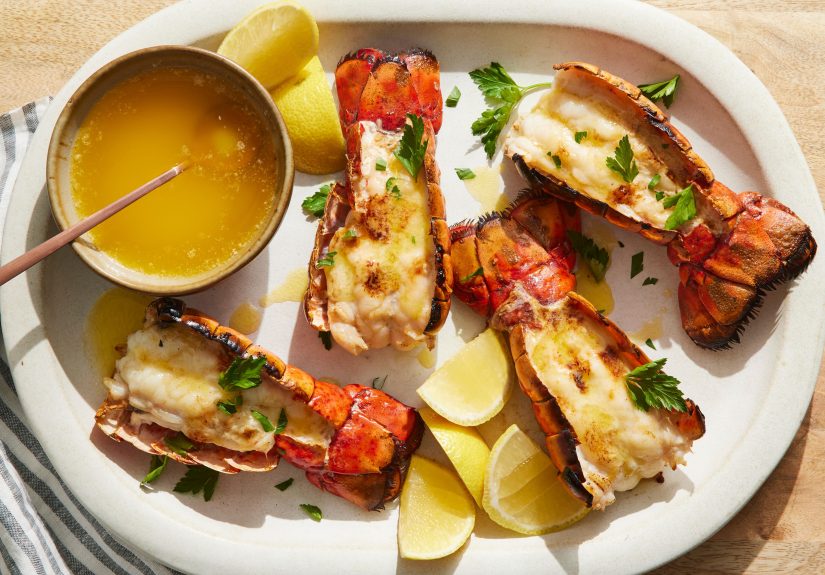
Add melted butter and lemon, and suddenly your meal looks suspiciously like a celebration.