Table of Contents >> Show >> Hide
- Leg Press vs. Squat at a Glance
- Muscles Worked: Same Neighborhood, Different House Rules
- Strength, Size, and Performance: Which Lift Wins for Each Goal?
- Which One Is Better for Beginners?
- What About Knee Pain, Back Pain, or Mobility Limits?
- Technique Matters More Than the Debate
- So, Which One Is Best Suited to Your Fitness Goals?
- A Smart Programming Example
- Real-World Experiences: What Lifters Usually Notice Over Time
- Conclusion
Leg day has a funny way of turning otherwise calm adults into philosophers. One camp swears the squat is king. Another camp practically lives on the leg press and would like a moment of silence for their quadriceps. So who is right? Annoyingly, both sides have a point.
If you are comparing leg press vs. squat, the better question is not which exercise is universally “best.” The better question is: best for what? Building bigger quads? Getting stronger for sports? Learning movement patterns that carry into everyday life? Training around an achy back, cranky knees, or limited shoulder mobility? Those are very different goals, and they deserve different answers.
Both exercises can help you build lower-body strength, muscle, and confidence. But they do not challenge the body in exactly the same way. A squat is a free or bodyweight movement that asks your legs, core, hips, and upper body to work together while you control your posture in space. A leg press, by contrast, gives you a machine-guided path and back support, which can make it easier to focus hard on your legs without worrying as much about balance and bracing.
That means this is not really a battle of good versus bad. It is more like a casting decision. One actor is great at full-body performance. The other absolutely crushes the role of targeted lower-body training. Let’s break down where each exercise shines, where each one falls short, and how to choose the one that actually matches your fitness goals instead of your gym buddy’s very loud opinions.
Leg Press vs. Squat at a Glance
| Category | Leg Press | Squat |
|---|---|---|
| Main focus | Lower-body loading with machine support | Full-body coordination with lower-body emphasis |
| Primary muscles | Quads, glutes, hamstrings | Quads, glutes, hamstrings, plus core and trunk stabilizers |
| Stability demand | Low to moderate | High |
| Learning curve | Usually easier for beginners | Usually steeper, especially with loaded barbell variations |
| Best for | Hypertrophy, controlled volume, training around some mobility limits | Functional strength, athletic carryover, total-body strength development |
| Common problem | Ego loading and shallow reps | Technique breakdown under fatigue or too much weight |
Muscles Worked: Same Neighborhood, Different House Rules
What the Leg Press Trains
The leg press mainly targets your quadriceps, glutes, and hamstrings. Because you are seated or reclined against a pad, the machine reduces the balance and postural demands you would have to manage in a standing lift. That can be a huge advantage if your goal is to hammer the legs directly and pile up quality reps without turning every set into a full-body negotiation.
In plain English, the leg press is often the “let me just train my legs already” option. It is especially useful when you want to chase muscle growth in the lower body, add training volume after heavier compound lifts, or keep training hard when your upper back, shoulders, or core are not the limiting factor.
What the Squat Trains
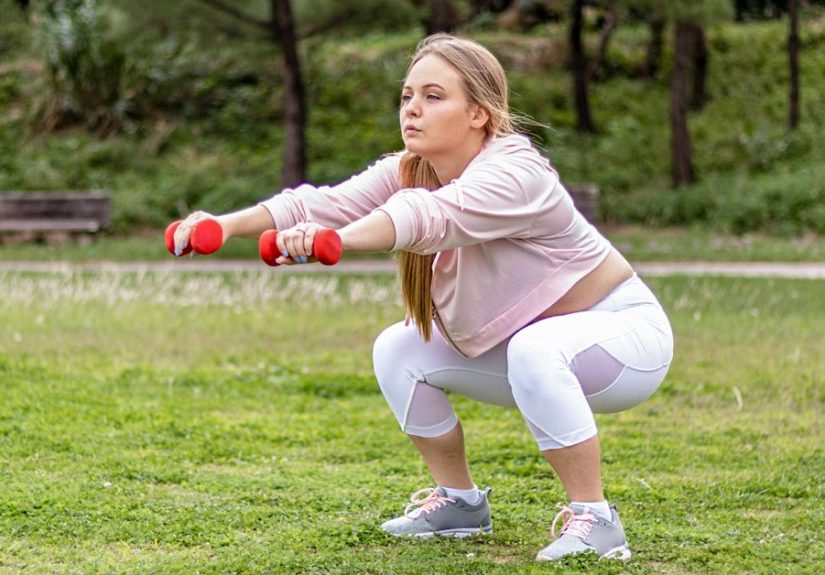
The squat also works the quads, glutes, and hamstrings, but it asks more from the rest of your body. Your trunk has to stay braced. Your hips, knees, and ankles need to coordinate. Your upper back has to help support the load in many squat variations. Even a bodyweight squat teaches your body how to sit, stand, brace, and move with control.
That is why squats are often described as a more functional strength exercise. They do not just train muscles. They train muscles to cooperate. And that matters if your goals include sports performance, full-body strength, or moving through everyday life with less creaking, swaying, and accidental sound effects.
So Which Builds More Muscle?
Both can build muscle when programmed well. If your goal is pure lower-body hypertrophy, especially quad growth, the leg press has a strong case because it is easier to load heavily, control the path, and train closer to fatigue. If your goal is total-body muscular development with extra payoff in core strength and movement skill, the squat usually gives you more bang for your buck.
Put simply: the leg press is often the better specialist, while the squat is often the better generalist.
Strength, Size, and Performance: Which Lift Wins for Each Goal?
For Overall Strength
If your definition of strength includes lifting, carrying, standing up powerfully, bracing, and controlling your body under load, the squat usually wins. A squat demands force production plus stability, posture, and coordination. That combination tends to make it more useful for broad, real-world strength.
This does not mean the leg press is weak. Not even close. It can absolutely make your legs stronger. But it does not ask the same question of your body. The squat asks, “Can you produce force and organize your whole system?” The leg press asks, “Can your legs drive this load?” Both are valuable. One is just more comprehensive.
For Muscle Growth
If you want to build muscular legs and you love the feeling of a targeted burn that makes stairs feel like betrayal the next day, the leg press deserves respect. The machine setup lets many lifters train with more consistency, more control, and sometimes more total lower-body volume. That makes it extremely useful for bodybuilding-style training.
Squats can also build serious muscle, of course. But because they are more technically demanding and systemically fatiguing, they can become limited by balance, bracing, mobility, or bar position before the quads are truly cooked. In that specific scenario, the leg press often keeps the muscle-building party going.
For Athletic Performance
If your goal is to improve sprinting, jumping, change of direction, and general athletic carryover, the squat usually gets the nod. It trains force production in a standing position and requires more stability and coordination, which tends to transfer better to sport and movement. That does not make leg press useless for athletes. It simply makes it better as a support exercise than as the star of the show.
For Fat Loss
Neither exercise is magic for fat loss. That job belongs mostly to overall calorie balance, consistent training, sleep, and nutrition habits that do not collapse every weekend. That said, both exercises can help preserve or build muscle while dieting, which is a big deal for body composition.
If you want a simple rule, pick the exercise you can perform safely, consistently, and progressively. The “best” fat-loss exercise is often the one you will actually keep doing after motivation stops acting like a reality show contestant.
Which One Is Better for Beginners?
For many beginners, the leg press feels friendlier. The machine provides support, the movement path is more predictable, and the setup can be less intimidating than stepping under a barbell and suddenly feeling as if gravity has become personal.
But that does not mean beginners should avoid squats. In fact, learning to squat well is one of the smartest investments a new lifter can make. Bodyweight squats, goblet squats, and box squats can help build mobility, balance, and confidence before heavier versions enter the picture.
The smartest beginner strategy is usually this: learn a squat pattern, then use the leg press to add volume. That gives you the skill benefits of squatting without forcing every lower-body session to be a technical drama.
What About Knee Pain, Back Pain, or Mobility Limits?
This is where nuance matters. Neither the squat nor the leg press is automatically bad for your knees or back. Poor setup, too much load, limited mobility, bad control, or trying to impress strangers can make either one unpleasant very quickly.
When the Leg Press May Be the Better Choice
The leg press can be a smart option if you have trouble balancing, limited shoulder mobility, or difficulty tolerating a bar on your back. It can also make sense when you want to reduce the demand on your trunk and focus on controlled lower-body loading. For some people returning from injury or rebuilding confidence, that support matters.
When the Squat May Be the Better Choice
The squat may be the better choice if you want to improve movement quality, core engagement, and strength that transfers to daily life. Variations like goblet squats or box squats can often be adjusted to match comfort and ability. In other words, “squat” is not one rigid exercise. It is a whole family of options.
If pain is persistent, sharp, or worsening, that is your cue to stop playing internet doctor and get guidance from a qualified clinician or physical therapist.
Technique Matters More Than the Debate
Squat Technique Basics
For a strong squat, think about keeping your feet planted, your knees tracking in line with your toes, and your torso braced. Sit down and slightly back, maintain a neutral spine, and only go as deep as you can while staying in control. There is no trophy for folding yourself into a position your body clearly did not agree to.
Leg Press Technique Basics
For the leg press, keep your whole foot connected to the platform, avoid slamming the sled, and control the bottom position. Lower until you still have good alignment and your lower back stays supported. The classic mistake is loading the machine with enough plates to impress half the gym, then moving it three inches and calling it a set. Your quads know the truth.
So, Which One Is Best Suited to Your Fitness Goals?
Choose the Leg Press If:
You want to emphasize quad hypertrophy, accumulate lower-body volume, train close to failure with more support, or work around certain balance and mobility limitations.
Choose the Squat If:
You want total-body strength, better movement skill, stronger bracing, athletic carryover, and an exercise that challenges your legs and your coordination at the same time.
Choose Both If:
You enjoy progress and do not feel emotionally attached to false binaries. For many lifters, the best answer is to squat first for skill and overall strength, then use the leg press afterward for extra muscle-building volume.
A Smart Programming Example
Goal: General fitness. Start with squats early in the workout, then use the leg press for moderate accessory volume.
Goal: Muscle growth. Use squats or a squat variation for moderate sets, then push the leg press harder with controlled reps and a longer time under tension.
Goal: Athletic performance. Prioritize squats, then use the leg press sparingly as support work for the quads.
Goal: Returning from a layoff. Rebuild the squat pattern with lighter variations, and lean on the leg press when you want a safer-feeling way to load the legs.
For most adults, strength training at least two days per week is a solid baseline. Whether you use squats, leg press, or a mix of both, consistency still beats the perfect spreadsheet you abandon in nine days.
Real-World Experiences: What Lifters Usually Notice Over Time
In real gyms, the difference between the leg press and the squat often becomes obvious after a few months of consistent training. Beginners frequently fall in love with the leg press first because it feels approachable. You sit down, brace against a pad, move the sled, and instantly feel your legs working. That feedback is satisfying. It makes people feel successful early, and that matters. Confidence is not fluff; it is part of adherence.
Then something interesting happens. As lifters get more comfortable, many realize the squat teaches them things the leg press never quite does. Squats expose mobility limits. They reveal whether your ankles are stiff, whether your hips shift, whether your core is actually bracing, and whether you can stay organized under load. At first, that can feel humbling. Later, it feels useful. A lot of people begin to notice they move better outside the gym when squats become part of the plan.
Taller lifters, in particular, often go through a dramatic arc with squats. Early on, they assume squats are not “for their body type” because the movement feels awkward. In many cases, the issue is not that they cannot squat. It is that they need a stance adjustment, a heel wedge, a goblet squat progression, or simply more practice. Once the setup matches their structure, the exercise usually looks less like a giraffe learning yoga and more like a real strength movement.
On the other hand, experienced lifters who care about building bigger legs often circle back to the leg press with fresh appreciation. After years of treating it like a lesser exercise, they discover it is an outstanding tool for high-quality volume. They can squat hard, then use the leg press to chase extra quad and glute work without asking their lower back and stabilizers to keep solving complicated problems. In other words, the squat earns the headline, but the leg press sells a lot of tickets.
There is also the recovery factor. Many people report that heavy squats feel more demanding on the whole body, while the leg press creates a more local muscular fatigue. That difference matters when life is busy, sleep is inconsistent, or training has to fit around sports practice, work stress, and the occasional existential crisis caused by laundry. Some weeks, the leg press is simply easier to recover from.
Another common experience is that people use the two exercises differently as they age or deal with aches and limitations. Someone who once loved barbell back squats may shift toward goblet squats, split squats, and leg press work because it lets them keep training hard with fewer complaints from their shoulders or spine. That is not “giving up.” That is smart training. The best exercise at 22 is not always the best exercise at 42, and that is perfectly normal.
Perhaps the most honest gym truth is this: people who make the best progress rarely marry one exercise forever. They use squats when they want skill, transfer, and total-body strength. They use the leg press when they want targeted volume, safer proximity to failure, or a break from technical fatigue. The winners are usually not the people arguing about which exercise is superior. The winners are the people doing both with good form and enough patience to let boring consistency work its magic.
Conclusion
In the leg press vs. squat debate, there is no universal champion. There is only the exercise that best fits your current goal, body, skill level, and training context. If you want more full-body strength, movement skill, and athletic carryover, the squat usually deserves priority. If you want a supported way to drive lower-body hypertrophy, accumulate volume, or train around certain limitations, the leg press is an excellent choice.
The smartest answer for most people is not choosing sides. It is choosing sequence. Learn to squat well. Use the leg press strategically. Build strength with one, build extra volume with the other, and stop asking a machine and a movement pattern to be the exact same thing. They are different tools, and that is precisely why both belong in a thoughtful training program.