Table of Contents >> Show >> Hide
- What Is Skin Cancer on the Scalp?
- Why Scalp Skin Cancer Is Easy to Miss
- Common Signs of Skin Cancer on the Scalp
- What Does Melanoma on the Scalp Look Like?
- Who Is More at Risk?
- How to Check Your Scalp at Home
- When to See a Dermatologist
- How Scalp Skin Cancer Is Treated
- How to Protect Your Scalp From Skin Cancer
- Common Mistakes People Make
- Experience-Based Tips: What People Often Notice Before Getting Checked
- Conclusion
Your scalp has a sneaky job. It sits at the very top of your body, catches plenty of sunlight, hides under hair, and somehow expects you to notice tiny skin changes in a place you can barely see without two mirrors, a phone camera, and the flexibility of a yoga instructor. That is exactly why skin cancer on the scalp can be easy to miss.
Scalp skin cancer may appear as a new bump, a crusty patch, a sore that refuses to heal, a changing mole, or a tender spot that keeps bleeding or itching. Because hair can cover early warning signs, many people do not notice a suspicious lesion until a haircut, a sunburn, or a dermatologist visit brings it into view. The good news: when skin cancer is found early, treatment is often more successful and less complicated.
This guide explains what scalp skin cancer can look like, why it happens, who is at higher risk, how to check your scalp, and when to see a dermatologist. It is not meant to diagnose you through a screen. Your scalp deserves a real inspection by a medical professional, not a guessing game with bathroom lighting.
What Is Skin Cancer on the Scalp?
Skin cancer on the scalp happens when skin cells grow abnormally, often after damage from ultraviolet rays from the sun or tanning devices. The scalp is a common sun-exposed area, especially for people with thinning hair, bald spots, fine hair, short hairstyles, or parts in the hair that receive direct sunlight.
The three main types to know are basal cell carcinoma, squamous cell carcinoma, and melanoma. Basal cell carcinoma is usually the most common and often grows slowly. Squamous cell carcinoma can be more likely to spread if ignored, especially on sun-damaged skin. Melanoma is less common but more dangerous because it can spread more quickly than many other skin cancers.
Why Scalp Skin Cancer Is Easy to Miss
The scalp is not exactly prime real estate for daily inspection. You wash it, brush it, style it, maybe complain about it during humid weather, and then move on. Unlike your face or hands, the scalp is mostly hidden. A spot can grow for months before someone notices it.
Hair can also create a false sense of protection. While hair does block some UV exposure, it does not act like a full-time sun shield. Sunlight can still reach the scalp through hair parts, thinning areas, cowlicks, shaved sections, and uncovered bald spots. Baseball caps help, but they often leave the ears, neck, and parts of the scalp exposed. A wide-brimmed hat is usually a better choice for full coverage.
Common Signs of Skin Cancer on the Scalp
Scalp skin cancer does not have one single appearance. It may look harmless at first, which is what makes awareness so important. Watch for anything new, changing, unusual, or persistent.
1. A Sore That Does Not Heal
A spot that scabs, bleeds, heals, and then opens again deserves attention. This can happen with basal cell carcinoma or squamous cell carcinoma. Many people mistake it for a scratch from brushing, a pimple, or irritation from hair products. If the same sore keeps coming back, do not keep blaming the shampoo.
2. A Rough, Scaly, or Crusty Patch
Squamous cell carcinoma may appear as a rough or scaly patch that feels different from the surrounding skin. It may be red, pink, brown, darker than nearby skin, or slightly raised. Some spots feel like sandpaper and may be tender when touched.
3. A Pearly, Shiny, or Waxy Bump
Basal cell carcinoma can look like a shiny bump, a pale or pink growth, or a small raised area with visible tiny blood vessels. On darker skin tones, it may appear brown, black, or glossy. Because it can grow slowly, people sometimes ignore it until it becomes larger or starts bleeding.
4. A Changing Mole
Melanoma may develop in an existing mole or appear as a new spot. Use the ABCDE rule: asymmetry, border irregularity, color variation, diameter larger than a pencil eraser, and evolution. Evolution means the spot is changing in size, shape, color, texture, height, or symptoms.
5. Itching, Pain, Bleeding, or Crusting
A suspicious scalp spot may itch, hurt, crust, bleed, or feel irritated even when you have not scratched it. Symptoms do not automatically mean cancer, but a persistent or changing symptom should be checked.
6. A “Different From the Others” Spot
Dermatologists often call this the “ugly duckling” sign. If one mole or spot looks noticeably different from everything else on your scalp or body, it may need a professional exam. In skin checks, being the odd one out is not a compliment.
What Does Melanoma on the Scalp Look Like?
Scalp melanoma can be especially concerning because it may go unnoticed until it is more advanced. It might appear as a dark or multicolored patch, a mole with uneven edges, a changing spot, or even a pink, red, or colorless bump. Not every melanoma is dark, which is why texture, growth, and change matter too.
Look for a spot that has uneven halves, blurred or jagged edges, several colors, rapid growth, bleeding, crusting, or a new raised area. A mole that suddenly becomes itchy or painful also needs attention. If your barber, hairstylist, friend, or family member says, “Hey, has that always been there?” take the question seriously.
Who Is More at Risk?
Anyone can develop skin cancer on the scalp, but some people have higher risk. Risk increases with long-term UV exposure, frequent sunburns, indoor tanning, fair skin that burns easily, light-colored eyes, red or blond hair, many moles, a personal or family history of skin cancer, older age, and a weakened immune system.
People with thinning hair, bald scalps, shaved heads, or a defined hair part are also more exposed. Outdoor workers, athletes, gardeners, runners, beach lovers, and anyone who spends lots of time outside without sun protection should be extra careful. The scalp may be small compared with the rest of the body, but it can collect years of sun exposure like a tiny solar panel nobody asked for.
How to Check Your Scalp at Home
A monthly scalp check can help you notice changes earlier. You do not need fancy equipment, but you do need patience, decent lighting, and possibly someone you trust to help inspect hard-to-see areas.
Step 1: Use Good Lighting
Stand near bright natural light or use a strong lamp. Dim bathroom lighting can make everything look suspicious or hide details you actually need to see.
Step 2: Part the Hair in Sections
Use a comb or your fingers to part your hair in rows. Check the hairline, crown, temples, behind the ears, back of the scalp, and the area where you usually part your hair.
Step 3: Use Mirrors or a Phone Camera
A hand mirror can help with the back of the head. A phone camera can be even better because you can zoom in, compare photos, and track changes over time. Take clear photos of any spot you want to monitor.
Step 4: Ask for Help
A partner, parent, friend, barber, or hairstylist may notice spots you cannot see. Hair professionals are often in a good position to spot unusual scalp changes because they regularly see the scalp up close.
Step 5: Track Changes
If a spot looks new or strange, note the date and take a photo. Do not wait months if it bleeds, grows, hurts, changes color, or does not heal. Monitoring is useful, but it should not become procrastination wearing a lab coat.
When to See a Dermatologist
Make an appointment with a dermatologist if you notice a new growth, a changing mole, a sore that does not heal within a few weeks, a crusty or bleeding patch, or a spot that looks different from your other moles. You should also get checked if a scalp lesion becomes painful, itchy, swollen, or repeatedly irritated.
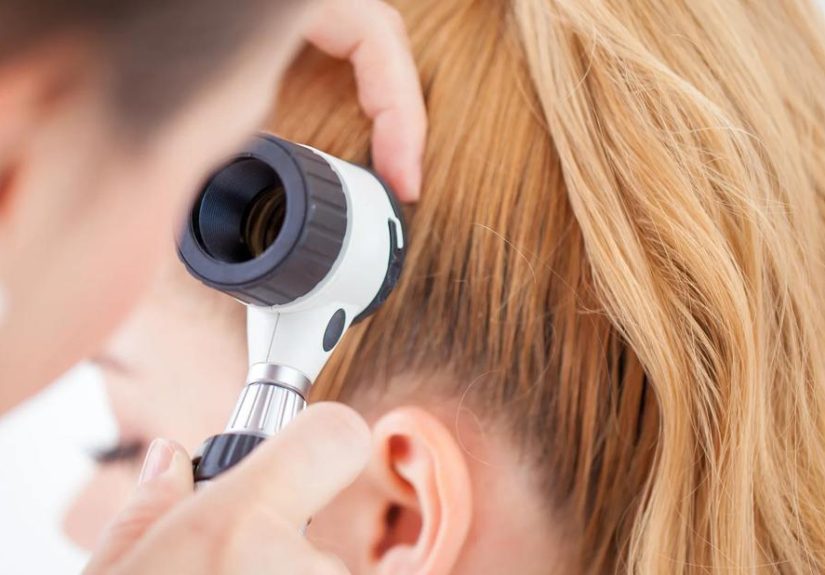
A dermatologist may examine the area with a dermatoscope, a tool that helps magnify skin structures. If the spot looks suspicious, they may perform a biopsy. A biopsy means removing a small sample of tissue so it can be checked under a microscope. That is the only reliable way to confirm whether a spot is cancerous.
How Scalp Skin Cancer Is Treated
Treatment depends on the type of skin cancer, its size, depth, location, and whether it has spread. Common treatments include surgical removal, Mohs surgery, cryotherapy for certain early lesions, topical medications for selected superficial cancers, radiation therapy in specific cases, and advanced therapies for more serious disease.
Mohs surgery is often used for skin cancers in areas where preserving healthy tissue matters, such as the scalp, face, ears, and nose. During Mohs surgery, thin layers of tissue are removed and examined until no cancer cells are seen. The goal is to remove the cancer while keeping as much healthy skin as possible.
Melanoma treatment may require wider surgical removal and additional testing if there is concern that the cancer has spread. This is one reason early detection is so important. Smaller, earlier cancers are often easier to treat than cancers that have had time to grow deeper.
How to Protect Your Scalp From Skin Cancer
Prevention is not about hiding indoors forever like a houseplant with Wi-Fi. It is about building simple habits that protect your skin while still letting you enjoy life.
Wear a Wide-Brimmed Hat
A wide-brimmed hat protects the scalp, face, ears, and neck better than a baseball cap. Choose tightly woven fabric or a hat labeled with UPF protection. Straw hats with lots of holes may look charming, but sunlight treats those holes like open invitations.
Use Sunscreen on Exposed Scalp
Apply broad-spectrum sunscreen to your hair part, thinning areas, bald spots, hairline, ears, and neck. SPF 30 or higher is a practical choice for many people. Sprays, powders, sticks, and lightweight lotions can make scalp application easier. Reapply when outdoors for long periods, especially after sweating or swimming.
Avoid Indoor Tanning
Tanning beds expose skin to UV radiation and increase skin cancer risk. A tan is not a “healthy glow”; it is evidence that the skin is responding to damage. Your scalp does not need that drama.
Plan Around Peak Sun Hours
UV rays are often strongest from late morning through afternoon. Shade, hats, and protective clothing matter most during these hours. This is especially important at beaches, pools, high altitudes, and sunny climates.
Schedule Regular Skin Exams
If you have a history of skin cancer, many moles, significant sun damage, or a family history of melanoma, ask your dermatologist how often you should have a full-body skin exam. The scalp should be part of that exam, not an afterthought.
Common Mistakes People Make
One common mistake is assuming that hair provides complete protection. It does not. Another mistake is ignoring scalp sores because they seem like dandruff, razor irritation, folliculitis, or a reaction to hair dye. Those conditions can happen, of course, but a persistent spot deserves a closer look.
People also delay care because the spot does not hurt. Many skin cancers are painless at first. Pain is not required for a problem to be real. Finally, some people try to pick, scrub, freeze, or treat suspicious spots at home. Please do not turn your scalp into a science fair project. A dermatologist can evaluate the spot properly and prevent unnecessary irritation or delay.
Experience-Based Tips: What People Often Notice Before Getting Checked
Many people who eventually get a scalp spot examined describe a similar pattern: at first, the area seems too minor to worry about. It may feel like a tiny scab from scratching, a bump from a close shave, or a flaky patch that appears after too much sun. Because the scalp is not easy to see, they often notice the spot by touch before they see it. A finger catches on a rough patch while shampooing. A comb bumps the same tender place. A barber pauses and says there is a mark near the crown. That small moment of “Hmm, that’s weird” is often the first clue.
One practical experience many people share is that scalp spots are easier to monitor with photos. A clear picture taken under the same lighting every couple of weeks can help show whether a mole is expanding, darkening, crusting, or becoming more raised. The key is not to obsess over every pore, but to create a simple record. If the spot changes, you have useful information to bring to your appointment.
Another common experience is confusing scalp skin cancer signs with everyday scalp problems. Dandruff can flake. Psoriasis can create thick patches. Folliculitis can cause bumps. Hair products can irritate the skin. The difference is persistence and change. A suspicious lesion tends to stay in one place, return after healing, bleed easily, or slowly grow. If you have treated a “dry patch” for weeks and it keeps behaving badly, it is time to stop negotiating with it and get it checked.
People with thinning hair often say they did not realize how much sun their scalp was getting until they had a painful burn along the part line or crown. That is a wake-up call. A hair part can act like a tiny runway for UV rays. Applying sunscreen there may feel strange at first, but it becomes routine quickly. Powder sunscreens and scalp sprays can be helpful because they are less greasy than traditional lotions. Hats are even easier: put one near the door, in the car, or in a beach bag so you are not relying on memory alone.
Hairstylists and barbers can also become unexpected allies. They see areas you rarely see and may notice a new mole, a changing spot, or a sore that keeps appearing. If someone who regularly cuts your hair points out a lesion, do not panic, but do not ignore it either. Ask where it is, take a photo, and schedule a skin exam. A casual comment during a haircut can become an important early-warning system.
The most useful lesson is simple: scalp checks do not need to be perfect to be valuable. You are looking for patterns, changes, and spots that stand out. Combine home checks with professional exams, especially if you have risk factors. When in doubt, choose the dermatologist over the internet rabbit hole. Search engines are excellent at many things, but they cannot biopsy a suspicious mole, and they have never once said, “Please turn your head slightly to the left.”
Conclusion
Skin cancer on the scalp can be easy to overlook because hair hides early warning signs. Still, your scalp needs the same attention as your face, arms, and other sun-exposed areas. Watch for new or changing moles, scaly patches, shiny bumps, sores that do not heal, bleeding, itching, crusting, or any spot that looks different from the rest.
Protect your scalp with hats, sunscreen, shade, and regular skin checks. Ask your hairstylist or someone you trust to help inspect hard-to-see areas. Most importantly, see a dermatologist for anything suspicious. Catching skin cancer early can make treatment simpler and outcomes better. Your scalp may be out of sight, but it should never be out of mind.
Note: This article is for general educational purposes only and is not a medical diagnosis. Anyone with a new, changing, bleeding, painful, or non-healing scalp spot should contact a qualified dermatologist or healthcare professional.