Table of Contents >> Show >> Hide
- Why Sour Cream Makes Cookies So Ridiculously Soft
- The Best Sour Cream to Use
- Classic Soft Sour Cream Cookies (Frosted or Plain)
- Quick Frosting Options
- Flavor Variations That Actually Work
- Troubleshooting: When Cookies Misbehave
- Make-Ahead, Storage, and Freezing
- FAQ
- Baker-to-Baker: Real-World Experiences (500+ Words of What You’ll Notice)
- Conclusion
Sour cream cookies are what happens when a sugar cookie and a tiny cake have a delicious little secret.
You get a soft, plush bite, a gentle tang, and a cookie that stays tender for days (instead of turning into
a “why is this so crunchy?” mystery). This guide walks you through an easy, classic sour cream cookies recipe
with foolproof steps, smart swaps, and flavor ideasbecause your cookie tray deserves a glow-up.
Why Sour Cream Makes Cookies So Ridiculously Soft
Sour cream isn’t just “extra dairy.” It’s a texture cheat code. The fat adds richness, the acidity helps tenderize,
and the moisture keeps the crumb soft. Paired with the right leaveners (usually baking powder + baking soda),
the dough bakes up pillowymore “bakery soft” than “snappy cookie.”
- Fat = tenderness: Full-fat sour cream gives a richer, softer bite.
- Acid + baking soda = lift: The acidity reacts with baking soda for gentle rise.
- Moisture = staying power: These cookies don’t dry out as quickly as many cutouts.
The Best Sour Cream to Use
Use full-fat sour cream if you can. Reduced-fat can work, but it may bake up slightly less tender.
Choose a sour cream you’d happily eat on a baked potato: thick, creamy, pleasantly tangynot watery or oddly sweet.
Pro tip: If your sour cream looks thin or separated, stir it well before measuring. Consistency matters in baking.
Classic Soft Sour Cream Cookies (Frosted or Plain)
Yield and timing
- Makes: about 24–30 medium cookies
- Prep: 20 minutes
- Chill: 1–2 hours (or overnight for easiest handling)
- Bake: 8–11 minutes per batch
Ingredients
- 1/2 cup (113 g) unsalted butter, softened
- 1/4 cup (48 g) vegetable shortening (optional, for extra “old-school soft”)
- 1 1/4 cups (250 g) granulated sugar
- 2 large eggs, room temperature
- 1 cup (240 g) full-fat sour cream
- 2 teaspoons vanilla extract
- 3 3/4 cups (450 g) all-purpose flour (start with 3 1/2 cups; add more only if needed)
- 2 teaspoons baking powder
- 1/2 teaspoon baking soda
- 3/4 teaspoon fine salt
- Optional flavor boosters: 1 teaspoon lemon zest or 1/4 teaspoon almond extract
Step-by-step instructions
-
Whisk the dry ingredients.
In a medium bowl, whisk flour, baking powder, baking soda, and salt. Set aside. -
Cream the fats and sugar.
In a large bowl, beat butter (and shortening, if using) with sugar for 2–3 minutes until lighter and fluffy.
This step helps the cookies rise and stay tender. -
Add eggs + flavor.
Beat in eggs one at a time. Mix in vanilla (and zest or almond extract if using). -
Stir in sour cream.
Mix just until smooth. The batter will look luscious and a little looserthis is normal. -
Combine wet and dry gently.
Add the dry ingredients in 2–3 additions, mixing on low just until the flour disappears.
Don’t overmixtough cookies are not invited to this party. -
Chill the dough.
Cover and refrigerate for 1–2 hours (or up to overnight). Chilling firms the dough and makes it easier to scoop,
shape, or roll. -
Bake.
Heat oven to 350°F. Line baking sheets with parchment.
Scoop dough (about 1 1/2 tablespoons each) and place 2 inches apart.
Bake 8–11 minutes until the tops look set and the bottoms are just barely golden.
They should not brown much on top. -
Cool before frosting.
Let cookies cool 5 minutes on the pan, then move to a rack. Frost only when fully cool.
Drop cookies vs. roll-and-cut cookies
This recipe is designed to be easy and forgiving as drop cookies. If you want cutouts, chill overnight,
flour your surface lightly, and roll thicker than usual (about 1/4 inch). If the dough feels sticky, dust with flour
sparinglytoo much flour makes cookies dry. For sharp-edged cutouts, use a dedicated roll-out dough recipe.
Quick Frosting Options
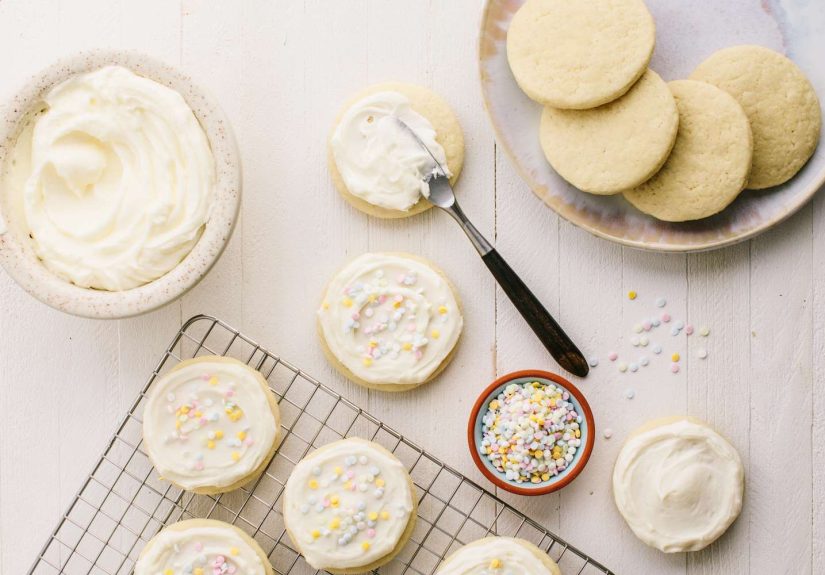
Option 1: Creamy vanilla buttercream (classic “bakery style”)
- 1/2 cup (113 g) unsalted butter, softened
- 2 1/2 cups (300 g) powdered sugar
- 1 1/2 teaspoons vanilla extract
- 1–3 tablespoons milk or cream
- Pinch of salt
Beat butter until smooth. Add powdered sugar, vanilla, salt, and 1 tablespoon milk. Beat 1–2 minutes.
Add more milk a teaspoon at a time until spreadable. Finish with sprinkles if you’re feeling festive (or chaotic-good).
Option 2: Tangy sour cream glaze (fast + no mixer drama)
- 1 cup (120 g) powdered sugar
- 2–3 tablespoons sour cream
- 1/2 teaspoon vanilla
Stir until smooth and glossy, then spoon over cooled cookies. It sets softly and tastes like “vanilla cheesecake’s fun cousin.”
Option 3: Cream cheese frosting (for maximum crowd-pleasing)
Swap half the butter in the buttercream for 4 oz softened cream cheese. Add powdered sugar to taste.
It’s tang-on-tang, in the best way.
Flavor Variations That Actually Work
Once you’ve nailed the classic version, try these easy upgrades:
- Lemon: Add 1 tablespoon lemon zest + 1 tablespoon lemon juice; glaze with lemon icing.
- Spiced: Add 1/2 teaspoon cinnamon + 1/4 teaspoon nutmeg for a cozy, old-fashioned vibe.
- Almond: Use 1/4 teaspoon almond extract and top with a vanilla glaze.
- Chocolate chip: Fold in 1 cup mini chocolate chips after the flour is mixed in.
- Sprinkle confetti: Mix 1/2 cup sprinkles into the dough (use jimmies, not nonpareils to reduce color bleed).
Troubleshooting: When Cookies Misbehave
My dough is too sticky
Chill longer. Sticky dough usually means it’s warm. If it’s still sticky after chilling, add flour 1 tablespoon at a time
but stop once it’s scoopable. Over-flouring is the #1 way to lose the “soft sour cream magic.”
My cookies spread too much
- Chill dough longer (and chill the scooped dough 10 minutes before baking).
- Use parchment, not a greased pan (grease can encourage spread).
- Make sure butter wasn’t meltedsoftened is good, melted is chaos.
My cookies are dry
- Measure flour carefully (spoon-and-level is your friend).
- Pull them when the tops are set; don’t wait for browned tops.
- Use full-fat sour cream and don’t skip the chill (it improves texture).
My frosting is too sweet
Add a pinch more salt and a tiny splash of sour cream or lemon juice. Salt and acid help balance sweetness without turning your frosting into soup.
Make-Ahead, Storage, and Freezing
- Chill dough: Up to 24 hours in the fridge (great for planning ahead).
- Freeze dough: Scoop into portions, freeze on a tray, then bag. Bake from frozen, adding 1–2 minutes.
- Store baked cookies: Airtight container at room temp for 3–4 days. Frosted cookies store best in a single layer or with parchment between layers.
- Freeze baked cookies: Unfrosted is easiest. Freeze up to 2 months; thaw, then frost.
FAQ
Can I use Greek yogurt instead of sour cream?
Yesplain full-fat Greek yogurt is the closest swap. The flavor will be slightly different (a bit more “yogurt tang”),
but the texture stays soft.
Do I really need both baking powder and baking soda?
Usually, yes. Baking soda reacts with sour cream’s acidity for lift and tenderness, while baking powder helps with an even rise.
Together, they deliver that signature pillowy crumb.
Can I make these without frosting?
Absolutely. Roll warm cookies in sugar, dust with powdered sugar, or drizzle with the sour cream glaze for a lighter finish.
The cookies are tasty on their ownfrosting just makes them “party ready.”
Baker-to-Baker: Real-World Experiences (500+ Words of What You’ll Notice)
If you’ve never baked with sour cream in cookie dough before, the first surprise is how the dough feels.
It’s not the stiff, tidy ball you might expect from classic sugar cookies. It’s softeralmost like a very thick cake batter
that’s trying its best to become a cookie. That’s normal, and it’s also the reason chilling is so important.
Home bakers who skip the chill often end up “chasing the dough” with extra flour, which fixes the stickiness but can quietly
steal the tenderness. The better move is patience: give the dough time to firm up, and it becomes easy to scoop and shape.
The second thing people notice is how these cookies bake “pale.” If you’re used to waiting for a golden top, sour cream cookies
can make you feel like you’re pulling them too early. But that pale top is part of the charm. The cookies set on the surface,
stay soft in the middle, and barely color on top while the bottoms pick up the faintest golden tint. That’s your cue.
When you nail the timing, the texture lands right between a soft sugar cookie and a little tea caketender, plush, and not at all dry.
Frosting is where cookie personalities show up. Some bakers love the classic thick vanilla buttercream because it turns a simple cookie
into a bakery-style treat (and lets sprinkles do their confetti job). Others prefer a tangy glaze made with sour cream because it
leans into the flavor that makes these cookies special. A fun observation from many holiday-cookie kitchens: the frosting choice
often depends on the crowd. Kids and sweet-tooths tend to vote for buttercream. Adults who claim they “don’t like super sweet desserts”
(and then somehow eat three cookies) usually prefer the glaze or cream cheese frosting.
These cookies also teach a small lesson about ingredients you wouldn’t think matterlike the sour cream itself. When the sour cream is thick,
the dough behaves more predictably and the cookies puff beautifully. When it’s watery, the dough can feel looser and the baked cookies can spread more.
That doesn’t mean the batch is ruined; it just means your best tools become chilling, gentle mixing, and not overbaking.
Many bakers also learn that “more flour” is rarely the answer. “More chill” usually is.
Finally, sour cream cookies are a sneaky make-ahead win. People often report that the cookies taste even better the next day:
the crumb relaxes, the tang rounds out, and the frosting (if you used it) sets into that soft, bakery-like finish.
If you’re making them for an event, baking the cookies one day and frosting the next can be the difference between “I’m thriving”
and “why am I measuring powdered sugar at midnight?” And if you’re gifting them, they’re sturdy enough to travel and soft enough to feel special
when someone opens the container. In other words: these are not just cookiesthey’re low-stress joy with excellent texture.
Conclusion
A great sour cream cookies recipe is all about texture: full-fat sour cream for tenderness, the right leaveners for lift,
and a gentle hand with flour and mixing. Chill the dough, bake until just set (not browned), and choose your finishing move:
buttercream for bakery vibes, glaze for tangy simplicity, or cream cheese frosting for maximum “wow.” However you top them,
these cookies deliver soft, nostalgic comfort with a little zingand they’re basically guaranteed to disappear from the plate.