Table of Contents >> Show >> Hide
- What the M10 Booker Was Supposed to Be
- Why the Army Wanted It So Badly
- How the Booker Looked So Promising So Fast
- Why the Army Refused to Call It a Light Tank
- Where the Trouble Started
- What the Booker Still Did Well
- The 2025 Cancellation: A Very Loud Plot Twist
- Why the M10 Booker Still Matters
- Field Experience and Lessons: What the Booker Felt Like in Practice
- Final Take
- SEO Tags
Editor’s note: The Army later canceled the M10 Booker program in 2025. This article explains what the vehicle was, why it mattered, and why it became one of the most talked-about armored programs in recent memory.
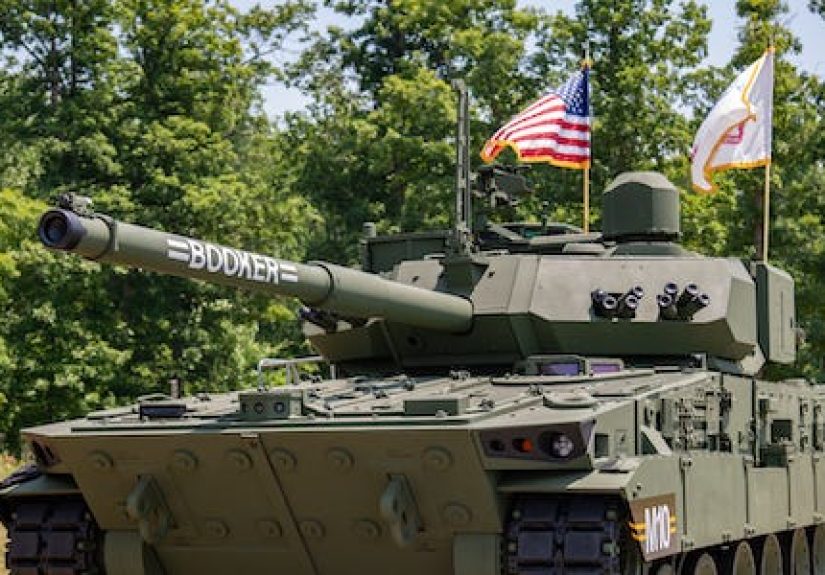
If the M1 Abrams is the heavyweight champion of the Army’s armored world, the M10 Booker was supposed to be the quicker cousin that showed up earlier, hit hard, and didn’t demand a logistics parade just to get to the fight. That was the sales pitch, anyway. Officially, the Army did not want it called a light tank. Unofficially, everyone looked at it and thought, “That sure looks like a tank that shrank in the wash.”
Still, the M10 Booker had a very real purpose. The Army wanted a tracked, protected, direct-fire vehicle for infantry brigade combat teams, especially light formations that often move fast but lack the kind of organic punch needed to destroy bunkers, machine-gun nests, fortified positions, and light armored threats. In plain English, infantry needed something with armor, speed, and a big gun that could show up before an Abrams lumbered onto the scene.
That need produced the Mobile Protected Firepower program, later redesignated as the M10 Booker. The vehicle was named after two soldiers: Pvt. Robert D. Booker, a Medal of Honor recipient from World War II, and Staff Sgt. Stevon A. Booker, a Distinguished Service Cross recipient from Operation Iraqi Freedom. The naming gave the platform an immediate sense of weight and meaning. The problem was that the vehicle itself soon carried rather a lot of weight too.
What the M10 Booker Was Supposed to Be
At its core, the M10 Booker was built to support infantry, not replace a main battle tank. That distinction matters more than the internet’s favorite “light tank or not?” argument. The Army described the Booker as an infantry assault vehicle designed to provide mobile, protected direct fire. Its job was not to duel enemy heavy armor all day like an Abrams. Its job was to help infantry keep momentum by smashing the ugly things that slow infantry down: strongpoints, defensive positions, fortified buildings, and lightly armored vehicles.
That role helps explain the Booker’s design. It carried a 105mm M35 main gun, paired with a 7.62mm coaxial weapon and a .50-caliber commander’s weapon. It had a four-person crew: commander, gunner, loader, and driver. It was also fitted with advanced optics and fire-control elements tied closely to proven Abrams-derived technology. In other words, this was not some science-fair prototype wrapped in buzzwords. It was meant to be a practical, mature platform that borrowed proven pieces and delivered real battlefield value.
The vehicle also promised mobility advantages over the Abrams. It could move at about 40 miles per hour, required less fuel, and was built with infantry operations in mind. Army materials in 2024 emphasized that two Bookers could be transported on a C-17, which supported the platform’s image as a deployable direct-fire asset for lighter formations. That image became a big part of the Booker story later, because mobility on PowerPoint slides is not always the same thing as mobility in the real world.
Why the Army Wanted It So Badly
The Army’s interest in the Booker came from a gap that had been bothering infantry planners for years. Light formations are great at moving fast, seizing terrain, and operating in places where heavier armored units may arrive later. What they are not great at is blowing apart fortified resistance on demand with protected, organic firepower. Infantry can call for artillery, air support, or attached armor, but “call for help and wait” is not always the same as “solve the problem right now.”
That is where the Booker was supposed to live: in the uncomfortable middle ground between lightly armed mobility and full-scale armored overkill. It was designed to travel with infantry formations, train with them, and arrive ready to fight without the huge support burden of a 70-ton main battle tank. It was, at least in theory, a way to restore protected assault firepower to units that had been missing it for decades.
And to be fair, that concept was not nonsense. In fact, it made a lot of sense. A light infantry brigade facing bunkers, prepared positions, or enemy armored personnel carriers does not need a philosophical debate. It needs something metal, tracked, and loud.
How the Booker Looked So Promising So Fast
One reason the M10 Booker attracted so much attention was speed. By Army standards, this program moved like it had somewhere to be. Officials highlighted that the platform reached production in just under four years, making it one of the fastest major armored acquisition efforts in recent memory. Army AL&T also described it as the first major new combat vehicle in two decades. In Pentagon time, that is practically a caffeine overdose.
General Dynamics Land Systems won the Mobile Protected Firepower competition in 2022, defeating BAE Systems after both companies had provided prototypes for soldier assessments. The Army’s low-rate initial production contract covered up to 96 systems, and early planning envisioned a much larger buy in the hundreds. Congressional reporting described an acquisition objective of 504 vehicles, with fielding intended across active-duty infantry formations and the National Guard.
By early 2024, the Army had taken delivery of the first production vehicles and pushed ahead with testing, training, and plans for operational fielding. The 82nd Airborne Division was selected as the first unit to operate and test the Booker. That choice made sense. If you want to prove a vehicle built for light forces, you hand it to paratroopers and see if the romance survives first contact with reality.
Why the Army Refused to Call It a Light Tank
The M10 Booker has spent a lot of time being called a light tank by nearly everyone except the Army. The service consistently pushed back on that label, and not just because Pentagon naming conventions enjoy a good headache.
The Army’s argument was straightforward: tanks exist to fight as tanks. The Booker existed to support infantry with direct fire. Yes, it had tracks. Yes, it had a turret. Yes, it had a large cannon and a silhouette that practically begged people to say “cute little Abrams.” But doctrine matters. The Army wanted people to understand that this was not a smaller Abrams substitute. It was an infantry-support vehicle meant to travel with lighter formations and solve a specific tactical problem.
That doctrinal distinction is actually important because it reveals both the Booker’s strength and its weakness. The strength was focus. The weakness was that once the vehicle got heavier, more complex, and more infrastructure-hungry, people naturally started asking a brutal question: if it is not a tank, why is it becoming tank-ish in all the expensive ways?
Where the Trouble Started
The M10 Booker did not collapse because the Army suddenly stopped liking protected firepower. It collapsed because requirements drift, mobility assumptions, and institutional inertia slowly turned a sharp concept into a much blurrier machine.
According to later reporting, the original dream had much more strategic mobility baked into it. Over time, some of those assumptions changed. Requirements tied to C-130 transport and airdrop ambitions fell away, while survivability and capability demands remained. That is usually how vehicles gain pounds the way the rest of us gain holiday weight: one “small adjustment” at a time, then suddenly the pants do not fit.
By 2025, the Booker had become a case study in how a program can satisfy formal requirements while drifting away from the thing people thought they were buying. Defense One reported that planners at Fort Campbell realized many local bridges could not support the Booker as intended. The same outlet also reported that Air Force load restrictions had complicated the two-per-C-17 assumption, undercutting part of the platform’s deployability story. That was more than an embarrassing technical footnote. It struck at the vehicle’s reason for existing.
When a vehicle is sold as the mobile protected answer for infantry, mobility is not a bonus feature. It is the plot.
What the Booker Still Did Well
Here is the part that makes the M10 Booker story more interesting than a simple “program failed, roll credits” headline. By all public accounts, the underlying battlefield need was real, and the vehicle also appeared to offer genuine tactical value in certain situations.
The Booker brought protected direct fire to infantry forces that usually do not have it organically. Its optics, firepower, and survivability could help dismounted troops maneuver more aggressively. Its 105mm gun gave commanders something far more decisive than wishful thinking when facing bunkers, fortifications, or light armored threats. It was also designed to be easier to deploy and sustain than an Abrams, even if the final real-world mobility picture turned out to be more complicated than advertised.
In other words, the Army may have ended up with the wrong answer, but it was still answering a legitimate question.
The 2025 Cancellation: A Very Loud Plot Twist
By mid-2025, the Army officially pulled the plug. The service ceased production and canceled fielding before the Booker could move into full-rate production. The decision came amid the Army Transformation Initiative and a wider push to cut systems seen as ineffective, redundant, or mismatched to future priorities.
That alone would have made headlines. What made the story bigger was the contrast. This was the Army’s first major new combat vehicle in decades. It had moved unusually fast. It had a live modernization narrative behind it. It had a strong infantry support rationale. And then, after years of development, testing, contracts, speeches, and ceremonial shell casings, the whole thing skidded into cancellation just as it was nearing broader fielding.
Public reporting indicated that the Army had already spent at least $1 billion on the program and had accepted a meaningful number of vehicles, with more in late production. So the Booker did not quietly disappear into a filing cabinet. It exited like a marching band hitting a pothole.
Why the M10 Booker Still Matters
The M10 Booker matters because it tells two stories at once. The first is tactical: infantry units still need mobile, protected direct fire. That requirement did not vanish just because the program did. The second is institutional: acquisition speed means very little if the final product drifts away from operational reality.
The Army seems to have taken that second lesson seriously. Much of the commentary around the Booker’s cancellation centered on fixing the requirements process itself, not merely blaming one contractor or one office. The criticism was less “this vehicle is absurd” and more “this process let an increasingly mismatched vehicle keep rolling forward because nobody wanted to stop the machine.”
That is an uncomfortable lesson, but probably a useful one. Militaries do not just buy steel. They buy assumptions. And when those assumptions go stale, even a capable machine can turn into the wrong answer.
Field Experience and Lessons: What the Booker Felt Like in Practice
The most revealing part of the Booker story may not be the contracts, the naming ceremony, or the cancellation memo. It may be the training experience. Public Army writing published after the program’s cancellation described how light infantry soldiers trained for months alongside a Booker test detachment, and that experience is worth sitting with because it shows why the idea behind the vehicle had real appeal.
In those exercises, the Booker did what infantry leaders hoped armored fire support would do. It moved faster than foot-mobile troops, reinforced success quickly, and offered protected punch in places where lightly equipped infantry would otherwise have to grind forward at much greater risk. Commanders found that the vehicle’s combination of mobility, armor protection, elevated optics, and hard-hitting direct fire opened opportunities that dismounted troops could not easily create alone.
That matters. A lot. Modern war has a bad habit of punishing units that cannot rapidly shift firepower. When infantry encounters a fortified position, a well-placed machine gun, or enemy forces using cover intelligently, even a small delay can be costly. The Booker gave infantry formations a way to bring violence to the exact problem, right now, without waiting for a larger armored package to arrive from somewhere else. There is a reason soldiers kept finding value in the concept.
But the field experience also showed that armor-infantry integration is not magic just because both sides are on the same team. It takes rehearsal, shared planning, standard operating procedures, route coordination, and a deep understanding of how mounted and dismounted forces see terrain differently. Infantry likes cover. Armor often likes clearer lines of sight. Infantry leaders think in foot routes, concealment, and close terrain. Armor crews think in angles, mobility corridors, firing positions, and where a large tracked vehicle can actually go without becoming a very expensive landscaping project.
Training reportedly exposed those differences fast. Leaders had to work through everything from communications and visual signals to safe positioning around the main gun, especially when infantry was operating close to the vehicle. Even ammunition choices mattered. A powerful direct-fire platform is a wonderful friend until you stand too close to it at the wrong moment. Combined arms works best when everyone understands the choreography.
There was also a psychological side to the Booker experience. Infantry troops training with armored support gained confidence because the vehicle changed the menu of tactical options. Suddenly, an obstacle was not just something to avoid or suppress. It might be something to breach, smash, outflank, or overwhelm. That kind of confidence can increase tempo, and tempo often decides who keeps the initiative.
So the field lesson is a little bittersweet. The Army may have built the wrong final vehicle for the broader mission set it eventually wanted, but the experience of training with the Booker appears to have confirmed that infantry still benefits from nearby armor that can move, see, and hit hard. The idea was not fantasy. The execution got messy.
If anything, the Booker’s training legacy may outlive the platform itself. It reminded the Army that light forces and armored direct-fire support can be extremely effective together, but only if the vehicle matches the actual deployment environment, the infrastructure, the logistics system, and the doctrine it is supposed to serve. In that sense, the Booker may end up being less a dead-end machine and more a brutally expensive draft of a capability the Army still wants.
Final Take
The M10 Booker was not a joke, and it was not exactly a triumph either. It was a serious attempt to give infantry brigade combat teams something they genuinely lacked: protected, mobile, direct-fire muscle. It had clear tactical logic, a strong symbolic identity, and some very real battlefield usefulness in training and test environments. It also became a warning label on wheels for what happens when requirements expand, mobility assumptions weaken, and no one hits the brakes early enough.
For one brief, noisy chapter, the Army’s new mobile assault gun really was the M10 Booker. Then reality showed up with bridge limits, transport complications, and a strategic reset. The result is one of the more fascinating armored vehicle stories of the decade: a machine born from a good idea, accelerated by urgent modernization, and canceled because the final form no longer matched the future it was supposed to fight in.