Table of Contents >> Show >> Hide
- Why Noguchi Lamps Keep Winning the Room
- 14 Times Noguchi Lamps Stole the Spotlight
- 1. Georgia O’Keeffe’s New Mexico Home Proved the Glow Was Timeless
- 2. David Salle’s East Hampton Compound Let a Pair of Lanterns Rule the Living Room
- 3. Inez and Vinoodh’s Manhattan Loft Used One Like a Floating Thought Bubble
- 4. Noguchi’s Own Shikoku Residence Became an Akari Master Class
- 5. A Hamptons Dining Room Used a Paper Orb Like a Full Stop
- 6. Tom Scheerer Turned a Flattened Lantern Into Wall Art
- 7. A Manhattan Penthouse Let a Zigzag Floor Lamp Do the Corner Work
- 8. Carrie Bradshaw’s Apartment Said Yes, That Really Was a Noguchi
- 9. Carrie’s Earlier 1N Shelf Moment Was Smaller but Just as Sharp
- 10. Melissa Lee’s Connecticut Dining Room Used One Like a Full Moon
- 11. Aurora James Turned the Pink Room Into an Akari Party
- 12. Troye Sivan’s Melbourne Home Made “Good Lighting” a Philosophy
- 13. Ashley Tisdale’s Bedroom Brought Back the Big-Lantern Fantasy
- 14. An Oslo Apartment Doubled Down With Both a 24N and a 26A
- What All These Rooms Have in Common
- 5 Noguchi Lamps to Buy
- Experience Notes: What It’s Actually Like to Live With a Noguchi Lamp
- Conclusion
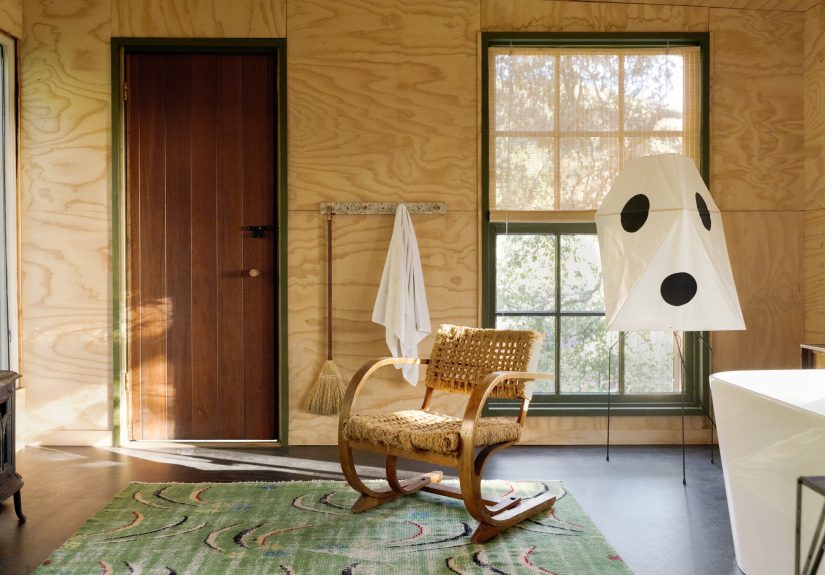
Some lamps are content to stand quietly in a corner and mind their own business. A Noguchi lamp is not one of those lamps. It glows. It floats. It looks like a moon that decided to major in interior design. And somehow, without trying too hard, it can make an entire room feel calmer, smarter, softer, and just a little more expensive than it was five minutes ago.
That is the strange power of Isamu Noguchi lighting. The famous Akari lamps are made from washi paper, bamboo ribbing, and metal frames, yet they never read as fragile decoration. They feel sculptural, intentional, and deeply human. They are modern, but not cold. Minimalist, but not boring. Famous, but not flashy in a “look at my imported marble bathtub” way.
It also helps that these paper lantern lamps keep showing up in all the right places: design magazines, celebrity homes, museum collections, stylish rentals, serene bedrooms, dramatic dining rooms, and the kind of living spaces that make you wonder whether your own overhead light has been sabotaging your happiness for years.
Below, we’re looking at 14 real moments when Noguchi lamps absolutely stole the spotlight, plus five standout models worth buying if you want that same soft-glow magic at home.
Why Noguchi Lamps Keep Winning the Room
Before the highlight reel, it helps to understand why these lamps keep outliving trends. Noguchi developed Akari in Japan in the early 1950s after visiting Gifu, a city known for traditional lantern-making. Instead of treating those lanterns like old craft objects that belonged in the past, he reimagined them as modern sculpture for everyday life. That idea still feels fresh now: functional art that doesn’t scream for attention yet somehow steals it anyway.
Part of the appeal is material honesty. Washi paper diffuses light in a way glass rarely can. Bamboo gives the forms their elegant bones. The shapes range from classic round globes to biomorphic silhouettes with legs, angles, and a little swagger. The result is sculptural lighting that feels airy rather than heavy, warm rather than harsh, and stylish without becoming fussy.
There is also the mood factor. A good Noguchi lamp does not just illuminate a room; it edits it. Sharp corners soften. Busy shelves seem less chaotic. Minimal spaces stop feeling sterile. It is the lighting version of lowering your voice in a beautiful museum, except it happens in your apartment while you are reheating leftovers.
14 Times Noguchi Lamps Stole the Spotlight
1. Georgia O’Keeffe’s New Mexico Home Proved the Glow Was Timeless
One of the most telling Akari sightings came from Georgia O’Keeffe’s New Mexico home. In that setting, the lamp did not feel trendy or “midcentury-modern-core.” It felt inevitable. Against the desert light and the restraint of O’Keeffe’s interiors, the lantern read like a calm lunar objectsimple, poetic, and almost spiritual. That is peak Noguchi: the piece looks quiet, but the room starts orbiting around it.
2. David Salle’s East Hampton Compound Let a Pair of Lanterns Rule the Living Room
Architectural Digest also captured a pair of Noguchi lanterns presiding over artist David Salle’s East Hampton compound. This is where Akari shows off one of its best tricks: doubling up without becoming visually heavy. Two lanterns can feel less like “more stuff” and more like a rhythm in the room. The effect is sculptural, but still relaxed. In other words, the lamps understood the assignment.
3. Inez and Vinoodh’s Manhattan Loft Used One Like a Floating Thought Bubble
In the Manhattan loft of photographers Inez van Lamsweerde and Vinoodh Matadin, a suspended Noguchi lantern looked exactly how great loft lighting should look: effortless, airy, and just a little dreamy. In large urban spaces, lighting can easily turn too industrial or too anonymous. An Akari lamp brings scale without heaviness, and personality without clutter. It is the rare fixture that makes a loft feel human instead of merely expensive.
4. Noguchi’s Own Shikoku Residence Became an Akari Master Class
When multiple Akari forms appeared in Noguchi’s own residence on Shikoku island, it was less a decorating move and more a manifesto. Different models shared the same room without fighting. That matters. It shows the collection was never meant to be a one-hit wonder. Akari works as a family of forms, where one lamp looks beautiful and several look like a glowing installation with excellent manners.
5. A Hamptons Dining Room Used a Paper Orb Like a Full Stop
In a Hamptons home by Sawyer|Berson, a paper orb hung above the dining table and basically ended the conversation. Not because it was loud, but because it solved the room in one move. The lantern added drama while preserving the airiness of the space. That is one of the reasons midcentury lighting fans keep coming back to Noguchi: the fixture can be the focal point without feeling like it is flexing.
6. Tom Scheerer Turned a Flattened Lantern Into Wall Art
One of the smartest, most design-editor-catnip uses of Akari came in Tom Scheerer’s Bahamas beach house, where a flattened Noguchi lantern was framed. This is proof that Akari is more than lighting. Even collapsed, it holds onto its sculptural identity. Most lamps, when turned off or taken apart, become objects of pure utility. A Noguchi lamp still looks intentional. That is an annoyingly impressive talent.
7. A Manhattan Penthouse Let a Zigzag Floor Lamp Do the Corner Work
In a Manhattan penthouse by Steven Harris and Rees Roberts + Partners, a tall zigzagging Noguchi floor lamp occupied a bedroom corner with total confidence. Corners are often where design ambition goes to nap. Not here. The lamp brought height, shape, and softness all at once. It turned leftover square footage into a composed visual moment, which is exactly the kind of trick that separates decent lighting from iconic lighting.
8. Carrie Bradshaw’s Apartment Said Yes, That Really Was a Noguchi
When ELLE Decor confirmed that Carrie Bradshaw’s apartment in And Just Like That… featured an authentic Akari 24N, it felt right. Of course Carrie would not go for a sad imitation when the real thing exists. The lamp’s fluffy silhouette softened the room while reinforcing the show’s mix of old-world architecture and selective modern taste. Even in a nearly unfurnished space, the Akari looked like a deliberate act of character development.
9. Carrie’s Earlier 1N Shelf Moment Was Smaller but Just as Sharp
ELLE Decor also noted that Carrie previously had an Akari 1N on her bookshelf. This smaller sighting matters because it proves Noguchi lamps do not need cathedral ceilings or giant dining rooms to work. A compact model can still bring that signature glow and shape to a shelf, sideboard, or reading corner. Sometimes the spotlight is stolen quietly, which is honestly the chicest way to do it.
10. Melissa Lee’s Connecticut Dining Room Used One Like a Full Moon
In a renovated Connecticut home, designer Melissa Lee hung a giant Noguchi paper lantern over the dining table to evoke a full moon. That description is so perfect it almost feels unfair to every other dining light on the market. The fixture was not just illuminating the table; it was setting a mood, creating metaphor, and making the room feel more elemental. A chandelier sparkles. A Noguchi lamp glows with intent.
11. Aurora James Turned the Pink Room Into an Akari Party
Architectural Digest showed Aurora James’s pink room featuring an assemblage of Akari lamps, and the result was delightfully theatrical. This was not minimalism whispering in a beige corner. It was proof that Noguchi works in colorful, personality-packed spaces too. The lamps added warmth and shape, but also a kind of visual softness that kept the room from tipping into chaos. Think: artful glow, not decorative sugar rush.
12. Troye Sivan’s Melbourne Home Made “Good Lighting” a Philosophy
Troye Sivan’s Melbourne home leaned hard into soft, layered illumination, and Akari played a starring role. Architectural Digest highlighted Noguchi lamps in the house, including bedroom moments that helped build what Sivan described as a “soup of light.” That phrase alone explains why these lamps endure. Nobody has ever described a harsh ceiling spotlight as soup. Broth, maybe. Interrogation broth.
13. Ashley Tisdale’s Bedroom Brought Back the Big-Lantern Fantasy
Ashley Tisdale’s bedroom featured a giant Noguchi paper lantern that Apartment Therapy pegged as a likely Akari 100D. It worked because the scale was bold, but the material stayed gentle. Large fixtures often dominate a bedroom in the worst possible way, like they are trying to launch a TED Talk. This one floated overhead like a calm planet. Statement lighting, yes. Aggressive lighting, absolutely not.
14. An Oslo Apartment Doubled Down With Both a 24N and a 26A
Apartment Therapy’s tour of an Oslo apartment featured both an Akari 24N floor lamp and a 26A ceiling pendant. This was a great reminder that one Noguchi lamp often leads to another. Once the language of the room clickssoft paper, organic form, diffused lightyou start seeing opportunities everywhere. The pairing made the home feel cohesive without becoming themed, which is a very hard line to walk and a very easy line to trip over.
What All These Rooms Have in Common
Look across all 14 examples and a pattern emerges. Noguchi lamps show up in desert homes, city lofts, old townhouses, minimalist rentals, colorful celebrity rooms, and carefully restored modern spaces. They work because they are not tied to one strict style tribe. They belong in Japanese modern design, yes, but also in eclectic interiors, warm minimalism, contemporary homes, and classic midcentury rooms.
That flexibility is what makes them iconic. A Noguchi lamp is not just a trend piece people borrowed for a season. It is an object that keeps getting rediscovered because it solves real design problems: it softens a space, adds sculpture, improves atmosphere, and brings visual calm without asking for a total redesign.
5 Noguchi Lamps to Buy
1. Akari 1N
If you want the easiest, least-intimidating point of entry, start here. The Akari 1N is compact, elegant, and versatile enough for a bookshelf, nightstand, side table, or desk. It gives you the signature Noguchi glow without requiring a dedicated corner or a dramatic life plan.
2. Akari 24N
The Akari 24N is a sweet spot model: sculptural enough to stand out, small enough to fit in real homes, and charming from almost every angle. It is the kind of piece that makes a room look more considered even when everything else is still half “I just moved in.”
3. Akari 30A
For ceiling lighting, the Akari 30A delivers that classic floating-orb effect without overwhelming the room. It is ideal above a breakfast table, in a hallway, over a reading nook, or anywhere you want a pendant that feels light, warm, and quietly architectural.
4. Akari UF3-DL
The Akari UF3-DL is a floor-lamp option for people who want the lamp to feel like a piece of sculpture first and a lighting solution second. It has presence, height, and that unmistakable Noguchi ability to make even a neglected corner feel curated.
5. Akari 10A
If you want a larger statement floor lamp, the Akari 10A is a strong pick. It carries more physical presence than the smaller table models but keeps the same airy, weightless quality that makes Akari so easy to live with. Big glow, zero visual heaviness.
Experience Notes: What It’s Actually Like to Live With a Noguchi Lamp
Living with a Noguchi lamp is one of those design experiences that sounds a little overhyped until you actually do it. On paper, you bought a lamp. In practice, you changed the emotional weather of your room.
The first thing you notice is not style. It is relief. The light is soft in a way that makes your shoulders drop. A bedroom feels less like a place full of objects and more like a place meant for exhaling. A living room stops performing and starts hosting. Even a home office becomes less “quarterly report under fluorescent despair” and more “quietly competent person with excellent taste.” That is not nothing.
There is also the visual rhythm these lamps create. During the day, they hold shape beautifully even when they are off. They do not sit in the room like dead equipment. They read almost like paper sculpture, which means they still contribute something when the sun is doing the heavy lifting. At night, they flip roles and become atmosphere machines. You stop seeing them as fixtures and start experiencing them as part object, part mood, part architecture.
Another underrated pleasure is how forgiving they are. A Noguchi lamp can make mismatched furniture look intentional. It can soften a room that has too many hard materials. It can calm down a space with awkward angles or too little ornament. If your apartment has one weird corner you keep pretending is fine, this lamp may be the first object that tells the truth and fixes it kindly.
They are also surprisingly democratic. Yes, they show up in glossy homes and celebrity tours, but the reason people love them is not just status. It is usability. A small Akari on a shelf can feel just as satisfying as a dramatic ceiling pendant over a designer dining table. The effect scales. That is rare. Many iconic objects only sing in large, styled spaces. Noguchi lamps can sing in a rental with secondhand chairs and a table you assembled while questioning your life choices.
Then there is the hosting factor. Guests notice these lamps. Not always with a big speech, but with that small pause that says, “Wait, your place feels really good.” That response usually has less to do with the lamp alone than with what it does to everything around it. Skin tones look warmer. Shadows get prettier. The room feels more composed. Suddenly, takeout noodles and sparkling water feel weirdly elegant.
And finally, there is the long-game satisfaction. A lot of trendy lighting starts to feel dated the minute the algorithm moves on. Noguchi lamps tend to age in the opposite direction. The longer you live with one, the more natural it feels, like it had always belonged there and you just took a little too long to realize it. That is probably the biggest compliment any design object can earn.
So yes, Noguchi lamps steal the spotlight. But they do it in the best possible way: by making the whole room look better, feel better, and glow like it has finally found its indoor voice.
Conclusion
Noguchi lamps have managed something most famous design objects never pull off: they stayed iconic without becoming stiff, and they stayed popular without losing their soul. Whether they are hanging over a Hamptons table, glowing in a celebrity bedroom, softening a city apartment, or turning a humble reading corner into the best seat in the house, Akari lamps keep proving that the right light is never just practical. Sometimes, it is the whole story.