Table of Contents >> Show >> Hide
- Before You Draw a Single Line: The Unsexy Stuff That Makes or Breaks a Car
- Way #1: Outside-In Design (Style-First, Then Make It Real)
- Way #2: Inside-Out Design (Package-First, Human-First)
- Way #3: Constraint-First Design (Engineering, Compliance, and Performance Lead)
- So… Which Way Should You Use?
- Conclusion: A Great Car Design Is a Negotiation You Win with Skill
- Experience Section: Real-World Lessons That Make “Design a Car” Less Scary (and More Fun)
- 1) Proportions are 80% of “good design,” and the other 20% is pretending it’s not
- 2) “Just move it 10 millimeters” is how you accidentally redesign half the car
- 3) Aerodynamics is the friend who tells you the truth (even when you don’t want it)
- 4) The interior is where your car either becomes a favorite… or a regrettable lease
- 5) Collaboration isn’t optional; it’s the job
- 6) Build prototypes earlyeven ugly ones
Designing a car is like making a burrito: everybody has an opinion, every ingredient affects the bite, and if you
mess up the wrap, the whole thing collapses in your lap at a red light.
The good news? There are a few proven ways to get from “cool idea” to “please don’t let the door handle fall off.”
In this guide, you’ll learn three practical approaches to car designeach with its own workflow,
tools, tradeoffs, and real-world examplesso you can pick the method that matches your goals (and your budget,
sanity, and deadline).
Before You Draw a Single Line: The Unsexy Stuff That Makes or Breaks a Car
Great car design isn’t just about a dramatic silhouette and headlights that look like they’ve seen your search
history. In the U.S., vehicle design is boxed in by real constraintssafety requirements,
emissions and efficiency targets, manufacturability, and the cold truth of physics.
Safety is not a vibeit’s a requirement
Your gorgeous roofline still needs to survive crash scenarios, protect occupants, and accommodate safety tech.
That means planning for crash structures, restraint systems, visibility, lighting, and modern driver-assistance
hardware. Crash testing and ratings programs also shape design decisions: crumple zones, A-pillars, hood geometry,
sensor placement, and even bumper details can change when you design for real-world impacts.
Efficiency and emissions are baked into the shape
A car’s weight, power, acceleration targets, and size all influence fuel economy and CO2. Aerodynamics
matters toosometimes more than your ego wants to admit. Smooth underbodies, cleaner airflow, and smart openings
aren’t just “engineering fussiness”; they can be the difference between meeting a target and holding a meeting
titled “Why Are We Like This?”
Manufacturing is the final boss
A design that can’t be built at scale is just expensive fan fiction. Tooling, assembly tolerances, parts
standardization, supply chain realities, and serviceability all tug on the design. This is why modern teams use
structured workflows (often managed with product lifecycle thinking) to keep design, engineering, and production
from drifting into separate galaxies.
Way #1: Outside-In Design (Style-First, Then Make It Real)
Outside-in car design starts with the exteriorproportions, stance, brand identity, and that
“I want to walk out and look back at it” energy. This is the method behind iconic silhouettes and
attention-grabbing concept cars. It’s also the method most likely to cause lively debates about millimeters.
How the outside-in workflow typically runs
- Define the vibe: brand cues, competitor scan, “what should this car say about us?”
- Sketch fast: dozens (or hundreds) of thumbnail sketches to find themes.
- Pick a direction: refine the best ideas into tighter renderings and proportions.
- Turn 2D into 3D: build a digital surface model, then evaluate it in realistic lighting.
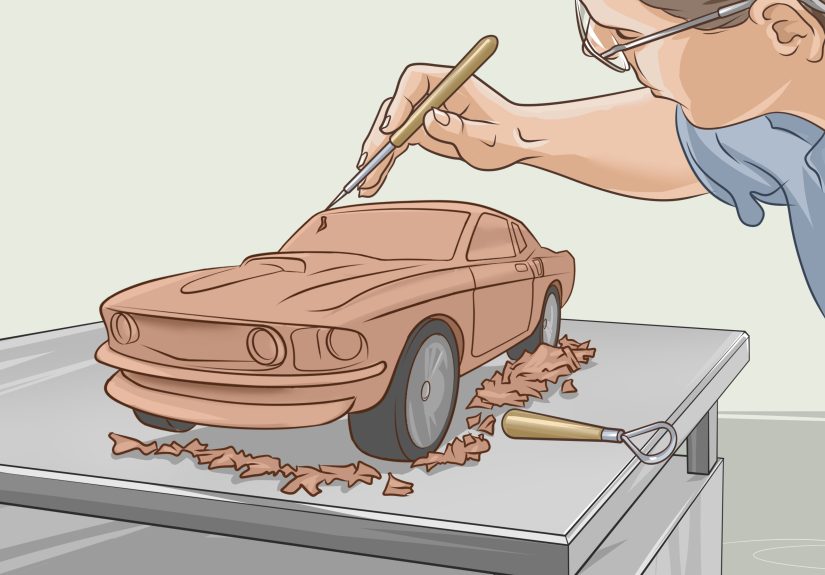
- Make it physical: a full-size model (often clay or milled foam) to judge surfaces in real life.
- Iterate with engineering: adjust for packaging, cooling, sensors, crash structure, and production rules.
Why physical modeling still shows up in a digital world
Designers have used clay modeling for nearly a century because your eyes (and hands) catch what screens can miss:
subtle reflections, surface tension, and whether a curve looks athletic or just… lumpy. Clay also makes it easier
for leaders and cross-functional teams to give clear feedbackbecause it’s hard to argue with a thing you can
literally point at.
Historically, clay became a breakthrough because it let teams move from drawings to 3D quickly, long before modern
CAD. That “touch it, walk around it, light it from every angle” advantage is still realespecially for exterior
surfacing, where tiny changes can make a car look premium or like it’s wearing bargain sunglasses.
Best use cases for outside-in
- Halo cars: sports coupes, flagship sedans, “look what we can do” concept vehicles.
- Brand refresh moments: when a company needs a new face (literally).
- Emotional categories: off-roaders, performance trims, lifestyle vehicles.
Example: Designing a modern muscle coupe
If you’re designing a muscle coupe, outside-in makes sense because the car’s identity is the product: long hood,
planted stance, strong shoulder, and a recognizable front graphic. You’ll likely sketch aggressively, then lock
proportions early. Next comes the “make it real” phaseensuring the hood can actually cover the powertrain,
that airflow can cool what needs cooling, and that crash structures fit behind that mean-looking grille.
Tradeoffs
Outside-in can create stunning results, but it’s also the approach most likely to run into “packaging reality.”
The more dramatic the shape, the harder it may be to meet visibility targets, cargo needs, pedestrian protection,
or sensor requirements. If you love drama, congratulations: your engineering team also loves drama now.
Way #2: Inside-Out Design (Package-First, Human-First)
Inside-out vehicle design begins with the people and the “hard points”:
seating position, sightlines, entry/exit, cargo volume, HVAC, airbags, battery or fuel system layout, and the
overall vehicle architecture. In short: you design the experience first, then wrap a body around it.
The inside-out workflow in plain English
- Define the mission: family hauler, urban EV, work truck, rideshare pod, etc.
- Set packaging targets: headroom, legroom, hip points, cargo, towing, ground clearance.
- Lock key architectures: wheelbase, track width, floor height, battery placement (if EV), crash zones.
- Build the cabin UX: controls, display reach, storage, materials, comfort, and noise targets.
- Wrap the exterior: shape it for aero, brand, and manufacturabilitywithout breaking the package.
Why this approach dominates modern mainstream cars
Crossovers, compact SUVs, and EVs often live or die by usability. Customers may forgive a “safe” exterior if the
car is comfortable, roomy, quiet, and easy to see out of. Inside-out design is also extremely compatible with
platform strategies (shared architectures) because you can reuse structural layouts and tune the
cabin/exterior for different brands or trims.
Example: Building a compact family crossover
Start with real family needs: easy car-seat access, useful cargo space, sensible storage, and visibility that
doesn’t feel like you’re driving a mailbox. You lock the seating geometry, door openings, and rear cargo height
early. Then you sculpt the exterior around those requirements: roofline that preserves headroom, a rear shape that
doesn’t kill cargo, and body sides that aren’t so thick they turn the cabin into a cave.
Tradeoffs
Inside-out can produce cars that are genuinely lovable to live with, but it may also yield designs that feel
conservative. The biggest risk is creating “competent beige”a car that does everything right but sparks zero
emotion. The solution is to layer brand cues and purposeful details on top of a strong package, not to fight the
package with random styling gimmicks.
Way #3: Constraint-First Design (Engineering, Compliance, and Performance Lead)
Constraint-first car design starts with the toughest requirementssafety, aerodynamics, efficiency,
durability, cost, and manufacturing feasibilityand uses those constraints as the creative engine. Think of it as
designing a car the way a pilot flies an airplane: with checklists, systems thinking, and a healthy respect for
consequences.
What “constraints” really include
- Safety performance: crash structures, occupant protection strategies, and modern crash scenarios.
- Crash avoidance tech: sensors, visibility, lighting, braking performance, driver assistance.
- Efficiency targets: weight, drag, rolling resistance, powertrain strategy.
- Regulatory compliance: U.S. safety standards and emissions/fuel economy requirements.
- Manufacturing constraints: stamping limits, joining methods, tolerances, assembly sequence.
Digital tools make this approach faster than ever
Modern teams lean heavily on CAD, simulation, and fast prototyping:
aerodynamic simulation (including “virtual wind tunnel” style workflows), structural CAE, packaging validation,
and iterative prototype parts (including 3D printing for quick evaluation). Virtual and augmented reality can
speed up design reviews by letting teams evaluate full-scale geometry without waiting on physical builds.
Safety and driver assistance can shape the exterior
Safety isn’t just airbags and beamsit’s also how the car avoids crashes in the first place. Systems like
automatic emergency braking depend on sensor placement, clean forward visibility, and robust calibration. That
affects grille design, bumper surfaces, windshield geometry, and where you hide (or proudly show off) cameras and
radar. Translation: your “minimalist front fascia” still needs to see pedestrians at night. Design accordingly.
Example: Designing an aero-efficient EV commuter
An EV commuter lives on efficiency. So you start with drag reduction targets, lightweighting strategy, cooling
management, and battery packaging. The exterior becomes a disciplined exercise: smooth surfaces, smart airflow,
tight shutlines, and minimal turbulence. Even the wheels matterbecause spinning air is basically a tiny tornado
factory.
The fun part is that constraint-first doesn’t have to look boring. When you design with purpose, you can create a
clear, confident aesthetic: “This shape exists because it works.” That’s a vibe toojust a quieter one.
Tradeoffs
The constraint-first method can produce cars that hit targets reliably, but it can also become overly cautious if
teams treat constraints as walls instead of puzzle pieces. The best outcomes come from using requirements to guide
creativitynot to suffocate it.
So… Which Way Should You Use?
In real automotive design, teams blend all three approaches. Still, it helps to choose a “primary” method so the
project doesn’t wobble.
A quick decision guide
- Choose Outside-In if brand emotion and a standout silhouette are the main product.
- Choose Inside-Out if comfort, space, usability, and architecture define success.
- Choose Constraint-First if hitting safety/efficiency/cost targets is the non-negotiable priority.
The secret fourth option: Start wrong, then fix it (not recommended)
If you don’t pick a method, your project will pick one for youusually at the worst possible time. That’s how you
end up redesigning a front end three weeks before a major review because someone just noticed the sensors have
nowhere to live. Ask me how I know. (Actually don’t. It’s painful.)
Conclusion: A Great Car Design Is a Negotiation You Win with Skill
Designing a car isn’t a single straight line from sketch to showroom. It’s a loop: imagine, test, argue politely,
adjust, test again, and repeat until the vehicle becomes both beautiful and buildable.
If you want drama and identity, go outside-in. If you want daily livability, go
inside-out. If you want a car that hits targets with ruthless efficiency, go
constraint-first. And if you want the best results, borrow from all threebecause the most
successful automotive design process is the one that respects humans, physics, and the factory at the same time.
Experience Section: Real-World Lessons That Make “Design a Car” Less Scary (and More Fun)
Here are experience-based lessons you’ll hear again and again from people who build vehicles for a livingwhether
they’re sketching in a studio, wrangling CAD surfaces, or trying to keep a prototype from rattling itself into
modern art.
1) Proportions are 80% of “good design,” and the other 20% is pretending it’s not
You can add clever lights, dramatic vents, and a grille pattern inspired by sacred geometry, but if the wheelbase
looks short or the cabin looks perched, the car will feel awkward. Early on, invest time in the “big blocks”:
wheel size, overhangs, dash-to-axle, roof height, and stance. This is why teams obsess over side profiles and
“tape drawings”it’s the fastest way to see if the car will look right before you fall in love with details.
2) “Just move it 10 millimeters” is how you accidentally redesign half the car
In automotive design, tiny changes have ripple effects. A headlamp shifts slightly, which nudges the hood shutline,
which forces a fender change, which breaks a bracket, which affects assembly, which changes cost, which triggers a
meeting that could have been an email. The lesson: make big decisions early, then protect them with discipline.
Save the micro-adjustments for when the architecture is stable.
3) Aerodynamics is the friend who tells you the truth (even when you don’t want it)
People often imagine aero work as “add a spoiler, call it science.” In reality, airflow hates drama.
It loves smooth surfaces, clean separation, and fewer random holes. The experience-based takeaway is simple:
design with airflow in mind from day one. If you wait until late-stage testing to “fix aero,” you’ll end up
bolting on awkward add-onslike putting duct tape on a tuxedo.
4) The interior is where your car either becomes a favorite… or a regrettable lease
You don’t live on the hood. You live in the cabin. Small usability decisionsstorage that fits real bottles,
controls you can reach without yoga, screens that don’t blind you at night, seats that support actual spinesare
what make owners loyal. Designers who spend time sitting in the buck (or a full-scale VR cabin) tend to catch
problems earlier: sightlines, mirror placement, knee clearance, and the dreaded “my elbow hits the armrest but the
steering wheel is still two inches away” phenomenon.
5) Collaboration isn’t optional; it’s the job
The most practical “experience” in car design is learning how to work with people who don’t speak your language:
engineers, manufacturing, quality, suppliers, safety teams, marketing, legal, and service. When design wins,
it’s rarely because design shouted the loudest. It’s because design framed tradeoffs clearly, proposed solutions,
and made it easy for other teams to say “yes” without setting the factory on fire.
6) Build prototypes earlyeven ugly ones
The fastest way to learn is to make something physical (or at least full-scale in VR) sooner than feels
comfortable. Early prototypes expose reality: door openings, visibility, surface quality, and the difference
between “looks cool” and “looks cheap.” The point isn’t perfection. The point is feedback before the stakes get
expensive.
If you keep these lessons close, the phrase “automotive design process” stops feeling mysterious and starts
feeling manageable. You’re not chasing magicyou’re stacking smart decisions, one iteration at a time.