Table of Contents >> Show >> Hide
- Why Professional Speaking Matters
- 1. Know Your Point Before You Start Talking
- 2. Use Clear, Concise Language Instead of Verbal Fog
- 3. Pay Attention to Tone, Pace, and Body Language
- 4. Listen Actively Before You Respond
- Common Habits That Make People Sound Less Professional
- Experience: What Professional Speaking Looks Like in Real Life
- Conclusion
Professional speech is not about sounding like a robot in a blazer. It is not about replacing every normal sentence with “per my previous email,” then wondering why nobody invites you to lunch. Speaking professionally is really about making people trust your message. When you talk with clarity, confidence, and respect, people stop decoding your style and start listening to your ideas.
That matters more than most people realize. In meetings, interviews, presentations, performance reviews, and even quick hallway conversations, the way you speak shapes how others see your judgment, credibility, and leadership potential. You can have a smart idea, a strong résumé, and ten browser tabs full of research, but if your delivery sounds rushed, vague, defensive, or chaotic, your message can lose power on impact.
The good news is that professional speaking is not some mysterious gift bestowed on a lucky few at birth. It is a skill. That means it can be learned, practiced, sharpened, and improved without becoming stiff or fake. The goal is not to sound like a corporate audiobook. The goal is to sound clear, thoughtful, and composed.
Here are four practical ways to speak professionally, with real-world examples, common mistakes to avoid, and habits that make a noticeable difference at work.
Why Professional Speaking Matters
People often judge communication faster than content. Before colleagues fully evaluate your proposal, they react to your tone. Before a hiring manager assesses your qualifications, they notice whether your answer is organized. Before a client accepts your recommendation, they decide whether you sound steady and prepared.
Professional speaking helps you do three big things well: communicate your point clearly, build trust quickly, and reduce unnecessary friction. It also makes hard conversations easier. A calm, respectful speaker can deliver feedback, disagree in a meeting, or answer tough questions without turning the room into a low-budget disaster movie.
In other words, professional speaking is not just a “nice soft skill.” It is a career skill. And like most career skills, it rewards consistency more than perfection.
1. Know Your Point Before You Start Talking
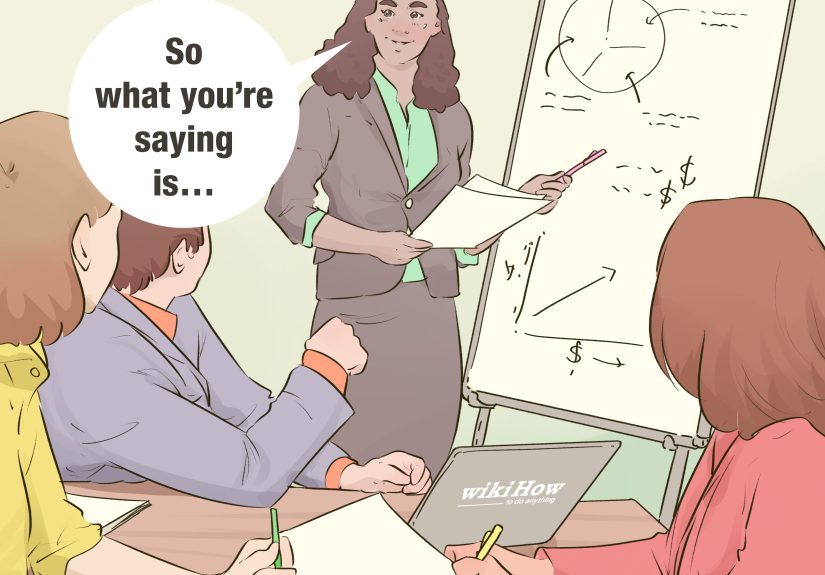
The first way to speak professionally is to know exactly what you are trying to say. This sounds obvious, yet a surprising number of conversations begin with verbal wandering. You have probably heard it before: “So, basically, kind of, what I’m trying to say is…” Five minutes later, the room is older, the coffee is colder, and the point is still missing.
Professional speakers do not begin with noise. They begin with purpose. Before speaking, ask yourself three simple questions: What is my main point? Who is my audience? What do I want them to understand, decide, or do next?
That small pause changes everything. It helps you organize your thoughts before they come out in a tangled pile. It also helps you tailor your message. The way you explain a project update to your manager should not be identical to the way you explain it to a customer, a new coworker, or a technical team. Speaking professionally means adapting your message without losing your meaning.
What this looks like in practice
Imagine your boss asks, “Where are we on the client proposal?” An unprepared answer might sound like this: “We’ve been working on a few things, and there were some edits from last week, and marketing had a couple notes, and I think we’re mostly there, but I need to check one section.”
A professional answer sounds more like this: “We are on track. The draft is complete, marketing approved the messaging, and I’m finalizing the pricing section this afternoon. I can send the finished version by 4 p.m.”
Same topic. Different level of confidence. One sounds scattered. The other sounds in command.
How to build this habit
Before important conversations, write down your main point in one sentence. Not three paragraphs. One sentence. If you cannot summarize your point clearly on paper, it probably will not come out clearly in speech either. This trick works for meetings, interviews, presentations, and even awkward conversations that begin with, “Do you have a minute?”
Professional speaking starts before the first word. It starts with mental organization.
2. Use Clear, Concise Language Instead of Verbal Fog
The second way to speak professionally is to say what you mean in plain, direct language. Professional does not mean complicated. In fact, people often sound less professional when they try too hard to sound impressive.
This usually shows up in three ways: too much jargon, too many filler words, and too many unnecessary words overall. Jargon can make sense inside the right context, but overusing it can make you sound like you swallowed a business memo. Filler words like “um,” “like,” “you know,” and “basically” are normal in casual conversation, but too many of them weaken your delivery. And unnecessary words bury your point under a pile of linguistic packaging peanuts.
Clear speakers choose simple wording, short sentences, and a logical structure. They do not ramble to prove they are smart. They make it easy for other people to follow them. That is what actually sounds smart.
Swap vague language for stronger language
Instead of saying, “I just kind of wanted to touch base and maybe discuss the possibility of moving forward with some adjustments,” say, “I’d like to discuss two changes so we can move forward today.”
Instead of saying, “There are a lot of moving parts,” say, “We have three issues: timing, budget, and staffing.”
Instead of saying, “I think maybe this could potentially help,” say, “This should reduce delays by simplifying approvals.”
Notice the difference. Clear language sounds more capable because it gives people something solid to work with.
How to sound concise without sounding cold
Being concise does not mean being abrupt. You can still sound warm, respectful, and human. The sweet spot is friendly clarity. For example: “Thanks for raising that. My recommendation is to delay launch by one week so we can fix the reporting issue.” That sentence is polite, direct, and useful. No fog. No fluff. No dramatic monologue.
If you tend to ramble, try this rule: state the point, support it briefly, then stop. Silence is not your enemy. In professional settings, a short pause often sounds more confident than a nervous stream of extra words.
3. Pay Attention to Tone, Pace, and Body Language
The third way to speak professionally is to remember that people hear more than words. Your tone, volume, pace, posture, eye contact, and facial expression all affect how your message lands. You can say the perfect sentence, but if you mumble it while staring at the floor like it owes you money, the effect is not quite the same.
Professional speakers aim for alignment. Their words, tone, and body language support each other. They sound calm when discussing problems. They sound engaged when listening. They sound confident without sounding aggressive. They do not rush through every sentence as if they are trying to outrun their own anxiety.
Tone matters more than most people think
A flat, irritated, or defensive tone can make even reasonable words sound hostile. On the other hand, a steady and respectful tone can make disagreement sound constructive. For example, compare these two responses:
“That won’t work.”
“I see the idea, but I think we’ll run into a timing issue. Here’s what I’d suggest instead.”
Both responses disagree. Only one keeps the conversation productive.
Pace and pauses are power tools
Many people speak too quickly when they are nervous or eager to prove themselves. Unfortunately, speed often makes you harder to understand. Professional speaking usually sounds measured. Not slow enough to put the room to sleep, but steady enough that people can absorb what you are saying.
Pauses help too. A brief pause before a key point adds emphasis. A pause after a question shows composure. A pause instead of “um” is a trade worth making every time.
Body language should support the message
Open posture, natural eye contact, and deliberate gestures make you look more engaged and credible. Fidgeting, crossed arms, constant looking down, or dramatic chair swiveling can distract from your message. You do not need stage-performer energy. You just need to look present, attentive, and grounded.
Here is a good test: record yourself answering a common work question for one minute. Then watch it with the sound off. Do you still look confident and professional? If the silent version looks nervous, annoyed, or disconnected, your body language may be editing your message without permission.
4. Listen Actively Before You Respond
The fourth way to speak professionally is slightly sneaky because it begins with not speaking. Great professional communicators are strong listeners. They do not merely wait for their turn to talk. They pay attention, clarify meaning, and respond to what was actually said instead of the version they assumed they heard.
Active listening improves professional speech because better input creates better output. When you listen carefully, your response becomes more relevant, more respectful, and more precise. You avoid interrupting. You ask smarter questions. You notice tone and context. You also make other people feel heard, which tends to improve the entire conversation.
What active listening sounds like
It sounds like this: “So your main concern is the deadline, not the concept itself. Is that right?”
Or this: “Let me make sure I understand. You want a simpler version for the client and a detailed version for the internal team.”
Or this: “That makes sense. Before I answer, can I ask one clarifying question?”
Those phrases do not just buy time. They improve accuracy. They also show maturity, especially in tense situations. Interrupting may feel powerful in the moment, but understanding first is usually what sounds truly professional.
Why listening changes your reputation
People remember how you make conversations feel. If you respond thoughtfully, summarize well, and avoid jumping to conclusions, others start to see you as steady, respectful, and easy to work with. That reputation opens doors. It also saves everyone from the chaos of preventable misunderstandings, which is one of the least glamorous but most valuable workplace achievements.
Common Habits That Make People Sound Less Professional
Sometimes the fastest way to improve is to stop doing the things that quietly sabotage your credibility. A few common habits make capable people sound less polished than they really are.
One is apologizing too much. Saying “Sorry” for every question, suggestion, or comment can make you sound hesitant when no apology is needed. Another is upspeaking, where every statement sounds like a question. Another is using slang or sarcasm in the wrong setting. Humor can absolutely belong in professional communication, but it should not confuse the message or make someone else the punchline.
Another major issue is overexplaining. When people feel nervous, they often keep talking long after the point is clear. Ironically, that extra talking can make them sound less certain, not more. Professional speakers trust a clear statement to do its job.
And finally, there is emotional leakage. If frustration, panic, or defensiveness takes over your tone, your words may stop mattering. This does not mean you have to be emotionless. It means you should learn to pause, regulate, and respond with intention.
Experience: What Professional Speaking Looks Like in Real Life
If you want a realistic picture of professional speaking, do not look only at conference stages or polished keynote videos. Look at ordinary moments at work. That is where the skill really earns its paycheck.
Take the weekly team meeting. One person gives updates by talking in circles, adding every minor detail, and forgetting the main point halfway through. Another person says, “We completed phase one, hit one delay in testing, and need design approval by Thursday to stay on schedule.” Guess which person sounds more prepared. It is not always the most charismatic person. It is often the clearest one.
Consider job interviews too. Many candidates know their experience well, but they struggle to explain it with structure. They start strong, drift into side stories, then end somewhere near the original question but not quite on the same map. Candidates who speak professionally usually pause, organize, and answer directly. They sound confident because they respect the listener’s time.
The same pattern shows up in difficult conversations. Imagine a manager addressing a missed deadline. An unprofessional version sounds accusatory or emotional: “This keeps happening, and it’s really frustrating.” A more professional version sounds calmer and more useful: “The deadline was missed, and that affected the rest of the timeline. I’d like to understand what happened and agree on a plan to prevent it next time.” That shift in language changes the entire temperature of the conversation.
Client communication offers another great example. Professionals who speak well do not hide behind vague phrases. They do not say, “We’re looking into it” when they really mean, “We found the issue, we’re fixing it today, and I’ll update you by 3 p.m.” Specific language builds trust. It tells people that you are not just talking. You are thinking.
Even small moments matter. Answering a question in a hallway. Introducing yourself on a video call. Speaking up when you disagree. Asking for clarification without sounding defensive. These moments do not usually feel dramatic, but they shape reputation over time. People start to notice who communicates with calm, clarity, and respect. They also notice who turns every simple conversation into an escape room.
One of the most useful lessons from real workplace experience is that professional speaking is rarely about sounding fancy. It is about sounding dependable. People trust speakers who are clear, measured, and attentive. They trust people who can explain a problem without panicking, ask a question without rambling, and disagree without turning the room into a reality show reunion special.
That is why practice matters. The more often you slow down, organize your point, trim extra words, and listen carefully, the more natural professional speaking becomes. Eventually, it stops feeling like a performance and starts feeling like part of how you work. And that is the sweet spot: not fake polish, but reliable presence.
Conclusion
Speaking professionally is not about pretending to be someone else. It is about communicating like someone people can trust. When you know your point, use clear language, manage your tone and body language, and listen actively, your message becomes stronger and your presence becomes more credible.
You do not need a perfect voice, a giant vocabulary, or motivational-speaker energy. You need intention, clarity, and practice. Start with one conversation today. Slow down. Say less, but say it better. Listen fully. And remember: sounding professional is not about being stiff. It is about being clear, respectful, and effective. That combination never goes out of style.