Table of Contents >> Show >> Hide
- 1) Start With Function: Design Around Real Life (Not Fantasy Life)
- 2) Pick a Vibe: One Sentence That Guides Every Decision
- 3) Color That Works With Steam, Shadows, and Morning Faces
- 4) Tile Ideas: Make It BeautifulThen Make It Easy to Clean
- 5) Lighting: The Fastest Upgrade With the Biggest Payoff
- 6) Storage That Doesn’t Ruin the Room
- 7) Mirrors and Glass: The Classic “Make It Feel Bigger” Tricks That Actually Work
- 8) Fixtures and Hardware: Treat Them Like the Room’s Jewelry
- 9) Textiles, Art, and Accessories: The “Decor” Part of Bathroom Decor
- 10) Small Bathroom Ideas That Feel Like a Major Upgrade
- 11) Budget-Friendly Bathroom Upgrades That Don’t Look “Budget”
- 12) The “Don’t Do This” List (Because We All Need One)
- Conclusion: Your Bathroom, But Better
- Real-World Experience Notes: What People Learn After Living With a “Pretty Bathroom” (500+ Words)
Bathrooms are tiny rooms with big opinions. They’re where you wake up, wind down, andlet’s be honesthave your most profound thoughts while staring at a shampoo label.
The good news: you don’t need a full demolition (or a second mortgage) to make your bathroom look intentional, feel comfortable, and work smarter.
Below are practical, style-forward bathroom decorating and design ideaspulled from what designers, remodelers, and organizing pros consistently recommendso you can create a space that feels
like a boutique hotel… minus the awkward tiny soap.
1) Start With Function: Design Around Real Life (Not Fantasy Life)
Before you pick a tile that looks like it belongs in a Roman bathhouse, take 10 minutes to observe how the room is actually used. Who’s in here at the same time?
Is this a quick “teeth + hair + out the door” bathroom, or a long “I’m basically a sea otter in a tub” bathroom?
Map the zones
- Vanity zone: Grooming, makeup, shaving, skincare, hair tools.
- Wet zone: Shower/tub, towels, bath products, bathmat traffic.
- Utility zone: Toilet area, extra paper, cleaning supplies, trash.
This “zone thinking” helps you decide what needs prime real estate (hello, daily skincare) versus what can live higher, lower, or behind a door.
When a bathroom is designed around habits, it looks cleaner because it stays cleaner.
2) Pick a Vibe: One Sentence That Guides Every Decision
A bathroom looks expensive when it looks coherent. The easiest way to get coherence is to choose a vibe in one sentence and let it act like a bouncer:
if something doesn’t match, it doesn’t get in.
Examples of “vibe sentences”
- Warm spa: creamy whites, soft wood, brushed metal, plush textiles.
- Modern minimal: clean lines, fewer finishes, hidden storage, bold shapes.
- Vintage charm: classic tile patterns, framed mirrors, traditional lighting.
- Coastal calm: airy colors, natural textures, relaxed art and accessories.
- Moody boutique: deeper paint, dramatic lighting, high-contrast hardware.
You don’t need to buy a whole new life. You just need a clear direction. When the direction is clear, the room feels “designed,” even if half your upgrades are affordable swaps.
3) Color That Works With Steam, Shadows, and Morning Faces
Bathroom color is tricky because lighting and moisture are always in the room giving commentary. A paint color that looks “soft greige” in the store
can look like “sad oatmeal” under a single overhead bulb. So pick color strategically.
Use color to solve problems
- Windowless bathroom? Consider warmer whites or gentle warm neutrals so the space doesn’t feel icy.
- Tiny powder room? This is your permission slip to go boldwallpaper, color, patternbecause it’s small and can handle drama.
- Busy family bath? Mid-tones (not too light, not too dark) hide wear and water spots better than extremes.
If you’re nervous about color, “color-drenching” just one element (like the vanity wall or a niche) gives you impact without turning the entire room into a commitment.
And remember: paint is the cheapest way to look like you have your life together.
4) Tile Ideas: Make It BeautifulThen Make It Easy to Clean
Tile is where bathrooms tend to either (a) look custom or (b) look like a rental from 2009. The secret isn’t always “more tile.”
It’s smarter tile choicesespecially in wet areas.
Design moves that look high-end
- Go larger: Large-format tile can feel calmer and more modernand often means fewer grout lines visually.
- Use one tile in more than one place: Repeating a tile on the shower wall and floor (or wall and backsplash) creates continuity.
- Create a feature moment: A vertical “stacked” layout, a niche with contrasting tile, or a single accent wall makes the room memorable.
- Choose finishes with intention: Matte can feel modern; glossy can bounce light; textured tile can add grip where you need it.
Don’t forget safety
Bathrooms are where gravity auditions as a villain. If you’re tiling floors, prioritize slip resistanceespecially in kids’ baths, guest baths, and anywhere that sees wet feet.
You can still get the look you want; just choose a tile rated for the job.
5) Lighting: The Fastest Upgrade With the Biggest Payoff
If your bathroom lighting is one overhead fixture doing all the work, it’s basically a single employee running an entire storethings will be chaotic.
Great bathroom lighting is layered: ambient + task + accent.
Layer your lighting like a pro
- Ambient: A ceiling fixture (or recessed lights) for overall brightness.
- Task: Vanity lighting that reduces shadowsoften sconces at the sides of the mirror or a well-placed bar light.
- Accent: A small statement pendant, niche lighting, or subtle under-vanity glow for mood.
Make your mirror area flattering (and useful)
Place task lighting so it hits your face evenly. The goal is fewer harsh shadows under eyes and chinbecause none of us asked to look like a campfire ghost at 7 a.m.
If you can, choose fixtures designed for damp locations and consider dimmers so you can go bright for cleanup and softer for nighttime routines.
6) Storage That Doesn’t Ruin the Room
Bathrooms get cluttered fast because they store dozens of small things: hair ties, skincare, razors, meds, cotton pads, makeup, extra soap, extra towels, and five half-used bottles
of “this totally worked for my friend’s cousin.”
Smart storage ideas for any bathroom size
- Medicine cabinet upgrades: Use small bins inside so tiny items don’t avalanche when you open the door.
- Over-the-toilet space: Add shelving or a shallow cabinet to capture vertical storage without stealing floor space.
- Behind-the-door organization: Hooks, slim racks, or hanging organizers are lifesavers in tight layouts.
- Recessed niches: In showers, niches reduce the need for caddies and instantly look more built-in.
- Closed storage beats open shelving: Open shelves look cute in photos but turn into “dust + chaos displays” in real lifeespecially in family baths.
The goal is not to become a minimalist monk. It’s to create a place for everything so the counter can breathe. When counters are clear, the bathroom feels bigger, calmer, and easier to clean.
7) Mirrors and Glass: The Classic “Make It Feel Bigger” Tricks That Actually Work
Want your bathroom to feel larger without moving walls? Use light and reflection. A larger mirror (or a mirror that spans more width)
amplifies both natural and artificial light and can make a tight space feel less boxed-in.
Mirror upgrades that look custom
- Swap the builder mirror: Replace a plain sheet mirror with a framed mirror that matches your vibe sentence.
- Go wider than the vanity: A wider mirror visually stretches the room and boosts brightness.
- Consider a mirrored cabinet: Storage + reflection is a two-for-one win.
For showers, clear glass keeps sightlines open and makes the bathroom feel more spacious than a heavy curtain or frosted barrierespecially in small baths.
8) Fixtures and Hardware: Treat Them Like the Room’s Jewelry
Faucets, handles, towel bars, hooks, and shower trim are small, but they quietly signal “this was designed.”
The fastest way to look put-together is to coordinate finishes, not necessarily match every single thing perfectly.
Easy rules for polished results
- Limit your finishes: One main finish plus one supporting finish usually looks intentional.
- Repeat a finish at least 2–3 times: For example: faucet + mirror frame + hooks.
- Prioritize what you touch: Upgrading the faucet and cabinet hardware often changes the vibe instantly.
If you’re keeping existing fixtures, you can still modernize the feel by swapping the mirror, lighting, and hardware. It’s like changing shoes and suddenly your whole outfit makes sense.
9) Textiles, Art, and Accessories: The “Decor” Part of Bathroom Decor
Once the functional stuff is right, you can make it feel finished with a few thoughtful additions.
Keep accessories simple and purposefulbathrooms don’t have room for clutter cosplay.
High-impact, low-effort decorating ideas
- Upgrade towels: Choose a tight palette (2–3 colors) for a hotel-like look.
- Add a bathmat with texture: It softens the room visually and literally.
- Bring in art: One framed piece (or a small gallery of water-resistant frames) adds personality fast.
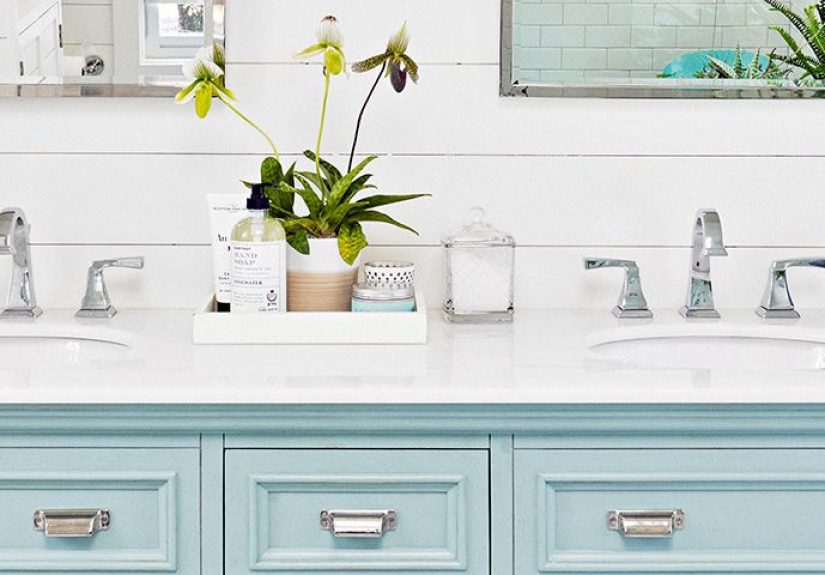
- Use a tray: Corral daily items (soap, hand lotion, fragrance) so the counter looks curated, not chaotic.
- Greeneryreal or convincing: A small plant or stem adds life. If your bathroom has no window, choose something that tolerates low lightor go faux.
Bonus: A scent moment (diffuser, candle, or subtle room spray) is the invisible accessory that makes the bathroom feel like a spaeven if you’re still storing extra toilet paper in there.
10) Small Bathroom Ideas That Feel Like a Major Upgrade
Small bathrooms don’t need “small style.” In fact, tiny spaces often look better when you commit to a bold choicebecause there’s less area to fight you.
Try these space-smart upgrades
- Floating vanity: Seeing more floor creates breathing room and a modern look.
- Wall hooks instead of a towel bar: Hooks hold more, especially in shared bathrooms.
- Corner solutions: Corner shelves or a corner caddy uses dead space efficiently.
- One “statement” moment: A bold wallpaper, dramatic paint, or patterned tile creates focus and distracts from size.
- Keep the palette tight: Fewer competing colors makes the room feel calmer and larger.
If your bathroom is extremely tight, consider a slimmer cabinet, a narrower sink, or storage pieces that are shallow but tall. You’re not looking for more furnitureyou’re looking for smarter geometry.
11) Budget-Friendly Bathroom Upgrades That Don’t Look “Budget”
You can refresh a bathroom without a full remodel by focusing on the “face” of the room: lighting, paint, hardware, and styling.
These upgrades tend to deliver the biggest visual change per dollar.
Quick wins (often weekend-friendly)
- Swap the light fixture: Choose a style that matches your vibe sentence and makes the mirror area brighter.
- Replace the mirror: A framed mirror adds instant character.
- Update cabinet pulls: Hardware is small, but it reads like a design decision.
- Paint the vanity: A fresh color can turn builder-basic into custom-feeling.
- Refresh caulk and grout lines: Not glamorous, but wildly effective. Clean lines make everything look newer.
If you’re changing anything electrical or plumbing-related, follow local codes and use a licensed professional where appropriate. A stylish bathroom is great; a safe bathroom is non-negotiable.
12) The “Don’t Do This” List (Because We All Need One)
Most bathroom regrets come down to two things: maintenance and lighting. Here are common missteps that look good in photos but can be annoying day-to-day.
- Only overhead lighting: It creates shadows where you don’t want them and makes the room feel flat.
- Too much open shelving: It demands constant styling and is unforgiving in real life.
- Ignoring ventilation: Moisture builds up fast; good ventilation helps keep paint, finishes, and the room itself in better shape.
- All trend, no timeless: Trends are funjust balance them with classic shapes and practical materials.
- Not enough hooks: Every bathroom needs more hooks than you think. Every. Single. One.
Conclusion: Your Bathroom, But Better
The best bathroom decorating and design ideas aren’t about copying a picture perfectlythey’re about creating a space that works for your routines and looks like it belongs in your home.
Start with function, choose a clear vibe, invest in lighting and storage, then add personality with color, tile, and accessories.
Do a few changes well, and your bathroom stops feeling like a utilitarian pit stop and starts feeling like a place you actually enjoy being. Which is goodbecause you’re in there every day.
Real-World Experience Notes: What People Learn After Living With a “Pretty Bathroom” (500+ Words)
If you’re planning bathroom decorating and design ideas from scratch, it helps to think beyond reveal-day photos. A bathroom is one of the most “used” rooms in a home,
and the things that feel small in a showroom can feel huge when you’re living with them daily.
One of the most common “I wish I knew” moments is about lighting. People often choose a fixture because it’s gorgeous, then realize it casts weird shadows at the mirror.
The fix is usually simple: add side lighting (sconces) or choose a vanity light that spreads illumination evenly. When the mirror area is lit well, mornings feel smoother,
and the room looks better even when you haven’t finished styling everything else.
Another lesson is that storage wins arguments you didn’t know you were having. When daily items don’t have a home, they pile up on the counter.
Then the counter looks messy, and the room feels smaller and more stressfuleven if it’s technically “nice.” What people end up loving long-term is hidden storage:
a medicine cabinet that can actually hold skincare, drawers that don’t waste space on fake fronts, and shower niches that keep bottles off the floor.
The bathroom stays calmer because it’s easier to reset in 60 seconds.
There’s also the “open shelving reality check.” Open shelves look airy, but in a family bathroom they can become a rotating exhibit of half-used products and towels
that never fold the same way twice. Many homeowners end up using a mix: one small open shelf for a pretty item (candle, plant, or framed art) and closed storage for everything else.
That way, the bathroom still feels styled without demanding constant maintenance.
Finishes and water spots are another big one. Some finishes show fingerprints and spots more easily than othersespecially in homes with hard water.
The takeaway isn’t “avoid the finish you love,” but “plan for it.” If you want a bold look, pair it with easy-to-wipe surfaces,
keep a small microfiber cloth handy, and don’t put delicate finishes in the highest-splash zones unless you’re okay with regular upkeep.
People also learn quickly that comfort details matter. The bathroom that gets the most compliments isn’t always the one with the most expensive tile.
It’s the one that feels good to use: hooks right where you need them, a towel within easy reach of the shower, a mat that doesn’t slide, a mirror that doesn’t fog forever,
and ventilation that actually clears steam. Those small decisions make the room feel thought-out and “quietly luxurious.”
Finally, there’s the truth about bold choices. In small bathroomsespecially powder roomspeople are often happiest when they take a bigger swing:
a dramatic wallpaper, a deep paint color, a playful tile pattern, or a statement light. Because you’re not in there for hours, bold design feels exciting, not exhausting.
And when the rest of the home is more neutral, that one small room becomes a fun surprise.
The practical lesson across all of these experiences is simple: the best bathroom design isn’t only about what looks good.
It’s about what stays goodunder steam, splashes, and real life. If you design for daily use first, the style you add on top will last longer and feel better every day.