Table of Contents >> Show >> Hide
- What Is a Lantern Swag (and Why Is It So Good)?
- Materials and Tools
- Design Before You Glue: 3 Decisions That Make It Look Expensive
- Step-by-Step: How to Make a DIY Fall Lantern Swag
- Step 1: Prep Your Workspace and “Audition” Your Stems
- Step 2: Build a Lightweight Base
- Step 3: Make a Bow That Won’t Quit
- Step 4: Attach the Bow to the Swag Base
- Step 5: Add Focal Florals First
- Step 6: Layer Texture (Berries, Leaves, Mini Pumpkins)
- Step 7: Attach the Swag to the Lantern Securely
- Step 8: Hide Mechanics and Do the Final “Fluff Pass”
- Fresh vs. Faux: Which Should You Use for a Lantern Swag?
- Three “Copy-Paste” Fall Lantern Swag Recipes
- Outdoor Survival Guide (Because Weather Has No Respect)
- Troubleshooting: Quick Fixes for Common Swag Problems
- Where to Display Your Fall Lantern Swag
- Conclusion
- Extra: My DIY Fall Lantern Swag Experiences (aka Lessons From the Glue Gun)
- SEO Tags
Fall decorating is basically your home’s way of saying, “I own at least one cozy blanket and I’m not afraid to use it.”
And if you want maximum autumn vibes with minimum effort (and minimum storage drama), a DIY fall lantern swag
is the underrated champion. It’s small, swap-able, porch-friendly, and it makes even a basic lantern look like it has a Pinterest agent.
In this guide, you’ll learn how to design and build a lantern swag that looks “custom boutique” instead of “I panicked in the craft aisle.”
We’ll cover supplies, design rules (the fun kind), step-by-step assembly, and a few copy-and-paste style recipes you can follow exactly.
Then I’ll share a longer, real-life-style “experience” section at the endaka the part where we learn why hot glue and overconfidence are a risky combo.
What Is a Lantern Swag (and Why Is It So Good)?
A lantern swag is a small, decorative bundle of greenery, florals, and ribbon that attaches to a lanterntypically draping off the top, handle, or side.
Think of it as a “mini garland with intentions.” You get the color and texture of a wreath, but you’re not committing to a full-circle relationship.
Why it works so well for fall:
- Fast impact: One swag can transform an entryway, mantel, or porch in under an hour.
- Easy to swap: Keep the lantern; change the swag for Halloween, Thanksgiving, winter, and beyond.
- Budget-friendly: A small swag uses fewer stems than a full wreathyour wallet gets to keep breathing.
- Photogenic: Lanterns already have structure. A swag adds “styled” without clutter.
Materials and Tools
Basic Supply List
- Lantern: Indoor or outdoor; metal, wood, or glass.
- Greenery base: Faux fall leaf garland, eucalyptus, cedar, or mixed greenery picks.
- Focal florals: Sunflowers, dahlias, mums, or fall peonies (faux works great).
- Texture accents: Berries, mini pinecones, wheat, bittersweet-style vines, or small pumpkins/gourds.
- Wired ribbon: 1.5″ and/or 2.5″ widths for a structured bow.
- Fasteners: Floral wire, pipe cleaners, zip ties, or rustic wire.
- Cutting tools: Wire cutters (not your kitchen scissorsunless you like chaos).
- Adhesives: Hot glue gun + glue sticks, plus optional glue dots for quick fixes.
Optional “Worth It” Upgrades
- Battery fairy lights to weave through the swag for evening glow.
- UV-resistant spray if your swag will live outdoors in full sun.
- Floral tape for cleaner wiring and stem bundling.
- Extra greenery (seriously): the difference between “fine” and “full” is often one more stem.
Design Before You Glue: 3 Decisions That Make It Look Expensive
1) Pick a Color Story (Not Just “Fall-ish”)
Choose a tight palette so your lantern swag reads as intentional, not accidental. Here are reliable combos:
- Classic Harvest: rust + mustard + deep green + touches of brown
- Moody Autumn: burgundy + copper + plum + olive
- Neutral Fall: cream + tan + muted sage + soft gold (great if you hate bright orange)
Pro tip: repeat one color at least three times (ribbon, floral, accent) for that “designer did it” look.
2) Choose a Silhouette
Your lantern swag needs a shape. The easiest silhouettes:
- Asymmetrical cascade (most popular): fuller at the top, draping down one side.
- Centered topper: sits on top like a small arrangement with shorter drape.
- Handle hug: wraps around the handle and spills slightly to the side.
If you’re unsure, go asymmetrical. It hides mistakes better. (Like bangs.)
3) Match Scale to the Lantern
The swag should look proportionalbig enough to feel lush, not so big it looks like your lantern is wearing a prom corsage.
A simple guideline: for a medium lantern (about 12–18 inches tall), aim for a swag that extends 10–16 inches down the side.
Step-by-Step: How to Make a DIY Fall Lantern Swag
Step 1: Prep Your Workspace and “Audition” Your Stems
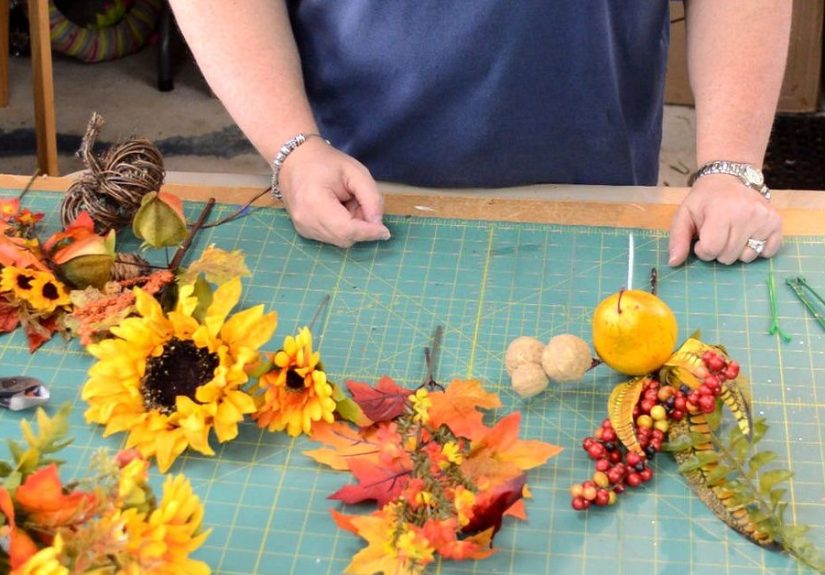
Lay everything out before you attach anything. Fluff faux greenery, separate stems, and trim bulky pieces so they’ll sit close to the lantern.
Set your lantern in front of you and do a quick dry-fit: hold the greenery where you want it and decide which side will be the “fancy side.”
If you’re using wired ribbon, smooth it first (a quick steam or press helps bows look crisp and professional).
It’s a small step that makes a big difference.
Step 2: Build a Lightweight Base
Start with greenery. This is the “hair and makeup” of your swageverything else depends on it.
-
Create a spine: Bundle 2–4 greenery stems together to form a base that’s about 8–12 inches long.
If using a mini garland, fold it into a shorter, thicker piece. - Secure the bundle: Use floral wire or a zip tie around the center. Keep the back relatively flat so it sits neatly on the lantern.
- Shape it: Bend the base into a gentle curve so it hugs the lantern top instead of sticking out like a startled porcupine.
Don’t worry if it looks underwhelming right now. Greenery is the foundation; drama comes later.
Step 3: Make a Bow That Won’t Quit
A lantern swag bow does three jobs: it adds color, hides mechanics, and signals “yes, this is on purpose.”
Wired ribbon is ideal because it holds shape.
- Choose 2–3 ribbons: one patterned + one solid + one textured is a safe combo.
- Create tails first: cut 10–18 inch tails depending on lantern size.
- Make layered loops: create 2–3 loops per ribbon, stacking them together.
- Secure tightly: twist floral wire or a pipe cleaner around the center.
- Dovetail ends: fold ribbon in half and cut at an angle for a polished finish.
Fluff the loops. If your bow looks a little sad, it’s usually because the loops are too flatpull them outward and upward until the bow has dimension.
Step 4: Attach the Bow to the Swag Base
Place the bow at the top-center of your greenery bundle (or slightly off-center if you’re doing an asymmetrical cascade).
Wrap the wire ends around the back of the swag base and twist until it’s secure.
Trim excess wire and tuck sharp ends into the greenery so nothing scratches your lantern (or your hand during final fluffing).
Step 5: Add Focal Florals First
Pick 1–2 “main character” blooms (sunflower, dahlia, mum cluster). Place them near the bow, angled slightly outward.
This creates a focal point and sets the direction of the cascade.
- Angle matters: point stems in the same general flow direction (down and to one side for a cascade).
- Trim aggressively: shorter stems sit tighter and look more integrated.
- Balance the front view: step back often and check from the angle people will actually see.
Step 6: Layer Texture (Berries, Leaves, Mini Pumpkins)
Now add the “supporting cast”: berries for pop, leaves for volume, pinecones for texture, and mini pumpkins for instant fall energy.
Place these slightly lower than the focal florals to guide the eye downward.
A good rule: alternate textures (leafy, then berry, then leaf again) so it looks natural and not like a pile of identical salad ingredients.
Step 7: Attach the Swag to the Lantern Securely
There are a few reliable methods, depending on your lantern style:
-
Top-tie method: wrap rustic wire around the lantern’s top frame and twist tight behind it.
Great for lantern toppers. -
Handle-wrap method: loop floral wire or a pipe cleaner around the handle base and into the swag spine.
Great for swags that drape off one side. -
Ribbon tie method: tie a coordinating ribbon around the lantern handle and the swag base.
Great for quick swaps (and for people who like commitment-free decor).
For outdoor lanterns, use at least two attachment points (center and one side) so wind doesn’t spin the swag like a weather vane.
Step 8: Hide Mechanics and Do the Final “Fluff Pass”
Flip the swag and cover visible wire, zip ties, or glue blobs with spare leaves or greenery.
Then put it back on the lantern and do your final adjustments:
- Spread ribbon tails so they’re visible from the front and sides.
- Pull bow loops forward for fullness.
- Fill any holes with small leaf sprigs or berries.
- Make sure the swag gently wraps the lantern instead of hovering.
Fresh vs. Faux: Which Should You Use for a Lantern Swag?
Faux florals are the easiest choice for a lantern swaglighter, longer-lasting, and less fussy.
But if you want to go fresh, it can be done with the right mechanics.
Faux Pros
- Reusable year after year
- No watering, no wilting, no “why is this leaf crispy?” moments
- Easy to store once you label it (future-you deserves that kindness)
Fresh Pros (With a Reality Check)
- Smells amazing (especially with fresh evergreen or eucalyptus)
- Looks naturally organic in close-up photos
- But requires hydration mechanics and more careful attachment
If using fresh materials, consider floral foam in a secure cage, fully soaked by letting it float and absorb water naturally
(forcing it under can leave a dry core). Then wire heavier items (like cones) to picks for stability, and keep the foam fully covered.
It’s also smart to secure the final piece well so it won’t blow away outdoors.
Three “Copy-Paste” Fall Lantern Swag Recipes
1) Farmhouse Sunflower + Plaid
Look: bright, classic, welcomingfront porch friendly.
- Greenery: mixed fall leaves + eucalyptus
- Focal: 1 large sunflower + 1 small sunflower cluster
- Accent: orange berries + mini pinecones
- Ribbon: plaid + mustard + burlap texture
- Extra: tiny pumpkin pick tucked near the bow
2) Moody Harvest (Burgundy + Copper)
Look: elevated autumnworks beautifully with black or brass lanterns.
- Greenery: deep olive + seeded eucalyptus
- Focal: burgundy dahlia + rust mum spray
- Accent: copper fern + dark berry picks
- Ribbon: velvet burgundy + copper shimmer + thin black accent ribbon
- Extra: a small bunch of dried-look wheat for movement
3) Neutral “No-Orange” Fall
Look: soft, airy, modernperfect for minimalist homes.
- Greenery: lamb’s ear (faux) + muted eucalyptus
- Focal: cream peony or beige mum cluster
- Accent: tan berries + mini white pumpkins
- Ribbon: cream + taupe + subtle gold edge
- Extra: warm white fairy lights tucked behind the bow
Outdoor Survival Guide (Because Weather Has No Respect)
- Use LED candles if your lantern is functionaldried leaves + real flame is a “no, thank you.”
- Double-attach your swag for wind: wire + ribbon tie is a solid combo.
- Avoid direct rain if using fabric ribbon; it can droop and stain.
- Rotate seasonally: keep the lantern outside, bring the swag in during storms.
- Sun fade is real: if it’s in full sun, choose deeper ribbons or use UV spray.
Troubleshooting: Quick Fixes for Common Swag Problems
- “My swag looks flat.” Add one more greenery stem and pull bow loops forward.
- “It’s sliding off the lantern.” Add a second anchor point and tighten the wire behind the lantern top.
- “I see holes.” Patch gaps with small leaf sprigs or berry picks (small fixes are magic).
- “The bow is floppy.” Use wired ribbon, steam/press it, then reshape loops with your fingers.
- “It looks too busy.” Remove one accent type (usually berries OR pineconeskeep one star per category).
Where to Display Your Fall Lantern Swag
The best part: lantern swags work almost anywhere.
- Front porch: pair two lanterns for symmetrical “welcome home” energy.
- Mantel: place lanterns at one end and let the swag cascade toward the center.
- Entry table: add a tray, a small pumpkin, and suddenly you’re the kind of person who “styles vignettes.”
- Dining centerpiece: one lantern + a few mini gourds around it = instant table moment.
- Stairs or hearth: swags look great layered with a simple garland.
Conclusion
A DIY fall lantern swag is one of the easiest ways to add seasonal style without committing to a giant project.
Start with a strong greenery base, add a layered wired-ribbon bow, build your focal flowers, then finish with texture and secure attachment.
The secret isn’t expensive materialsit’s thoughtful layering and a clean silhouette.
And remember: if your first attempt feels a little wonky, congratulationsyou’re officially doing DIY correctly.
Make one small tweak, fluff it again, and let the lantern do what lanterns do best: make everything look a little more magical.
Extra: My DIY Fall Lantern Swag Experiences (aka Lessons From the Glue Gun)
The first time I made a fall lantern swag, I was feeling unstoppable. I had my lantern. I had ribbon. I had a fresh pack of glue sticks.
I also had something even more powerful: the belief that I could “just wing it.”
Spoiler: winging it is how you end up holding a half-finished swag to a lantern like you’re trying to resuscitate it.
My original plan was “simple and elegant.” My cart at the craft store said otherwise. I bought three types of berries, two leaf garlands,
a sunflower the size of a small satellite dish, and ribbon with so much glitter it could be detected from space.
When I got home and piled everything together, the swag looked less like autumn decor and more like a parade float got lost and wandered onto my porch.
Lesson one: choose a color story before you fall in love with every shiny thing.
Once I edited down to one berry pick and one main flower type, everything calmed down immediately.
The swag started to look designed instead of… enthusiastic.
Lesson two: greenery is not optional. I tried to “save time” by using just a couple of leafy picks.
The result was a bow floating in midair with a single leaf clinging to it like it was scared.
Adding two extra greenery stems fixed 80% of the problem in about 30 seconds.
Now I treat greenery like mascara: you think you’re done, but you’re not.
Lesson three: bows need structure, not hope. I made my first bow with non-wired ribbon because it was pretty and soft.
It also collapsed like a sad soufflé. The second I switched to wired ribbon and actually shaped the loops,
the bow became the confident centerpiece it was meant to be. (If your bow looks “meh,” fluff it like you mean it.)
Lesson four: attachment matters more outdoors. My porch gets breezy, and I learned quickly that one pipe cleaner is not a security system.
The swag rotated, slid, and ended up hanging at an angle that suggested the lantern had opinions about my decorating choices.
Two anchor points (wire plus a ribbon tie) turned it from “wind toy” into “porch decor.”
Lesson five: final fluffing is where the magic happens. The swag never looks perfect the second you finish “building.”
It looks perfect after you step back, adjust the ribbon tails, rotate the berries forward, and patch the little holes with tiny leaf sprigs.
It’s like styling hair: the haircut is important, but the blowout is what makes people say, “Oh wow.”
Now, I actually love making fall lantern swags because they’re forgiving. You can swap one stem, change a ribbon, or adjust the cascade direction
and it feels brand new. Plus, when someone compliments it, you get to say, “ThanksI made it,” which is basically the adult version of getting a gold star.
And unlike some DIY projects, this one doesn’t require power tools, drywall repair, or explaining to your family why there’s glitter in the butter dish.