Table of Contents >> Show >> Hide
- When South Park Lets Celebrities In on the Joke (and It Backfires)
- 4. Jay Leno: From Cat Meows to Comedy Mismatch
- 3. PewDiePie: When South Park Tried to Be Extremely Online
- 2. Korn: Scooby-Doo Cosplay Gone Wrong
- 1. Elon Musk: The Softest Space Billionaire Roast Imaginable
- What These Lame Cameos Tell Us About Celebrity Culture
- Experiences and Takeaways From Rewatching These Episodes
- Conclusion: South Park Is Funniest When It Stops Being Nice
For almost three decades, South Park has made a sport out of roasting celebrities.
From turning Barbara Streisand into a kaiju robot to annihilating the reputation of every boy band within a 10-mile radius,
the show usually treats famous people like clay pigeons at a skeet-shooting range. That’s the fun of it.
But every once in a while, Trey Parker and Matt Stone do something very un–South Park:
they invite celebrities to come on the show and play themselves… and then they treat them gently.
No savage takedown, no brutal parody, just a weirdly polite cameo wedged into an otherwise chaotic episode.
Cracked recently highlighted four of the worst offenders in this special category of
“Hey, why are we being nice to this person?” guest appearances.
Let’s dig into why these South Park celebrity cameosJay Leno, PewDiePie, Korn, and Elon Musk
felt less like satire and more like awkward brand collaborations no one asked for.
When South Park Lets Celebrities In on the Joke (and It Backfires)
To be fair, celebrities playing themselves on South Park isn’t always a disaster.
Early on, Robert Smith of The Cure showed up to stomp Mecha-Streisand into the dirt like a goth Mothra,
and it was gloriously bizarre. Music legends like Elton John and Ozzy Osbourne popped into the
season 2 episode “Chef Aid,” turning a simple fundraiser for Chef into a bonkers rock festival.
Those appearances worked because they were still in service of the jokethe show stayed mean,
absurd, and specific.
But once you start inviting celebrities you clearly like or want to impress, the edge dulls.
Instead of the show using the celebrity, the celebrity starts using the show.
The result: episodes that feel less like South Park and more like extended promos for
YouTube channels, nu-metal albums, or space billionaires.
That’s the main problem with these four “lame” cameos: each one represents a moment where the
show prioritized clout over punchlines.
4. Jay Leno: From Cat Meows to Comedy Mismatch
The Setup: Late-Night Royalty Drops by a Small Mountain Town
Jay Leno was one of the earliest big names to appear on South Park.
In the show’s early years, Leno was surprisingly supportive of Parker and Stone,
so he got invited to voice characters in a couple of episodes.
His first appearance was actually a clever anti–stunt casting gag: instead of giving him a big role,
they had him voice Mr. Kitty, a cat that mostly just meows.
That’s classic South Parktake a famous guy and make him do literally nothing glamorous.
But then came later appearances where Leno actually played himself, including a Thanksgiving special and
a flashback-heavy episode where the kids are stuck on a runaway bus of memories.
Suddenly, the joke wasn’t “Jay Leno is here and we’re wasting him,” it was just… “Jay Leno is here.”
That’s it. That’s the gag.
Why It Falls Flat
The mismatch between South Park’s punk sensibility and Leno’s famously safe,
middle-of-the-road comedy is jarring. The show that once nuked the Jonas Brothers for selling purity rings
is now just hanging out with The Tonight Show host like it’s a PR appearance.
There’s no real satirical point. They don’t go after late-night TV culture, celebrity ego,
or network politics. Leno just shows up as a generic “TV guy,” smiles, and leaves.
It’s the entertainment equivalent of a participation trophynice, but totally unnecessary.
Instead of sharpening the satire, Leno’s cameo rounds the corners off the episode,
like someone slapped a “family friendly” filter on a show that built its reputation
on offending literally everyone.
3. PewDiePie: When South Park Tried to Be Extremely Online
#REHASH, #HappyHolograms, and #PleaseStop
In season 18, South Park decided to tackle YouTube culture, reaction videos,
and the generational gap between kids who watch people play games
and their older siblings who actually buy the games. The episode “#REHASH,” followed by
“#HappyHolograms,” brings in Swedish YouTuber PewDiePie to play himself,
complete with commentary layered over the episode.
On paper, this is a perfect target: a massively popular internet personality,
a changing media landscape, and a show that loves mocking whatever’s “new and dumb.”
But instead of roasting PewDiePie, South Park tries to juggle satire and flattery at the same time.
When Meta Becomes Muddled
The basic idea is that Cartman starts his own gaming commentary channel, CartmanBrah,
trying to cash in on the Let’s Play trend. PewDiePie then shows upfirst as a faceless voice
over the show’s events, then as himself in live actionto “react” to Cartman’s content
and essentially validate the phenomenon.
The problem? The show never really decides what it thinks. Is PewDiePie ridiculous?
Is the whole reaction-video culture empty content about other content?
Or is this all cool and the old people just don’t get it?
The answer ends up being, “Eh, kind of all of the above,” which is not exactly a strong comedic stance.
By letting PewDiePie in on the jokeand letting him stay cool, charming, and strangely un-roasted
the episode becomes more of a crossover event than a satire.
Instead of landing a sharp punchline, the episode feels like it’s desperately trying to stay “relevant,”
which is the exact thing South Park is usually making fun of in other people.
2. Korn: Scooby-Doo Cosplay Gone Wrong
“Korn’s Groovy Pirate Ghost Mystery” and the Scooby Problem
In season 3’s Halloween episode, “Korn’s Groovy Pirate Ghost Mystery,”
the nu metal band Korn appears as themselves in a parody of Scooby-Doo.
The boys join Korn to solve a spooky “pirate ghost” mystery while the band throws out cheesy one-liners,
inexplicable powers, and Saturday-morning-cartoon logic.
The episode’s premise isn’t terrible. A grimy, curse-word-heavy show borrowing the aesthetic of
an old-school mystery cartoon could be hilarious. But the way Korn is used turns half the episode
into a straight-up Scooby clone, with the band doing watered-down Hanna-Barbera bits
instead of letting South Park’s own brand of chaos take over.
When Guest Stars Handcuff the Comedy
Korn’s members read their lines with the kind of energy you’d expect from people saying,
“Wait, this is going to be on TV?” They’re not voice actors; they’re musicians who got dropped into
a studio and told, “Now say ‘jinkies’ like you really mean it.”
Because the episode leans so heavily on the Scooby parody, there’s less room for the kind of
brutal character work and social commentary that usually power the show. Instead of watching Cartman
weaponize bigotry for personal gain, you’re watching a band try to remember where the mic is.
Some fans love the episode for its nostalgia and weirdness, but in terms of
South Park celebrity guest spots where celebrities play themselves,
this one leans so hard into its guest-star gimmick that the show’s usual bite gets lost under
a pile of canned catchphrases and band promotion.
1. Elon Musk: The Softest Space Billionaire Roast Imaginable
From “Handicar” to Season 20’s Mars Misadventure
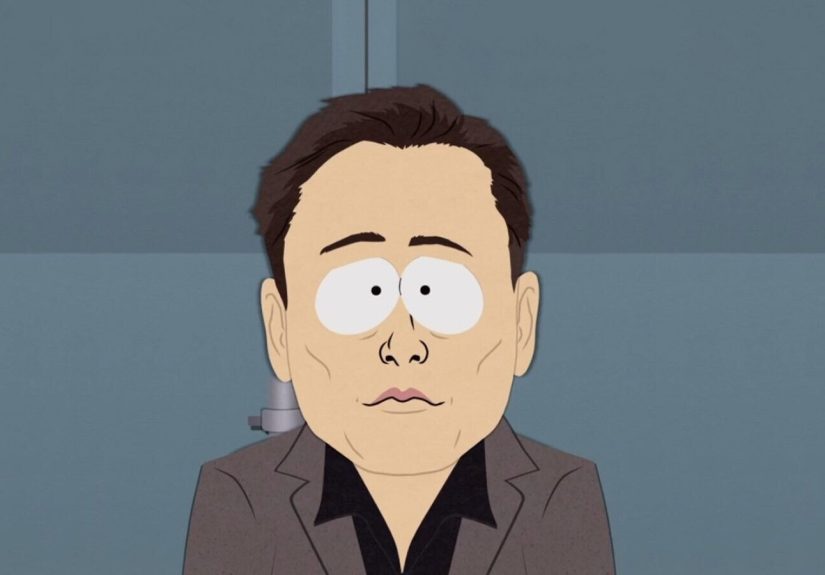
Elon Musk has appeared multiple times in South Park. Early on, he was spoofed in “Handicar,”
but later seasons brought in Musk himself to voice his animated counterpart.
In the season 20 storyline where Cartman and his girlfriend Heidi try to flee Earth for Mars,
Musk shows up at SpaceX to walk them through the mission.
You would think a show this ruthless would have a field day with a guy who launches cars into space,
tweets like he’s live-blogging a midlife crisis, and collects companies like Funko Pops.
Instead, the show kind of… likes him? Or at least treats him like a slightly awkward,
overworked tech dude doing his best.
The Lameness of Kid-Glove Treatment
The Musk episodes are especially frustrating because the potential for sharp commentary is sky-high.
Tech billionaires, corporate messianism, cult followings, the fantasy of escaping to Mars instead of
fixing Earththese are all themes that South Park normally chomps on.
But when Musk appears as himself, the show dodges most of that. We get mild jokes about bureaucracy,
overpromising space travel, and Musk being kind of a stiff presenterbut nothing that really cuts.
For a show that once sublimated its rage into a talking piece of poo,
this suddenly feels like a LinkedIn-sponsored comedy special.
The other problem is screen time. Musk pops up across multiple episodes, stretching a flimsy joke
(“What if Elon Musk was just… here?”) into an extended storyline. By the time the arc wraps,
it feels less like satire and more like a long-form brand collab nobody asked for.
What These Lame Cameos Tell Us About Celebrity Culture
Put all four of these appearances together and a pattern emerges.
When South Park celebrity cameos work, the show treats the guest as raw material.
When they don’t, the show treats the guest as a partner.
- Jay Leno shows how easily satire collapses when you respect the guest too much to go for the jugular.
- PewDiePie shows the danger of trying to “join” a trend instead of tearing it apart.
- Korn shows what happens when the aesthetic of a guest star overwhelms the tone of the show.
- Elon Musk shows how tempting it is to play nice with powerful peopleeven for a show built on offending them.
In each case, the celebrities playing themselves don’t just weaken individual episodes;
they temporarily warp the show’s comedic priorities.
Instead of “What’s the funniest, meanest thing we can do?” the question becomes
“How do we fit this person in and keep everyone happy?”
And if there’s one thing longtime fans know, it’s this:
South Park is never funnier than when it’s not trying to keep anyone happy.
Experiences and Takeaways From Rewatching These Episodes
Rewatching these four episodes back-to-back is like doing a little field study in how comedy agesand
how it breaks the moment it starts apologizing for itself. Individually, none of these episodes are
unwatchable disasters, but stacked together, they feel like a highlight reel of South Park
second-guessing its own instincts.
The first thing you notice is how different the energy feels whenever the celebrity is on screen.
In most classic episodes, the focus is on the kids and the town: Stan trying to stay sane,
Kyle wrestling with his conscience, Cartman committing war crimes over snack food,
and Kenny dying in increasingly stupid ways. When Jay Leno, Korn, PewDiePie, or Elon Musk show up as
themselves, the show’s camera almost politely turns toward them, as if the episode has been temporarily
hijacked by a guest host.
The second thing that jumps out is how these cameos date the episodes fast.
The Korn episode is drenched in late-’90s nu metal culture and Scooby-Doo nostalgia.
The PewDiePie storyline captures a very specific 2010s internet obsession with Let’s Plays and reaction videos.
Elon Musk’s appearances feel glued to a particular pre-twitter-meltdown version of his public image.
Even Jay Leno’s cameos are basically time capsules from the era when late-night TV still felt like the center
of the comedy universe.
That’s not automatically a bad thingSouth Park has always been topicalbut usually the show makes
that topicality feel deliberate and sharp. Here, it feels more like the writers trying to grab whatever was
trending and smuggle it into the show before the moment passed. Rather than dissecting pop culture,
they’re chasing it.
As a viewer, you also feel the difference between a cameo that’s about the show’s world and one
that’s about the guest’s world. When Robert Smith shows up to fight Mecha-Streisand or Elton John performs
at “Chef Aid,” their presence feels like an extension of South Park’s weird little universe.
They’re still serving the town’s story. In contrast, when PewDiePie starts reacting to the show itself,
or when Elon Musk explains SpaceX, you’re suddenly watching content about them instead of
about the kids.
If you’re a fan who’s grown up with the series, these episodes are interesting for another reason:
they mark moments where South Park briefly seems insecure. The show that once happily offended
everyone suddenly worries about staying “current,” “online,” and “plugged in.”
It’s like watching your most brutally honest friend start checking their follower count mid-conversation.
And yet, there’s something oddly valuable about these misfires. They’re reminders that even a legendary show
can lose its edge when it gets too cozy with fame. They also make the really good episodes
feel sharper by contrast. After spending a few hours watching Korn awkwardly solve pirate ghost mysteries
and Elon Musk gently guide kids around SpaceX, an old-school, merciless takedown episode feels
like jumping into a cold lakeyou remember exactly why you fell in love with the show in the first place.
For anyone writing comedy, the lesson is simple: the joke has to come before the guest.
If the celebrity is in on the joke and still looks cool, you’re probably not pushing hard enough.
If they leave the episode slightly bruised and very confusedthat’s when you know you’ve made something
that fits right into South Park’s long, chaotic, delightfully offensive history.
Conclusion: South Park Is Funniest When It Stops Being Nice
These four cameosJay Leno, PewDiePie, Korn, and Elon Muskaren’t the worst sins in television history,
but they are vivid examples of how even a savage satire can soften up when real-world fame walks through the door.
When celebrities play themselves on South Park, the show faces a choice:
use them as targets, or treat them like partners. The funniest, most memorable episodes always pick “target.”
The lamest ones, like the four Cracked called out, try to do bothand end up doing neither very well.
At its best, South Park doesn’t care if its guests like it.
The day it starts worrying about that is the day the show stops being dangerousand starts being,
well, totally lame.