Table of Contents >> Show >> Hide
- First: What “Treatment” Means for cSCC
- How Doctors Choose a Treatment Plan
- Most cSCCs Are Treated Locally: The Main Options
- 1) Standard surgical excision (a.k.a. “cut it out with a safety border”)
- 2) Mohs micrographic surgery (the “measure twice, cut once” methodrepeatedly)
- 3) Curettage and electrodesiccation (C&E): scrape, zap, repeat
- 4) Cryosurgery (freeze it like it owes you money)
- 5) Treatments for SCC in situ (Bowen disease): creams and light-based options
- Radiation Therapy: When It’s Used and Why
- When cSCC Is Advanced: Treatment Beyond the Skin
- Immunotherapy (PD-1 inhibitors): helping your immune system do the heavy lifting
- Newer directions: immunotherapy around the time of surgery
- Lymph node treatment: surgery, radiation, and sometimes systemic therapy
- Chemotherapy and targeted therapy: less common now, still sometimes used
- Clinical trials: an option worth asking about
- A Practical Comparison Table: Which Treatment Fits Which Situation?
- What Happens After Treatment?
- Questions to Ask Your Doctor
- Real-World Experiences With cSCC Treatment (About )
- Conclusion
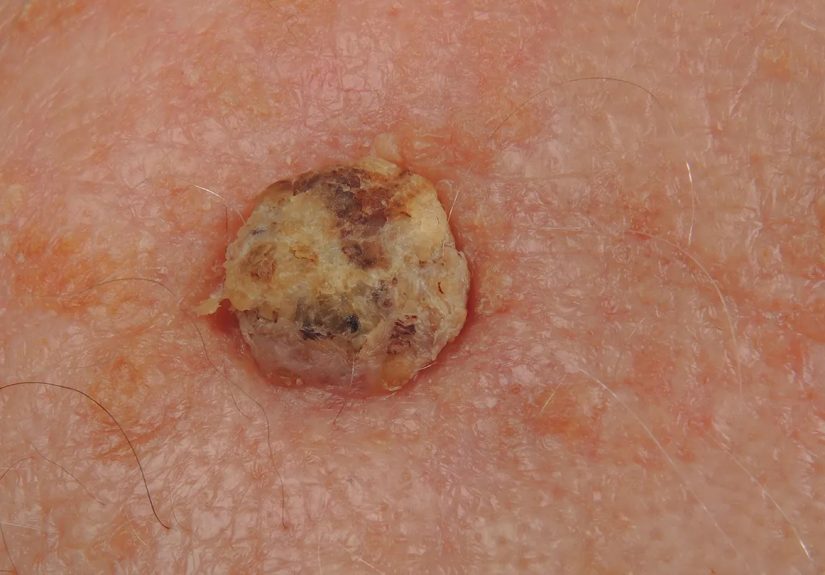
Cutaneous squamous cell carcinoma (often shortened to cSCC) is one of the most common forms of skin cancerand
one of the most treatable when caught early. The tricky part is that “treatable” doesn’t mean “one-size-fits-all.”
Treating cSCC is a lot like choosing the right tool for a home repair: a tiny nail doesn’t need a jackhammer, but a cracked foundation
shouldn’t be handled with a butter knife.
This guide walks through the real-world treatment optionswhat they are, why a doctor might recommend them, what the process is like,
and what comes next. (And yes, we’ll keep it human. Skin cancer is serious; the writing doesn’t have to be grim.)
First: What “Treatment” Means for cSCC
Most cSCCs start in the outer layer of skin and can be removed with local treatment. But cSCC can also grow deeper, recur,
or (less commonly) spread to nearby lymph nodes or other parts of the body. That’s why treatment planning focuses on two big questions:
- Can we cure it with a local procedure? (Often, yes.)
- Is this cancer high-risk? (Sometimes, and that changes the plan.)
How Doctors Choose a Treatment Plan
Low-risk vs. high-risk: the decision that drives everything
Your dermatologist (and sometimes a multidisciplinary team) looks at several factors to estimate the risk of recurrence or spread.
Common “high-risk features” include:
- Location: head/neck, lips, ears, around eyes, hands, genitalsareas where tissue is precious and nerves matter.
- Size and depth: larger or deeper tumors tend to behave more aggressively.
- Pathology details: poor differentiation, invasion into deeper structures, or perineural invasion (cancer tracking along nerves).
- Recurrence: a tumor that returned after earlier treatment is treated more cautiously.
- Immune status: people who are immunosuppressed (for example, organ transplant recipients) can face higher risk.
Tests that help map the next step
Nearly everyone starts with a skin biopsy to confirm the diagnosis. For higher-risk cases, a clinician may also:
- Examine and feel nearby lymph nodes (neck, armpit, groin depending on tumor location).
- Order imaging (like ultrasound, CT, MRI, or PET) if spread is suspected or the tumor is advanced.
- Discuss specialized evaluation in selected cases (for example, if symptoms suggest nerve involvement).
Most cSCCs Are Treated Locally: The Main Options
1) Standard surgical excision (a.k.a. “cut it out with a safety border”)
Surgical excision removes the tumor plus a margin of normal-looking skin around it.
The tissue is then examined to confirm margins are clear (no cancer at the edges).
This is a common approach for many low-risk and some higher-risk lesions depending on site and size.
What it’s like: usually an outpatient procedure under local anesthesia. You’ll feel pressure, not sharp pain.
The main aftercare revolves around wound care, keeping the site clean, and watching for infection.
Example: A small, well-defined cSCC on the forearm may be removed in a single office visit with excision, followed by stitches and a bandage.
2) Mohs micrographic surgery (the “measure twice, cut once” methodrepeatedly)
Mohs surgery removes the cancer in thin layers, checking each layer under a microscope in real time until no cancer cells remain.
The goal is to remove all the cancer while sparing as much healthy tissue as possible.
It’s often recommended for:
- Tumors on cosmetically or functionally important areas (nose, eyelids, lips, ears, hands).
- Recurrent tumors or tumors with indistinct borders.
- Higher-risk tumors where precise margin control matters.
What it’s like: you’re in the clinic for several hours because processing and microscope checks happen between stages.
It’s part procedure, part waiting-room marathonbring a snack, a charger, and patience.
3) Curettage and electrodesiccation (C&E): scrape, zap, repeat
Curettage and electrodesiccation uses a scoop-like instrument to scrape the tumor and then applies an electric current
to destroy remaining cancer cells and control bleeding. It’s generally used for small, superficial, low-risk tumors
in locations where scarring is acceptable.
Limitations: it’s not ideal for deeper tumors, aggressive features, or areas like the face where precise margin control is crucial.
4) Cryosurgery (freeze it like it owes you money)
Cryosurgery uses extreme cold (often liquid nitrogen) to destroy abnormal tissue.
It may be considered for certain small, superficial lesions and selected cases, especially when surgery isn’t the best fit.
What it’s like: brief stinging/burning, followed by blistering or scabbing as the area heals.
5) Treatments for SCC in situ (Bowen disease): creams and light-based options
SCC in situ means cancer cells are confined to the top layer of skin. Because it’s superficial,
doctors sometimes use non-surgical approachesespecially when lesions are broad, multiple, or in tricky areas.
Options can include:
- Topical 5-fluorouracil (5-FU) or imiquimod in selected cases.
- Photodynamic therapy (PDT) in certain situations, using a medication plus a special light to destroy abnormal cells.
- Targeted destruction methods (like C&E or cryotherapy) depending on lesion features and location.
These approaches aren’t right for every patient or every lesion, and follow-up is important because “non-surgical” doesn’t mean “no risk.”
Radiation Therapy: When It’s Used and Why
Radiation as the main treatment
Radiation therapy can be used to treat cSCC when surgery isn’t possible or isn’t a good optionsuch as when a patient
can’t safely undergo surgery or when surgery would cause unacceptable functional loss.
Radiation after surgery (adjuvant radiation)
After the tumor is removed, adjuvant radiation may be recommended for higher-risk scenariosfor example,
when pathology shows features associated with recurrence risk (like certain nerve involvement or other aggressive characteristics),
or when disease involves nearby lymph nodes.
Common side effects
Side effects depend on the area treated but can include skin irritation, redness, peeling, fatigue,
and longer-term changes such as pigmentation changes or tissue firmness. Radiation planning is carefully tailored
to balance cancer control with preserving healthy tissue.
When cSCC Is Advanced: Treatment Beyond the Skin
A smaller portion of cases are locally advanced (too extensive to remove surgically with cure) or metastatic
(spread to lymph nodes or other organs). The goal may still be cure in some situations, but treatment often becomes more team-based:
dermatology, surgical oncology, medical oncology, and radiation oncology working together.
Immunotherapy (PD-1 inhibitors): helping your immune system do the heavy lifting
For cSCC that is not curable with surgery or radiation, immunotherapy has become a major option.
Drugs known as PD-1 inhibitors can help the immune system recognize and attack cancer cells.
Two commonly used agents in this setting are:
- Cemiplimab
- Pembrolizumab
Immunotherapy is typically given by IV infusion on a schedule determined by your oncology team. It can lead to durable responses for some patients,
but it can also cause immune-related side effects (because revving up the immune system can sometimes trigger inflammation in normal organs).
Your team will monitor for issues like rash, diarrhea/colitis, thyroid changes, liver inflammation, or lung inflammation.
Newer directions: immunotherapy around the time of surgery
Research has explored immunotherapy before surgery (neoadjuvant therapy) in certain higher-stage cases to shrink tumors and improve outcomes.
In addition, the FDA approved adjuvant cemiplimab in October 2025 for adults at high risk of recurrence after surgery and radiation
a sign that treatment strategies continue to evolve for higher-risk disease.
Lymph node treatment: surgery, radiation, and sometimes systemic therapy
If cSCC spreads to nearby lymph nodes, treatment may involve:
- Lymph node surgery (removing involved nodes)
- Radiation therapy to the lymph node region
- Systemic therapy (often immunotherapy) depending on the extent and overall situation
Chemotherapy and targeted therapy: less common now, still sometimes used
Traditional chemotherapy (such as platinum-based regimens) and targeted therapy approaches (for example, EGFR-directed therapy)
may be considered in selected situationsparticularly when immunotherapy isn’t appropriate, isn’t working, or as part of combined strategies.
Your oncology team weighs benefits, side effects, and goals (cure vs. control vs. comfort).
Clinical trials: an option worth asking about
Clinical trials may offer access to newer combinations (like immunotherapy plus radiation), different dosing strategies,
or next-generation immune therapies. If you have high-risk, recurrent, or advanced cSCC, asking about trials is a practical move
not a “last resort.”
A Practical Comparison Table: Which Treatment Fits Which Situation?
| Situation | Common Treatment Options | Why It’s Chosen |
|---|---|---|
| Small, low-risk tumor on trunk/limb | Excision; sometimes C&E | High cure rate with straightforward removal |
| Tumor on face, ear, lip, or hands | Mohs surgery; sometimes excision with careful margin assessment | Preserves healthy tissue and function while maximizing clearance |
| SCC in situ (Bowen disease) | Topical therapy (5-FU/imiquimod), PDT, or localized destruction | Targets superficial disease; chosen case-by-case |
| High-risk pathology or close/positive margins | Re-excision and/or adjuvant radiation | Lowers recurrence risk when features suggest aggressive behavior |
| Locally advanced or metastatic disease | Immunotherapy (PD-1 inhibitors); surgery/radiation to nodes; clinical trials | Addresses disease beyond local skin removal |
What Happens After Treatment?
Follow-up is not optional (sorry, skin has a memory)
Once you’ve had cSCC, your risk of developing another skin cancer goes up. Follow-up typically includes:
- Regular dermatologist visits for total-body skin exams
- Self-checks at home (new bumps, non-healing sores, scaly patches, changes in scars)
- Lymph node awareness for higher-risk cases (new lumps, tenderness, persistent swelling)
Prevention: boring, effective, and worth it
UV exposure is a major driver of squamous cell skin cancer. Prevention strategies are wonderfully unglamorous:
broad-spectrum sunscreen, protective clothing, shade, and skipping tanning beds. Think of sun protection as
routine maintenancelike changing the oil so your engine doesn’t decide to express itself via smoke.
Questions to Ask Your Doctor
- Is my cSCC considered low-risk or high-risk, and why?
- Would Mohs surgery improve my chances of complete removal or better cosmetic outcomes?
- Do I need imaging or lymph node evaluation?
- What side effects should I expect from this treatment?
- What is my follow-up schedule, and what should I watch for at home?
- If my case is advanced, what are the pros/cons of immunotherapy and is a clinical trial available?
Real-World Experiences With cSCC Treatment (About )
Facts and options are helpful, but many people want to know what treatment feels likelogistically and emotionally.
Below are common experiences patients describe (not medical advice, and not a substitute for your clinician’s guidance).
“I thought it was just a stubborn scab.”
A frequent theme is surprise: a spot that looked like a flaky patch, a “scratch that won’t heal,” or a bump that kept crusting over.
People often blame dry skin, a nick from shaving, or a minor injury. Then a biopsy comes back with “squamous cell carcinoma,” and
suddenly you’re learning new vocabulary you didn’t ask for. Many patients say the biggest emotional shift happens right there
not because treatment is always intense, but because the word “carcinoma” hits like a door slamming in a quiet room.
The Mohs day: “It’s surgery, but also… a lot of waiting.”
Patients often describe Mohs surgery as a strange blend of high-tech precision and waiting-room patience.
The actual numbing shots are the most uncomfortable part for many people. After that, it’s pressure and mild tugging,
followed by a bandage and a pause while the lab checks the margins. Some people need one stage; others need multiple.
The emotional roller coaster is real: relief after a clear stage, tension if another round is needed, and then
“Okay, how big is this going to be?” when reconstruction is discussed.
Practical tips patients commonly share: wear comfy clothes, bring snacks, plan for a long day, and arrange a ride if your face/eye area is involved
(not because you can’t walk, but because you might not want to navigate traffic with a bulky bandage and adrenaline jitters).
Radiation therapy: “It’s quick each dayuntil the weeks add up.”
People receiving radiation often say the sessions themselves are fast, but the routine can be draining.
Skin irritation tends to build gradually, and fatigue can sneak in during the later weeks. Patients frequently mention that
the hardest part is the consistency: showing up on schedule, managing skin care, and staying patient when improvement isn’t immediate.
Many also report that it helps to treat it like a training plan: small daily work that pays off over time.
Immunotherapy: “I didn’t feel muchuntil my body had opinions.”
Infusion days can feel anticlimactic: you sit, you get an IV, you leave. But immune-related side effectsif they occurcan pop up
between visits. Patients often describe becoming “symptom detectives,” noticing patterns like unusual fatigue, new rashes,
persistent diarrhea, cough, or changes that don’t fit their normal baseline. The best experiences tend to happen when people
report symptoms early and teams respond quickly (because immune side effects are often manageable when addressed promptly).
The follow-up mindset: learning to watch without spiraling
After treatment, many patients describe a shift from “I’m done” to “I’m monitoring.” Some find reassurance in scheduled skin checks;
others feel anxious before appointments. A helpful middle ground is a simple, consistent self-check routinegood lighting,
a mirror, and a quick scan for new or changing spotswithout turning every freckle into a courtroom trial.
If you’re feeling stuck in worry, it’s worth telling your clinician; anxiety is common and support is part of care.
Conclusion
Cutaneous squamous cell carcinoma treatment ranges from simple local procedures to team-based therapy for advanced cases.
For many people, surgeryespecially excision or Mohsis the main event. Radiation therapy and systemic treatments like immunotherapy
come into play when the cancer is high-risk, recurrent, or has spread. The best plan is the one tailored to your tumor’s risk level,
your health, and your prioritiesideally with clear communication, realistic expectations, and a follow-up strategy that keeps you
protected long after the bandage comes off.