Table of Contents >> Show >> Hide
- What “pressure points” actually means (two helpful definitions)
- Quick safety checklist before you poke your own face
- Pressure points on the face: a practical map
- Pressure points “for the face” that aren’t on the face
- Three quick routines you can actually remember
- Does acupressure “work,” or is it just fancy face poking?
- When to skip pressure points and call a pro
- Experiences People Commonly Report (Realistic, Not Magical) Extra Detail
- Conclusion
If your face could talk, it would probably say: “Stop clenching, stop squinting, and please stop treating me like I’m a stress ball.” Modern life makes our
facial muscles work overtimescreens, allergies, jaw clenching, headaches, and the kind of stress that turns your eyebrows into a permanent “confused emoji.”
That’s where pressure points come in. Whether you call it acupressure, facial self-massage, or “I’m just trying to survive sinus season,”
pressing certain spots may help ease tension, reduce the feeling of pressure, and help you relax. It’s not a magic button (sorry), but done gently
and consistently, it can be a useful tool in your self-care toolkit.
What “pressure points” actually means (two helpful definitions)
1) Acupressure points (traditional acupuncture map, no needles)
Acupressure uses your fingers to stimulate specific points that come from acupuncture traditions. The classic theory talks about meridians and
energy flow; the modern explanation often focuses on how touch and pressure can influence the nervous system, muscle tone, stress response, and how we perceive
pain. Either way, the technique is the same: gentle, steady pressure on specific spots.
2) Trigger points (muscle “knots” that refer pain to the face)
Sometimes “pressure points” are simply tender muscle knotsespecially in the jaw (masseter), temples (temporalis), and neck. Pressing and
massaging these areas can help release tight muscle fibers. If you’ve ever had jaw pain that feels like it radiates into your cheek or temple, you’ve met this
concept in real life.
Quick safety checklist before you poke your own face
- Wash your hands and remove anything that could scratch your skin (rings, long nails).
- Pressure should never be painful. Aim for “pleasantly tender,” not “why did I do that?”
- Avoid broken or irritated skin (cuts, rashes, active acne lesions you’ve picked at, infections, swelling).
- Be extra gentle around the eyes. Press bone edges and soft tissuenever the eyeball.
- If you’re pregnant (or might be), don’t use certain points like the classic hand point LI4 unless a clinician says it’s okay.
-
Get medical care for severe or sudden symptoms (worst headache of your life, facial droop, vision changes, high fever, stiff neck, serious
swelling, trouble breathing).
Pressure points on the face: a practical map
Below are commonly used face pressure points people try for sinus pressure, headaches, eye strain, and jaw tension. You don’t need to do them
all. Pick 2–4 that match your symptoms and try them consistently for a few days.
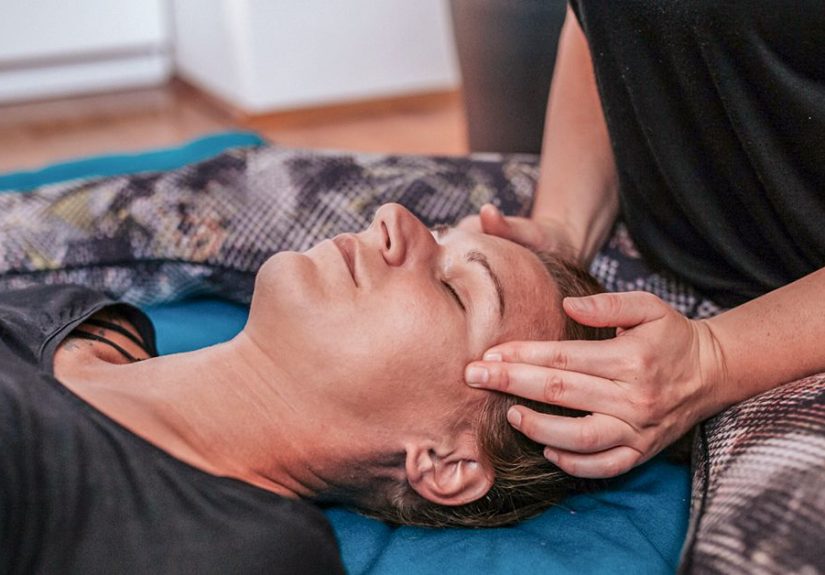
How to press (the simple method)
- Relax your shoulders and jaw. Unclench your teeth and let your tongue rest gently.
- Press and hold for 30–60 seconds, or do small circles.
- Breathe slowly (inhale 4 seconds, exhale 6 seconds works well).
- Repeat once or twice.
Key face points (and what people use them for)
| Point (common name) | Where it is | Often used for | How to use it |
|---|---|---|---|
| Yin Tang (“third eye”) | Between the eyebrows, just above the bridge of the nose | Forehead tension, “sinus-y” pressure, stressy vibes | Press gently with one finger; hold 60–120 seconds, or slow circles |
| UB2 / BL2 (inner eyebrow edge) | At the inner ends of the eyebrows, near the top of the nose bridge (small indent) | Eye strain, tension headaches around the forehead/eyes | Use both index fingers; press into the indent on the brow bone (not the eyeball) |
| Taiyang (temple) | Soft indentation at the temples, slightly to the side of the eye | Temple headaches, screen fatigue, facial tension | Use two fingers; small circles for 30–60 seconds per side |
| LI20 (beside nostrils) | On each side of the nose where it meets the cheek, level with the bottom of the nostrils | Stuffy nose feeling, sinus pressure sensations | Press upward and slightly outward; hold 30–60 seconds per side |
| Bitong (nasal groove) | Near the top of the nasolabial groove, beside the nose where it curves toward the cheek | Nasal congestion sensations and facial pressure | Gentle circles; don’t bruise yourselfthis area can be sensitive |
| SI18 (below cheekbone) | Below the cheekbones, roughly level with the outer edge of the nostrils | Facial tightness around the mid-face, runny/stuffy nose discomfort | Press lightly; pair with slow breathing for 60 seconds |
| TMJ/ear area point (near jaw hinge) | Just in front of the ear where your jaw hinges (you can feel it move when you open) | Jaw tension, clenching soreness, “my jaw is hosting stress” | Massage gently in circles; stop if you feel sharp pain or clicking worsens |
Pressure points “for the face” that aren’t on the face
Some of the most popular points for headaches and facial discomfort live nowhere near your nose. This is normal in acupressure traditions: points on the hand,
wrist, and neck are commonly used for head and face symptoms.
LI4 (Hegu) the famous hand point
LI4 sits in the webbing between your thumb and index finger. Many people use it for headache pain and general facial tension. Use firm-but-not-painful pressure
in small circles for 1–3 minutes.
Important: Avoid LI4 if you’re pregnant unless your clinician specifically okays it.
PC6 (Neiguan) wrist point for nausea + calming
PC6 is on the inner wrist, a few finger-widths below the palm crease. It’s commonly used for nausea and also for calming anxiety (which, let’s be honest,
often shows up on your face first).
GB20 (base of skull) “neck-meets-head” tension spot
GB20 points are in the hollows at the base of the skull on either side of the spine. People use them for tension headaches and head pressure sensations,
especially when neck tightness is part of the picture.
Three quick routines you can actually remember
Routine 1: “My sinuses are being dramatic” (3–5 minutes)
- Temples (Taiyang): small circles, 30–60 seconds.
- Inner eyebrows (UB2/BL2): press into the brow bone indent, 30–60 seconds.
- Cheekbone sweep: place fingers near the inside cheekbone (close to the nose) and gently glide outward 3–5 times.
- LI20 (beside nostrils): press upward/outward, 30–60 seconds.
- Finish: slow nasal breathing if you can, or breathe normally and relax your jaw.
Tip: If you’re congested from allergies, pairing acupressure with evidence-based basics (saline rinse, hydration, humidifier, clinician-recommended meds) tends
to work better than relying on pressure points alone.
Routine 2: “Screen face” (headache + eye strain reset, 2–4 minutes)
- Unclench check: lips together, teeth apart (yes, it feels weird at first).
- UB2/BL2: press at inner eyebrow edges for 45 seconds.
- Temples: slow circles for 45 seconds.
- Yin Tang: gentle hold for 60 seconds while you do slow breathing.
Bonus: Follow with the simplest eye-care habit: look 20 feet away for 20 seconds. Your eyebrows will thank you for not living in a constant squint.
Routine 3: “Jaw clenching and TMJ tension” (4–6 minutes)
- Find the masseter: place fingers on your cheek and gently clenchfeel the muscle pop up? That’s your masseter, the MVP of jaw clenching.
- Massage the masseter: small circles for 60–90 seconds per side.
- Jaw hinge (in front of ear): gentle circles for 30–60 seconds.
- Jaw relaxation exercise: tongue on the roof of your mouth (just behind front teeth), then open/close slowly for 5–10 reps.
If you have frequent jaw pain, locking, or clicking that’s getting worse, a dentist or clinician can check for TMJ disorder, bite issues, grinding, or muscle
imbalance.
Does acupressure “work,” or is it just fancy face poking?
The honest answer: it depends on what you mean by “work.” For some people, acupressure offers noticeable short-term reliefless tightness,
calmer breathing, a headache that feels less intense. For others, it’s more like a relaxation ritual that feels nice but doesn’t change symptoms much.
Research is stronger for acupuncture than for DIY acupressure. For example, evidence suggests acupuncture can reduce migraine headache
frequency for some people (often as a series of treatments). The science around acupressure is more mixed and still developing, especially for specific facial
points.
From a practical perspective, pressure-point work can help in at least three common ways:
- Muscle downshift: touching and massaging tight muscles can reduce guarding and tension.
- Nervous system calming: slow pressure + slow breathing nudges your body toward “rest and digest.”
- Attention + habit change: you notice you’re clenching or furrowing your browand you stop doing it for a while (which is huge).
When to skip pressure points and call a pro
- Sinus symptoms with high fever, severe facial swelling, worsening pain, or symptoms lasting more than ~10 days without improvement.
- Headaches that are sudden and severe, come with weakness/vision changes, or feel different from your usual pattern.
- Jaw problems like locking, major bite changes, or persistent pain that doesn’t improve with gentle care.
- Skin issues (infection, rash, or painful swelling) where pressing could worsen irritation.
Experiences People Commonly Report (Realistic, Not Magical) Extra Detail
Since pressure points are a hands-on practice, people often describe their results in very “human” termsless like flipping a switch and more like turning down
the volume. Here are some common experience patterns people report when they use facial pressure points consistently and gently.
1) The “I can breathe… kind of” sinus moment. Someone with seasonal allergies might start with LI20 (beside the nostrils) and Bitong (nasal
groove) because that’s where the discomfort is loudest. A typical report is that the face feels “more open” or “less tight” around the nose and cheeks after a
few minutes. It doesn’t necessarily mean congestion disappears, but the sensation of pressure can easeespecially if they combine it with basics like hydration,
warm steam, or saline rinses. People also report that Yin Tang (between the eyebrows) feels surprisingly calming when sinus pressure makes the forehead feel
heavy.
2) The “screen headache reset” is often really a jaw-and-brow reset. Students and office workers commonly notice that what they call a
“forehead headache” is tied to squinting and jaw clenching. When they press UB2/BL2 (inner eyebrow edges) and massage the temples, they often describe a warm,
spreading sensation around the eyes. The biggest “aha” moment is sometimes realizing how tense the face was in the first place. A lot of people say the real
benefit is that the routine interrupts the cycle: they stop clenching, they breathe slower, and the headache stops escalating.
3) TMJ tension tends to respond best to muscle work, not just point work. People who grind their teeth at night or clench during stress often
report that masseter massage (the thick cheek muscle you feel when you clench) gives the most immediate relief. They describe it as “finding a sore spot and
melting it,” as long as they keep the pressure gentle and don’t go after it like they’re kneading bread dough. Many also notice that jaw relaxation exercises
feel awkward at firstbecause the “normal” they’re used to is actually constant tension. Over a couple of weeks, the most common report is fewer moments of
waking up with a tired jaw, and less facial tightness by late afternoon.
4) Stress relief can show up as better sleep or fewer tension spirals. Some people use Yin Tang as a “pause button” when anxious thoughts keep
looping. The experience isn’t usually dramatic; it’s more like getting a little space between the stress and the reaction. People report that adding slow
exhaling while holding a point makes the effect stronger. In real life, this might look like doing 2 minutes of Yin Tang pressure before a test, a big
presentation, or bedtimeanything that tends to make your face and shoulders creep upward like a startled turtle.
5) Not everyone feels a big differenceand that’s still useful data. Plenty of people try acupressure and report, “It feels nice, but my
symptoms didn’t change much.” That’s not failure; it’s information. Sometimes the issue needs a different approach (hydration, sleep, allergy treatment,
vision check, physical therapy, dental guidance). And sometimes the technique just needs adjustinglighter pressure, shorter sessions, or focusing on muscles
(masseter/temples) rather than only point locations.
The best mindset is to treat facial pressure points like a low-risk experiment: try a small routine for a week, notice what changes, and keep
what helps. Your goal isn’t to become a human acupuncture chart. Your goal is to feel betterand keep your face from carrying your entire schedule on its
forehead.
Conclusion
“Pressure Points On and For the Face” can mean two very practical things: acupressure points that are traditionally linked to head/face symptoms, and tender
muscle spots (trigger points) that build up from clenching, squinting, and stress. Used gently, pressure-point work can be a simple, calming way to reduce
tension and ease the feeling of facial pressureespecially when you match the points to your symptom (sinus pressure, eye strain, headaches, jaw tightness).
Keep it gentle, keep it consistent, and treat it as a supportive toolnot a substitute for medical care when symptoms are severe, sudden, or persistent.