Table of Contents >> Show >> Hide
- How Whitening Strips Work
- So, Should You Brush Your Teeth After Whitening Strips?
- Why Gentle Brushing Matters After Whitening
- Should You Brush Before Using Whitening Strips?
- The Best Step-by-Step Routine After Using Whitening Strips
- What Toothpaste Should You Use After Whitening Strips?
- What If Your Teeth Hurt After Whitening Strips?
- Common Mistakes People Make With Whitening Strips
- Who Should Be Careful With Whitening Strips?
- Can Brushing After Whitening Strips Remove the Whitening Effect?
- Best Timing: Morning or Night?
- Simple Aftercare Checklist
- Real-Life Experience: What Using Whitening Strips Actually Feels Like
- Conclusion
Whitening strips are one of the easiest ways to brighten your smile without booking a professional whitening appointment, putting on protective goggles, or pretending the dentist chair is “basically a spa.” But once you peel off those little strips and admire your teeth in the mirror, one question almost always pops up: Should you brush your teeth after using whitening strips?
The short answer is: yes, you can brush after whitening strips, but do it gently. For many people, rinsing first and waiting a little while before brushing is the most comfortable option. Brushing immediately after using whitening strips usually will not ruin the whitening results, but aggressive brushing, hard bristles, or abrasive toothpaste can irritate teeth and gums that are already feeling a bit dramatic after peroxide exposure.
Think of your teeth after whitening strips like a friend who just finished a long workout: they are fine, but they do not need someone yelling “push harder!” at them. A soft touch is the smarter move.
How Whitening Strips Work
Most whitening strips use peroxide-based ingredients, commonly hydrogen peroxide or carbamide peroxide. These ingredients help break apart stain molecules that make teeth look yellow, dull, or discolored. The strips hold the whitening gel against the front surfaces of your teeth for a set amount of time, usually somewhere around 30 minutes, depending on the product.
Whitening strips are designed mainly for natural tooth enamel. They can help reduce stains from coffee, tea, red wine, soda, tobacco, and everyday aging. However, they do not whiten crowns, veneers, fillings, bonding, dentures, or implants. That means if you have visible dental work, whitening may create uneven color unless your dentist helps plan the process.
Used correctly, whitening strips can be convenient and effective. Used like a hobby, a personality trait, or a weekend science experiment? That is where sensitivity, gum irritation, and disappointment can enter the chat.
So, Should You Brush Your Teeth After Whitening Strips?
Yes, brushing after whitening strips is generally safe, but it is not always necessary. If you feel sticky gel left on your teeth, you can remove it by rinsing with water, wiping it away gently, or brushing softly with a toothbrush. The key word is gently. Your toothbrush should not be auditioning for a power-washing commercial.
Some whitening strip manufacturers say you may brush gently after using strips. Many dental professionals also suggest that if your teeth feel sensitive, you may prefer to rinse first and wait about 30 minutes before brushing. This gives your mouth a short break and can reduce the chance of post-whitening discomfort.
In practical terms, here is the best answer for most people: remove the strips, rinse your mouth with water, wait if your teeth feel sensitive, then brush gently with a soft-bristled toothbrush and fluoride toothpaste.
Why Gentle Brushing Matters After Whitening
Whitening strips can temporarily make teeth more sensitive because peroxide can travel through enamel and reach the dentin layer underneath. Dentin contains tiny tubules that connect toward the nerve area of the tooth. When those areas become irritated, cold drinks, hot coffee, or even breathing in cool air can make your teeth feel like they just received shocking news.
Gums can also get irritated if the whitening gel touches soft tissue, especially if the strips are placed too high, left on too long, or used too often. Brushing harshly right after treatment can add friction to an already sensitive area.
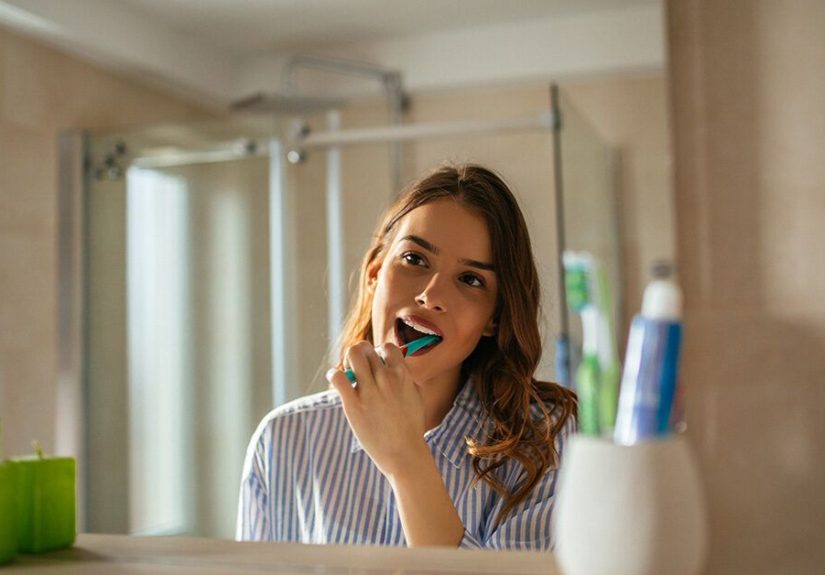
This is why the best post-whitening brushing routine is calm, boring, and effective. Use a soft-bristled brush. Use small strokes. Do not scrub like you are cleaning grout. Your enamel is strong, but your gums prefer manners.
Should You Brush Before Using Whitening Strips?
This is where the answer gets slightly more interesting. Many people assume they should brush immediately before applying whitening strips so the teeth are perfectly clean. That sounds logical, but it is not always ideal.
Some manufacturers recommend not brushing immediately before applying whitening strips because freshly brushed gums may be more likely to become irritated. Brushing right before application can also make some strips slide around instead of sticking well. A better approach is to brush earlier in the day, then use whitening strips after some time has passed.
If your teeth have visible food debris or heavy plaque, of course you want a clean mouth. But you do not need to brush seconds before applying strips. If you want a simple schedule, brush in the morning, use whitening strips later, and brush gently afterward if needed.
The Best Step-by-Step Routine After Using Whitening Strips
1. Remove the strips slowly
Peel the strips off carefully instead of snapping them away like a dramatic bandage moment. This helps avoid pulling at the gums or leaving gel everywhere.
2. Rinse with water
Swish water around your mouth to remove leftover whitening gel. This is usually enough for many people. If your teeth feel clean after rinsing, you do not have to brush immediately.
3. Wait if your teeth feel sensitive
If your teeth feel tender, wait about 30 minutes before brushing. This is not because brushing will cancel the whitening effect. It is because your mouth may simply feel better with a short recovery window.
4. Brush gently
Use a soft-bristled toothbrush and fluoride toothpaste. Brush for two minutes, using light pressure and small movements. Avoid hard-bristled brushes, rough scrubbing, charcoal powders, lemon juice, baking soda mixtures, or extra-abrasive whitening toothpaste right after using strips.
5. Avoid staining foods and drinks for a while
After whitening, many people choose to avoid coffee, tea, red wine, dark soda, soy sauce, berries, tomato sauce, and tobacco for at least the rest of the day. A helpful rule: if it can stain a white T-shirt, it can probably stain freshly whitened teeth. Sadly, teeth do not come with a stain-release laundry setting.
What Toothpaste Should You Use After Whitening Strips?
For most people, a regular fluoride toothpaste is the best choice after whitening strips. Fluoride helps support enamel and protect against cavities. If your teeth are sensitive, a toothpaste made for sensitive teeth may be more comfortable. These formulas often contain ingredients that help calm sensitivity over time when used consistently.
Be careful with whitening toothpaste immediately after strips. Whitening toothpastes usually work by polishing away surface stains, and some can be more abrasive than standard toothpaste. That does not mean they are bad, but using an abrasive product right after peroxide whitening may be too much for sensitive teeth.
Also, skip DIY whitening hacks. Lemon juice, vinegar, activated charcoal, and aggressive baking soda mixtures may sound “natural,” but natural does not automatically mean enamel-friendly. A cactus is natural too, and nobody is rubbing that on their molars.
What If Your Teeth Hurt After Whitening Strips?
Mild, temporary sensitivity is one of the most common side effects of teeth whitening. It may show up during treatment or shortly afterward. For many people, it fades after pausing whitening or finishing the treatment cycle.
If sensitivity bothers you, stop using the strips for a few days. Brush with toothpaste for sensitive teeth. Avoid very hot, cold, acidic, or sugary foods and drinks. Do not use multiple whitening products at once, such as strips plus whitening trays plus whitening toothpaste plus a whitening mouthwash. Your teeth are not trying to win a reality show makeover challenge.
You should contact a dentist if sensitivity is severe, lasts more than a few days, affects only one tooth, comes with swelling, bleeding, sores, or sharp pain, or if you already have untreated cavities, gum disease, exposed roots, worn enamel, or dental restorations in the whitening area.
Common Mistakes People Make With Whitening Strips
Leaving strips on too long
More time does not always mean whiter teeth. It can mean more irritation. Follow the product instructions exactly.
Using strips too often
Whitening strips are meant to be used in a specific schedule. Doubling up can increase sensitivity without giving you a movie-star smile overnight.
Brushing too hard afterward
Hard brushing can irritate gums and contribute to enamel wear over time. Gentle brushing is always better, especially after whitening.
Whitening over dental problems
If you have cavities, gum disease, cracked teeth, or exposed roots, whitening can be uncomfortable and may make symptoms worse. Handle dental health first, cosmetics second.
Expecting strips to whiten dental work
Whitening strips do not change the color of crowns, veneers, fillings, or bonding. If these are visible when you smile, ask your dentist before starting.
Who Should Be Careful With Whitening Strips?
Whitening strips are not ideal for everyone. People with sensitive teeth, gum recession, enamel erosion, braces, many restorations, active cavities, gum disease, or a history of dental pain should talk with a dentist before using them. Teens and younger users should also get guidance from a parent, guardian, or dentist because developing teeth and gums may be more sensitive.
Pregnant or breastfeeding people often choose to postpone elective whitening treatments, not necessarily because whitening strips are proven dangerous in every case, but because cosmetic treatments are usually easy to delay. When in doubt, ask a dental professional.
Can Brushing After Whitening Strips Remove the Whitening Effect?
No, gentle brushing after whitening strips should not erase the whitening effect. The peroxide has already contacted the tooth surface during the instructed wear time. Brushing afterward mostly removes leftover gel and helps your mouth feel clean.
However, brushing aggressively is not better. It will not make teeth whiter, faster, or more cooperative. It may simply irritate your gums and make your teeth feel sensitive. Whitening is a process, not a wrestling match.
Best Timing: Morning or Night?
Many people prefer using whitening strips at night. This makes it easier to avoid coffee, tea, colorful foods, and snacks afterward. It also gives your mouth several hours before your next meal. If you whiten at night, you can remove the strips, rinse, wait if needed, brush gently, and go to bed with a clean mouth.
Morning whitening can work too, but it requires more discipline. If your first thought after whitening is a giant iced coffee, your teeth may not be thrilled. If coffee is non-negotiable, consider using a straw, rinsing with water afterward, and keeping whitening sessions for evenings.
Simple Aftercare Checklist
- Remove whitening strips carefully.
- Rinse your mouth with water.
- Wait about 30 minutes if your teeth feel sensitive.
- Brush gently with a soft-bristled toothbrush.
- Use fluoride toothpaste or toothpaste for sensitive teeth.
- Avoid abrasive whitening products immediately afterward.
- Skip dark-colored foods and drinks for the rest of the day when possible.
- Follow the product instructions and do not overuse strips.
Real-Life Experience: What Using Whitening Strips Actually Feels Like
Using whitening strips sounds simple until you are standing in front of the mirror with a slippery plastic strip stuck halfway to your tooth and halfway to your lip. The first experience can feel a little awkward. You dry your teeth, line up the strip, press it into place, fold the edge behind your teeth, and then try not to talk for the next 30 minutes. Naturally, this is when everyone in the house suddenly wants to ask you questions.
After removing the strips, the most common feeling is not pain; it is usually texture. Some people notice a thin layer of gel left behind. It can feel slightly sticky or foamy, depending on the product. That is when the brushing question becomes very real. Your instinct may be to grab a toothbrush immediately and scrub until your teeth feel squeaky clean. But from experience, rinsing first is usually the better move. A few swishes of water remove most of the residue, and your mouth feels fresher without instantly attacking sensitive teeth.
If your teeth are not sensitive, gentle brushing afterward can feel perfectly fine. The trick is to use a soft toothbrush and a normal amount of pressure. If your toothbrush bristles look like they survived a windstorm, you are brushing too hard. After whitening, light brushing feels cleaner and safer than aggressive scrubbing.
People with sensitive teeth often learn to adjust the routine. For example, instead of brushing right after removing the strips, they rinse, wait 20 to 30 minutes, then brush with sensitive toothpaste. Some also whiten every other day instead of daily, depending on the product instructions and how their teeth respond. This slower approach may not feel as exciting, but neither does wincing every time you sip cold water.
Another practical lesson: do not whiten right before eating spaghetti, curry, blueberries, or drinking coffee. Freshly whitened teeth and dark sauces are not enemies exactly, but they are not best friends either. Many people find evening whitening easier because dinner is done, coffee is finished, and the only remaining task is trying not to snack. Admittedly, that last part can be the hardest step in the entire whitening journey.
It also helps to take realistic before-and-after photos in the same lighting. Bathroom lighting can lie. Car selfies can lie even more. Whitening strips usually create gradual results, so daily mirror checks may make you think nothing is happening. Photos taken several days apart can show a more honest difference.
The biggest experience-based takeaway is this: whitening strips work best when they are treated like dental care, not a shortcut. Follow the timing. Do not double up. Be kind to your gums. Brush gently. Use fluoride toothpaste. If sensitivity shows up, pause instead of pushing through. A brighter smile is great, but a comfortable, healthy smile is the real win.
Conclusion
So, should you brush your teeth after using whitening strips? Yes, you can, but you should brush gently. It is often smart to rinse first, wait a little if your teeth feel sensitive, and then use a soft-bristled toothbrush with fluoride toothpaste. Brushing after whitening strips will not undo your results, but harsh brushing can irritate your gums and make sensitivity worse.
The safest routine is simple: follow the whitening strip instructions, avoid overuse, protect your enamel, and listen to your mouth. If your teeth feel fine, gentle brushing is okay. If your teeth feel tender, give them a short break. Your smile does not need punishment to become brighter. It needs consistency, patience, and maybe a little less coffee chaos.