Table of Contents >> Show >> Hide
- What Happened In The Viral Sydney Sweeney And Amanda Seyfried Video?
- Why People Compared The Moment To Ariana Grande And Cynthia Erivo
- Media Bias Is Often About Framing, Not Just Facts
- The Role Of Race In Celebrity Body Language Debates
- Sydney Sweeney’s Complicated Public Image Added Fuel
- The Housemaid Promotion Turned Chemistry Into Content
- Why The “Possessive” Label Hit A Nerve
- Fandom, Algorithms, And The Hunger For Hypocrisy
- How Fair Celebrity Coverage Should Handle Moments Like This
- What The Debate Says About Us
- Experiences And Takeaways From Watching Viral Celebrity Debates Unfold
- Conclusion
A viral celebrity clip can begin as a harmless red-carpet moment and end, within hours, as a full-blown cultural courtroom. That is exactly what happened after a video of Sydney Sweeney and Amanda Seyfried sharing a long, affectionate interaction during promotion for The Housemaid started circulating online. Some viewers called it sweet. Others called it performative. A louder group looked at the reaction and asked a sharper question: why does this kind of public closeness get treated as charming for some actresses but strange, suspicious, or even threatening when different women do it?
The debate quickly moved beyond Sweeney and Seyfried themselves. The phrase “This is odd” became less about one hug and more about a larger pattern: how media outlets, fandoms, and social platforms assign meaning to women’s body language. The comparison many users made was to Ariana Grande and Cynthia Erivo, whose emotional, physically affectionate Wicked press tour became a meme factory. When Grande gently held Erivo’s finger during the now-famous “holding space” interview, the internet turned the gesture into both a joke and a cultural artifact.
So why did the Sweeney-Seyfried moment ignite a debate about media bias and racial double standards? Because online audiences are increasingly alert to how race, beauty standards, political assumptions, and celebrity branding shape public interpretation. A hug is rarely just a hug once the algorithm gets its tiny dramatic hands on it.
What Happened In The Viral Sydney Sweeney And Amanda Seyfried Video?
Sydney Sweeney and Amanda Seyfried have been promoting The Housemaid, a psychological thriller based on Freida McFadden’s bestselling novel. The movie stars Sweeney as Millie, a young woman hired as a live-in maid for the wealthy Winchester family, while Seyfried plays Nina Winchester, a polished but volatile employer whose perfect life is not so perfect after all. Brandon Sklenar also stars in the film, and Paul Feig directs the adaptation.
During the promotional cycle, Sweeney and Seyfried repeatedly emphasized their off-screen bond. Seyfried described feeling protective of Sweeney, noting that modern fame and social media scrutiny have created a far harsher environment than the one she faced earlier in her career. Sweeney, meanwhile, praised Seyfried warmly and treated their friendship as one of the emotional highlights of filming.
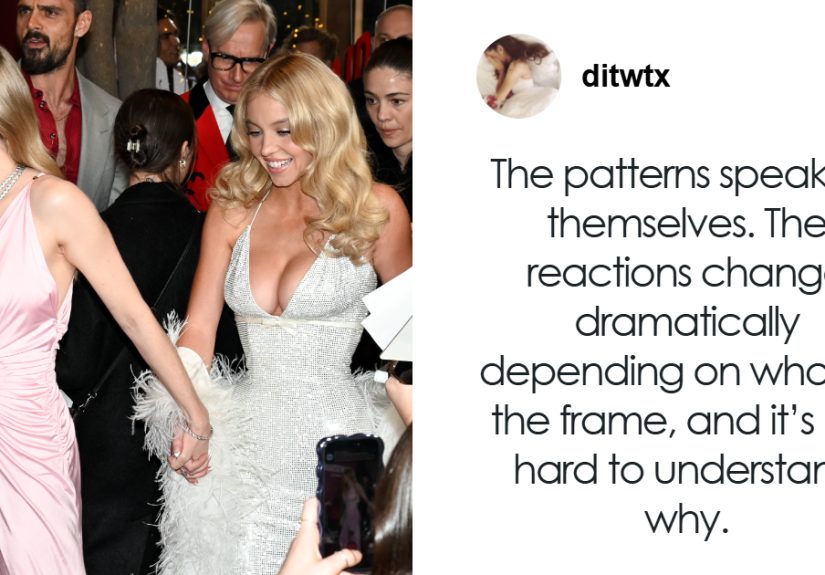
The viral clip that sparked the conversation showed the two actresses locked in a close, lingering interaction at a public event. They appeared affectionate, comfortable, and deeply engaged with each other. For many fans, it was simply two co-stars enjoying a successful press run. For others, the moment looked unusually intense. Comments ranged from jokes about romantic chemistry to complaints that the interaction felt staged. Then came the bigger question: would the public be this gentle if one of the women were Black?
Why People Compared The Moment To Ariana Grande And Cynthia Erivo
The most common comparison was Ariana Grande and Cynthia Erivo, whose Wicked press tour became famous for its emotional interviews, tearful praise, hand-holding, and hyper-close friendship. The “holding space” interview, in particular, became a viral moment after Grande held Erivo’s finger while Erivo reacted emotionally to a question about “Defying Gravity.”
That clip was widely memed, dissected, parodied, and sometimes mocked. Some viewers found it touching. Others described the pair’s press-tour dynamic as overly dramatic or “too much.” The language around Erivo was especially important to critics of the backlash. They argued that when a Black woman is emotionally expressive, physically affectionate, or protective in public, she is more likely to be framed as domineering, intense, or strange. When white actresses behave similarly, the same behavior may be softened into “sisterhood,” “chemistry,” or “cute bestie energy.”
That is the center of the Sydney Sweeney and Amanda Seyfried debate. It is not that everyone must dislike one pair or praise the other. It is that similar behavior can be filtered through very different cultural expectations. Two white actresses hugging may read as wholesome. A Black actress being tactile with a white co-star may be interpreted through older, uglier stereotypes about control, masculinity, aggression, or emotional excess.
Media Bias Is Often About Framing, Not Just Facts
Media bias does not always look like a headline screaming something obviously unfair. Often, it appears in tone, adjective choice, image selection, and the questions journalists choose to ask. One celebrity is “protective.” Another is “possessive.” One friendship is “adorable.” Another is “weird.” One emotional interview is “moving.” Another becomes a punchline before the clip even finishes loading.
That is why the Sweeney-Seyfried video became such a useful example for social media critics. The clip itself did not contain scandal. No one appeared harmed. No one made an offensive statement. The debate came from the contrast between reactions. Some users believed Sweeney and Seyfried were being granted a softer reading than Grande and Erivo had received. Others argued that both pairs had been mocked and that social media simply loves making everything awkward.
Both things can be true. The internet does mock everyone. It also does not mock everyone in the same way.
The Role Of Race In Celebrity Body Language Debates
Racial double standards in celebrity coverage are rarely limited to one viral clip. They are part of a longer history in which women of color, especially Black women, have had their emotions over-policed. Joy becomes “loud.” Confidence becomes “arrogant.” Grief becomes “dramatic.” Physical closeness becomes “controlling.” Meanwhile, white femininity is often granted more innocence, fragility, and softness.
This matters because celebrity culture does not exist in a separate glittery snow globe. It reflects everyday biases. In workplaces, schools, fandom spaces, and social media communities, Black women and other women of color often face harsher readings of the same behavior. A raised voice, a firm boundary, or a passionate friendship can be labeled as intimidating. The same action from a white woman may be described as assertive, quirky, or emotionally open.
When viewers saw Sweeney and Seyfried’s long hug receive a relatively playful reaction, some immediately thought of how quickly Cynthia Erivo had been ridiculed or scrutinized. The comparison was not perfect, but it was revealing. Viral discourse often uses imperfect comparisons to expose real discomfort.
Sydney Sweeney’s Complicated Public Image Added Fuel
Sydney Sweeney has become one of Hollywood’s most discussed young actresses, not only because of her performances in Euphoria, The White Lotus, and Anyone But You, but also because her image has become a cultural battleground. Her American Eagle “great jeans” campaign sparked controversy in 2025 after critics said the “jeans/genes” wordplay carried uncomfortable racial undertones when attached to a blonde, blue-eyed actress. Supporters dismissed the backlash as overreaction and argued that the ad was simply a denim campaign.
That context followed Sweeney into later press moments. Some social media users interpreted the Sweeney-Seyfried interaction through the lens of Sweeney’s recent controversies and the way right-wing commentators had tried to claim her as an anti-“woke” symbol. That does not mean every claim made about her online is fair. It does mean her image now carries political baggage that affects how people read even neutral moments.
Amanda Seyfried’s presence complicated the conversation further. Seyfried has had a long career and is often viewed as warm, earnest, and slightly eccentric in a charming way. Together, the two actresses presented a classic press-tour narrative: co-stars who bonded deeply while making a tense movie. But in the current media climate, even a press-tour friendship can become a referendum on race, gender, and who gets the benefit of the doubt.
The Housemaid Promotion Turned Chemistry Into Content
Hollywood press tours are designed to sell chemistry. If two actors play enemies, fans want to know if they are friends in real life. If they play lovers, viewers want evidence that the spark is “real.” If they play women locked in psychological warfare, as Sweeney and Seyfried do in The Housemaid, the marketing machine benefits when the stars seem unusually connected off-screen.
This is not new. Studios have always sold relationships as part of movie promotion. What has changed is the speed and intensity of audience interpretation. A red-carpet embrace becomes a TikTok edit. A TikTok edit becomes an X debate. An X debate becomes an article. The article becomes a new wave of comments. By the time the original clip returns to your feed, it has been covered in fifteen layers of meaning, like a celebrity discourse lasagna nobody ordered but everyone is eating.
For The Housemaid, the closeness between Sweeney and Seyfried also fits the film’s brand. The story is about secrets, intimacy, performance, class, jealousy, and suspicion. A public moment that feels both affectionate and slightly intense accidentally mirrors the emotional texture of the movie. That makes it perfect viral material.
Why The “Possessive” Label Hit A Nerve
Some online comments described the interaction as possessive or performative. That language is exactly what frustrated critics of the reaction. “Possessive” is not a neutral word. It suggests control. It suggests ownership. It suggests something unhealthy beneath the surface. When similar language has been applied to women of color, it often carries racial baggage, whether the speaker intends it or not.
To be clear, viewers are allowed to find a public celebrity moment awkward. Not every critique is racist. Not every joke is a thesis statement. But patterns matter. If the same physical gesture is called protective for one actress and predatory for another, the difference deserves examination.
The Sweeney-Seyfried clip became a mirror. Some people saw two women being affectionate. Others saw a double standard in real time. Still others saw fandoms weaponizing social justice language to score points against celebrities they already disliked. The truth probably lives somewhere in that messy middle, wearing sunglasses and refusing to give a clean quote.
Fandom, Algorithms, And The Hunger For Hypocrisy
Modern fandom is extremely good at finding hypocrisy. Sometimes that is useful. It can expose unequal treatment and force media outlets to rethink lazy framing. Other times, it becomes a sport. Fans compare screenshots, headlines, captions, and body language to prove that their favorite was treated unfairly or that another star is getting a free pass.
The algorithm rewards this behavior because hypocrisy is emotionally clickable. “They praised her but attacked Cynthia” is more engaging than “Two actresses hugged at a premiere.” Outrage travels faster than nuance. Sarcasm travels faster than context. And once a narrative forms, people begin sorting evidence into it.
That does not make the debate meaningless. It means readers should approach it carefully. The question is not whether Sydney Sweeney and Amanda Seyfried did something wrong. Based on the public information available, they did not. The better question is why audiences are so quick to assign moral meaning to women’s physical closeness, and why those meanings often change depending on race.
How Fair Celebrity Coverage Should Handle Moments Like This
Fair coverage should begin with the obvious: co-stars can be affectionate without it being scandalous. Women can praise each other without it being fake. Public closeness can be genuine, strategic, awkward, or all three at once. Press tours are strange environments. Actors spend weeks answering the same questions under bright lights while pretending they are not exhausted. If they cling to the one person in the room who understands the chaos, that is not exactly a national emergency.
At the same time, fair coverage should not ignore the racial context raised by viewers. When audiences point out double standards, the response should not be automatic dismissal. Media outlets should ask: Have we described similar behavior differently across racial lines? Have we used harsher language for Black women? Have we treated white actresses’ emotional intensity as depth while treating women of color’s emotional intensity as instability?
Good entertainment journalism can cover viral moments without turning them into character assassinations. It can analyze public reaction without pretending every tweet is a verified fact. It can acknowledge race without flattening individuals into symbols. That balance is hard, but it is also necessary.
What The Debate Says About Us
The viral Sydney Sweeney and Amanda Seyfried video says less about two actresses hugging and more about how hungry audiences are to decode celebrity behavior. We no longer simply watch stars promote films. We investigate their posture, eye contact, friendships, outfits, old interviews, political associations, brand deals, and fan edits. Every gesture becomes evidence.
That can be exhausting, but it can also reveal something valuable. People are noticing patterns that used to pass unchallenged. They are asking why some women are protected by softness while others are punished for intensity. They are questioning why whiteness is often read as innocence and why Black women must constantly fight against loaded interpretations of their emotions.
The clip may fade, as viral clips always do. But the conversation around it will likely return in another form, with another celebrity, another red carpet, another oddly intense hug. The internet has a short memory and a long appetite.
Experiences And Takeaways From Watching Viral Celebrity Debates Unfold
Anyone who has spent time watching celebrity discourse online knows the experience can feel like entering a group chat that has been arguing for six hours before you arrived. You see a clip, think it looks normal, scroll down, and suddenly discover that it has been connected to racism, misogyny, studio marketing, fandom wars, political symbolism, and someone’s 2018 Instagram likes. It is dizzying, but it is also how modern pop culture works.
The Sweeney-Seyfried debate is a perfect example of that experience. At first glance, it is a familiar press-tour moment: two actresses promoting a movie, showing affection, and giving fans something to share. But the comments underneath reveal how differently people experience the same image. Some viewers see warmth because they trust the stars involved. Some see performance because they distrust Hollywood promotion. Others see a racial double standard because they remember how Cynthia Erivo was treated during the Wicked press cycle.
That layered reaction is not random. Online audiences bring memory with them. A Black woman watching the clip may not only see Amanda and Sydney. She may also remember the times she was called “too much” for being expressive. A fan of Cynthia Erivo may remember jokes that seemed harmless at first but gradually felt meaner, sharper, and more racially loaded. A Sydney Sweeney fan may feel defensive because they believe she is constantly turned into a symbol by people who have already decided what she represents.
This is why viral debates become so emotional. They are not only about celebrities. They are about recognition. People argue because they see pieces of their own experiences in the coverage. They know what it feels like when one person’s behavior is excused and another person’s behavior is pathologized. They know what it feels like when tone changes depending on who is being discussed.
A useful takeaway is to slow down before joining the pile-on. A clip is not a full biography. A hug is not a confession. A joke is not always harmless, but it is also not always proof of malice. The smarter approach is to look for patterns rather than build entire moral verdicts from one moment. Ask who gets described as sweet, who gets described as strange, who gets protected, and who gets mocked. That question is more productive than trying to decide whether a celebrity hug was officially “normal.”
In the end, the viral Sweeney-Seyfried moment shows how entertainment culture has become a public classroom for media literacy. The lesson is not that people should stop enjoying celebrity friendships. The lesson is that audiences should notice the frames placed around those friendships. Sometimes the frame tells us more than the picture.
Conclusion
The viral video of Sydney Sweeney and Amanda Seyfried may have started with a long embrace, but it grew into a larger debate about media bias, racial double standards, and the way celebrity culture interprets women’s emotions. The strongest argument is not that Sweeney and Seyfried deserve backlash. It is that Ariana Grande and Cynthia Erivo, especially Erivo as a Black woman, may have faced harsher readings for similar public affection.
Celebrity discourse will always be messy because fame turns ordinary gestures into public property. But if the internet is going to analyze every hug, hand squeeze, and emotional glance, it should at least analyze its own biases too. Otherwise, the next “odd” viral moment will not teach us anything new. It will simply prove that the algorithm is undefeated.