Table of Contents >> Show >> Hide
If your training plan already has strength work, conditioning, drills, recovery sessions, and about twelve reminders to drink more water, adding yoga might sound like a cruel scheduling prank. But hear me out: yoga is not just for people who can fold themselves like carry-on luggage. For athletes, it can be one of the smartest tools for improving mobility, balance, body awareness, recovery, and mental focus.
Whether you run, lift, swim, throw, cycle, jump, sprint, or chase a ball around while questioning your life choices, your body needs more than brute force. It needs control. It needs range of motion. It needs the ability to create strength in awkward positions and stay calm when the game, race, or workout gets chaotic. That is exactly where yoga can shine.
This guide breaks down the biggest benefits of yoga for athletes, the best yoga poses for athletes to start with, and how to use yoga without turning your training week into a never-ending fitness buffet. Spoiler: you do not need 90-minute candlelit classes or expensive pants with emotional support drawstrings. You just need a smart approach.
Why Yoga Belongs in an Athlete’s Training Plan
Athletes often train in patterns. Runners rack up miles in the same movement groove. Lifters build power but may get stiff in the hips, ankles, or shoulders. Swimmers develop impressive upper-body endurance but can still fight tight lats and cranky shoulders. Court and field athletes need explosive movement, fast reaction time, and stability under fatigue. Yoga helps fill the gaps that sport-specific training can leave behind.
The reason is simple: yoga blends mobility, controlled strength, balance, breath work, posture, and mental focus. Instead of just stretching muscles, it teaches you how to control your body through space. That matters in sports, because performance is not just about how strong you are. It is also about how well you can apply that strength.
Think of yoga as a performance support system. It will not replace sprint work for a sprinter or heavy squats for a power athlete, but it can help the body move better between those intense efforts. And when movement improves, training often feels smoother, cleaner, and less like your hamstrings are negotiating against you.
Top Benefits of Yoga for Athletes
1. Better Mobility and Range of Motion
One of the biggest reasons athletes use yoga is to improve mobility. That does not just mean becoming more flexible. It means moving a joint through its available range with control. That difference matters. Passive flexibility might let you flop into a stretch, but active mobility helps you own the position when you run, cut, jump, squat, rotate, or land.
For athletes, improved mobility can support better mechanics in the hips, thoracic spine, shoulders, and ankles. Those areas are a big deal because they influence stride length, squat depth, overhead movement, rotation, and posture. When motion gets limited, the body often starts borrowing movement from other areas. That is when technique gets messy and compensation patterns show up uninvited.
2. More Strength in Stabilizing Muscles
Yoga is often marketed as stretching, but many poses also challenge strength. Planks, side planks, lunges, and controlled transitions demand work from the core, shoulders, hips, glutes, and upper back. These are the same areas athletes rely on for stability, posture, and power transfer.
The beauty of yoga is that it often builds strength in positions athletes neglect. Holding a pose teaches the body to stabilize under tension. That can be especially useful for athletes who are dominant in one plane of motion or who train hard but do not spend much time on slow, deliberate control work.
3. Improved Balance and Body Awareness
Balance is not just a “nice bonus” for older adults or people standing on one foot in a wellness brochure. For athletes, balance and proprioception are performance skills. You need them to decelerate, change direction, absorb force, maintain alignment, and recover when movement gets sloppy.
Yoga poses such as Tree Pose, Warrior variations, and single-leg transitions train balance while also sharpening body awareness. In plain English, yoga helps you notice where your body is in space and whether your joints are stacking the way they should. That can translate into better movement quality and smarter corrections during training.
4. Smarter Breathing and Better Focus
Athletes spend plenty of time training muscles, but not always enough time training breathing. Yoga puts breathing front and center. Controlled breathing can help with rhythm, tension management, and staying composed when effort rises.
That mental side matters more than people admit. Yoga can teach athletes to settle the nervous system, focus attention, and stop panicking just because a workout gets uncomfortable. A calmer athlete is often a more efficient athlete. Less wasted tension means better movement, better decision-making, and fewer moments of “why am I clenching my jaw during a warm-up?”
5. Recovery Support Without Complete Idleness
Recovery does not always have to mean collapsing onto the couch like a fallen gladiator. Gentle yoga can work well as active recovery, especially on days between hard sessions. Light movement, controlled stretching, and low-intensity mobility work may help athletes feel less stiff and more ready for the next training day.
This is especially helpful for athletes who dislike full rest days because they start pacing around the house after 17 minutes. Yoga gives them something productive to do without adding another brutal load to the body.
6. Potential Injury Resilience
No practice can guarantee you will never get hurt. Sports are still sports, and gravity remains undefeated. But yoga may help reduce injury risk by supporting flexibility, joint control, balance, posture, and awareness of movement quality. Athletes who move with better alignment and recognize tightness or compensation earlier may be in a better position to adjust before small issues become bigger ones.
That said, yoga only helps when it is done well. Forcing extreme positions, copying advanced poses from social media, or treating every class like a flexibility cage match is not the move. Smart yoga supports the body. Reckless yoga annoys it.
Best Yoga Poses for Athletes
You do not need fifty poses and a Sanskrit dictionary. Start with a few movements that give you the most bang for your athletic buck.
Downward-Facing Dog
This classic pose stretches the calves, hamstrings, and lower back while also strengthening the shoulders and arms. It is great for athletes who live in shoes, cleats, spikes, or lifting belts and have forgotten what their posterior chain is supposed to feel like.
Why it helps: mobility for the back line of the body, shoulder strength, postural awareness.
Plank
Plank looks simple until it starts sending feedback to every weak link in your kinetic chain. It challenges the core, shoulders, and glutes while teaching full-body tension.
Why it helps: trunk stability, shoulder control, better force transfer.
Side Plank
Side Plank is excellent for athletes who need lateral stability, especially runners, throwers, and field or court sport athletes. It lights up the obliques, glutes, and shoulder stabilizers.
Why it helps: core strength, pelvic control, shoulder stability.
Dolphin Pose
If Downward Dog and a shoulder stability drill had a very intense child, it would be Dolphin. This pose challenges the upper back, shoulders, and core while avoiding some of the wrist loading of straight-arm positions.
Why it helps: shoulder endurance, scapular control, overhead stability.
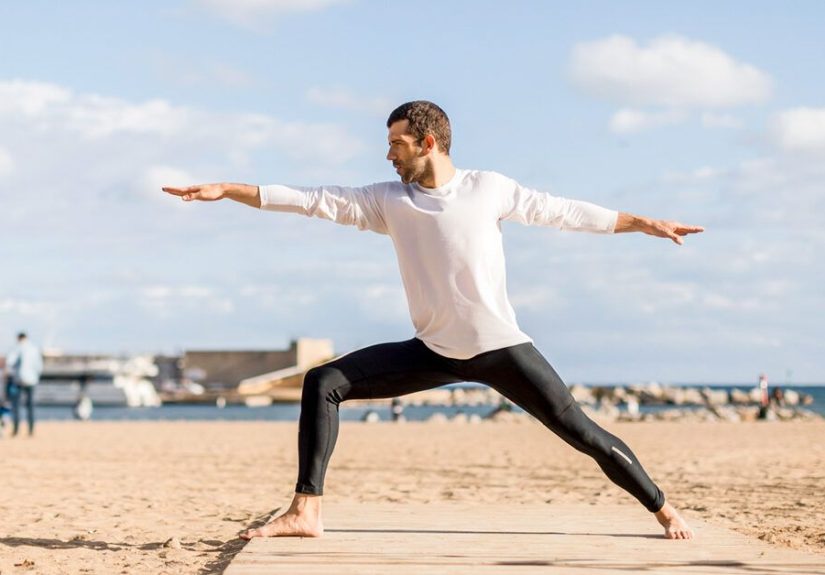
Warrior II
This pose builds strength in the legs and hips while also demanding focus and posture. It is a strong choice for athletes who need stability through the lower body and better awareness of knee tracking and hip alignment.
Why it helps: lower-body strength, balance, hip control.
Tree Pose
Tree Pose is a balance challenge with sneaky benefits. It trains single-leg stability, concentration, and postural control. If you wobble, congratulations, you are human. Stay with it.
Why it helps: balance, ankle and hip stability, body awareness.
Boat Pose
Boat Pose targets the core, hip flexors, and upper back. Athletes who need trunk stiffness for sprinting, lifting, or changing direction may find this pose humbling in the best possible way.
Why it helps: core endurance, posture, coordination.
Pigeon Pose
Pigeon is a famous hip opener for a reason. Many athletes carry tightness in the glutes, deep hip rotators, and hip flexors. This pose can help address that, especially after running, cycling, lifting, or long hours of sitting.
Why it helps: hip mobility, glute release, lower-back comfort.
Twisting Lunge
This pose combines hip opening with spinal rotation and balance. It can be useful for rotational athletes and anyone whose thoracic spine has become as expressive as a brick.
Why it helps: hip flexor stretch, rotational mobility, posture.
How Athletes Should Use Yoga
Use It as a Complement, Not a Replacement
Yoga is a tool, not a full substitute for sport-specific work. Athletes still need strength training, skill practice, conditioning, sleep, and a recovery plan that does not revolve entirely around optimism. Yoga works best when it supports the rest of your training.
Match the Style to the Goal
If you want recovery, choose gentle flow, mobility-focused yoga, or restorative sessions. If you want a challenge, pick strength-oriented flows with planks, lunges, and standing balance work. If you are in-season and already fatigued, this is probably not the moment to audition for advanced inversions.
Keep It Simple and Consistent
You do not need daily hour-long sessions to benefit. Even 15 to 30 minutes, two or three times a week, can help. Consistency beats occasional heroic efforts. Your body loves regular signals. It is less impressed by random flexibility panic.
Respect Pain
Stretching discomfort is one thing. Sharp pain, pinching, numbness, or joint strain is another. Back off, modify, or get guidance from a qualified instructor or sports medicine professional. More depth is not automatically more progress.
A Simple Yoga Routine for Athletes
Here is a practical beginner-friendly sequence:
- Downward-Facing Dog 5 slow breaths
- Plank 30 seconds
- Side Plank 20 to 30 seconds each side
- Warrior II 30 seconds each side
- Tree Pose 30 seconds each side
- Boat Pose 20 to 30 seconds
- Pigeon Pose 45 to 60 seconds each side
- Twisting Lunge 30 seconds each side
Move slowly. Breathe steadily. Focus on alignment. This is not a speedrun.
Common Mistakes Athletes Make With Yoga
Trying to Win Yoga
Athletes are competitive. That can be useful, but on a yoga mat it can also turn into “I must force this pose immediately because Greg is touching his toes.” Bad plan. Yoga rewards patience more than ego.
Ignoring Breath
Many athletes treat breathing like background noise. In yoga, it is part of the practice. If your breath gets choppy, you are probably forcing the position or losing control.
Skipping Warm-Up Awareness
Walking into a deep stretch with cold tissue is not a flex. Ease in. Let the body adapt. Your joints prefer diplomacy.
Choosing Fancy Over Functional
The best poses for athletes are often the least glamorous ones: planks, lunges, hip openers, balance work, and controlled spinal movement. You do not need circus tricks. You need positions that support how you train.
What Athletes Often Experience When They Start Yoga
The first experience many athletes have with yoga is pure confusion. A runner who can cruise through a long workout may shake violently in Tree Pose. A strong lifter who can deadlift serious weight may discover that sitting upright in Boat Pose feels oddly personal. A swimmer with excellent conditioning may realize their shoulders are strong but not exactly relaxed. This surprises people, but it should not. Yoga exposes the difference between being fit in one context and being well-rounded in movement.
Runners often notice hip tightness first. They may come to yoga because their calves feel like cement or because their stride starts to feel restricted after heavy mileage. At first, poses like Pigeon or Downward Dog can feel awkward, but over time many runners report that they move with less stiffness and recover better between sessions. The biggest mental adjustment is learning that “easy day” movement still counts.
Strength athletes usually experience yoga as a lesson in patience. They are used to measurable progress: more weight, more reps, more sets. Yoga progress is sneakier. One week a lunge feels unstable, and a month later it feels strong and smooth. The changes show up in better squat positioning, more shoulder control overhead, or less tension in the lower back. It is not always dramatic, but it is useful.
Team sport athletes often like yoga once they realize it supports the things they care about most: balance, agility, control, and durability. Soccer, basketball, baseball, tennis, and volleyball players all rely on rotation, deceleration, and repeated bursts of force. Yoga can help them feel more connected to their bodies, especially during transitions and single-leg work. It is not magic, but it can make movement feel cleaner.
Another common experience is mental resistance. Athletes who love hard intervals or heavy training sometimes struggle with slow holds and breath-focused practice. The room is quiet. The pose is simple. The mind starts wandering into tomorrow’s workout, last game’s mistakes, or whether their hamstrings are filing legal paperwork. Then something shifts. They begin to appreciate the focus, the reset, and the chance to train attention instead of just intensity.
Over time, athletes who stick with yoga often say the same thing: they do not just feel more flexible. They feel more aware. They notice posture sooner. They catch compensation patterns earlier. They breathe better under pressure. They stop trying to bulldoze every limitation and start working with the body more intelligently. That may be the most valuable experience of all, because good training is not only about pushing harder. Sometimes it is about moving better, recovering smarter, and staying in the game longer.
Final Thoughts
Yoga for athletes is not a trend reserved for elite pros, and it is definitely not just glorified stretching. It is a practical, adaptable training tool that can improve mobility, strength, stability, balance, focus, and recovery. For athletes who train hard and want to keep doing that for a long time, those benefits are hard to ignore.
The smartest approach is to use yoga with intention. Pick poses that match your sport, your limitations, and your schedule. Stay consistent. Focus on quality. And remember: if a pose feels impossible today, that does not mean your body is broken. It usually just means your body is telling the truth. Yoga is one of the best ways to listen.