Table of Contents >> Show >> Hide
- Why Choose Annie Sloan Chalk Paint for a Bathroom Vanity?
- Before You Start: Decide on the Look
- Supplies You Will Need
- Step 1: Remove Doors, Drawers, and Hardware
- Step 2: Clean the Vanity Thoroughly
- Step 3: Lightly Sand Glossy Surfaces
- Step 4: Tape and Protect the Bathroom
- Step 5: Stir the Chalk Paint Well
- Step 6: Apply the First Coat
- Step 7: Apply the Second Coat
- Step 8: Distress, If Desired
- Step 9: Seal the Vanity for Bathroom Durability
- Step 10: Reassemble and Add New Hardware
- Color Ideas for an Annie Sloan Bathroom Vanity
- Common Mistakes to Avoid
- How to Care for a Chalk Painted Bathroom Vanity
- Real-Life Experience: What This Makeover Feels Like from Start to Finish
- Conclusion
Note: This article is an original, web-ready synthesis based on real DIY painting guidance from Annie Sloan product instructions and reputable U.S. home-improvement references. Direct source links are intentionally omitted in the article body for clean publishing, but the technical recommendations reflect established guidance on cleaning, cabinet prep, chalk paint application, sealing, curing, and bathroom vanity durability.
A bathroom vanity has a special talent for making an entire bathroom look older than it really is. The walls may be fresh, the towels may be fluffy, and the candle may smell like a spa in a pine forest, but one tired orange-oak cabinet can walk into the room and announce, “Welcome to 1997.” The good news? You do not always need a full renovation, a contractor, or a budget that makes your wallet hide behind the toilet tank. A bathroom vanity makeover with Annie Sloan Chalk Paint can turn a dated cabinet into a charming, custom-looking focal point with surprisingly simple tools.
Annie Sloan Chalk Paint is popular because it offers a soft matte finish, strong decorative character, and a very beginner-friendly application process. It is especially loved for furniture makeovers because it can create everything from smooth modern finishes to rustic, lightly distressed farmhouse looks. For a bathroom vanity, however, beauty is only half the story. A vanity lives in a moisture-prone, splash-heavy, toothpaste-flying environment. That means the project needs smart prep, careful sealing, and a little patience while the finish cures.
This guide walks through the full process: planning your color, prepping the cabinet, painting with Annie Sloan Chalk Paint, sealing for bathroom use, updating hardware, and avoiding the small mistakes that can turn a weekend project into a “why did I start this?” situation.
Why Choose Annie Sloan Chalk Paint for a Bathroom Vanity?
Annie Sloan Chalk Paint is designed for decorative painting, furniture refinishing, and creative home projects. It is known for its thick consistency, matte look, and ability to adhere to many clean surfaces with less prep than traditional cabinet paint. That is why DIYers reach for it when they want a quick transformation without stripping a cabinet down to bare wood.
For a bathroom vanity makeover, this paint works especially well when the goal is character. It can soften a harsh builder-grade cabinet, add vintage charm to a thrifted vanity, or give a powder room a boutique-hotel mood without replacing perfectly functional cabinetry. Think French Linen for a calm neutral look, Graphite for drama, Old White for a cottage style, Duck Egg Blue for a gentle vintage feel, or Amsterdam Green for a rich statement that says, “Yes, I do own nice hand soap.”
The most important thing to understand is that chalk paint is not the final protective layer. The painted surface needs wax or lacquer to stand up to daily use. In a bathroom, that topcoat matters. Steam, water splashes, makeup smudges, cleaning cloths, and busy mornings all test the finish.
Before You Start: Decide on the Look
Before opening the paint tin, decide whether you want a smooth, modern finish or a more aged, distressed finish. Annie Sloan Chalk Paint can do both, but the method changes slightly.
For a smooth modern vanity
Choose a refined color, use thin coats, sand lightly between coats if needed, and seal with a clear matte or gloss lacquer. This approach works well in contemporary bathrooms, small powder rooms, or spaces with clean tile and simple mirrors.
For a vintage or farmhouse vanity
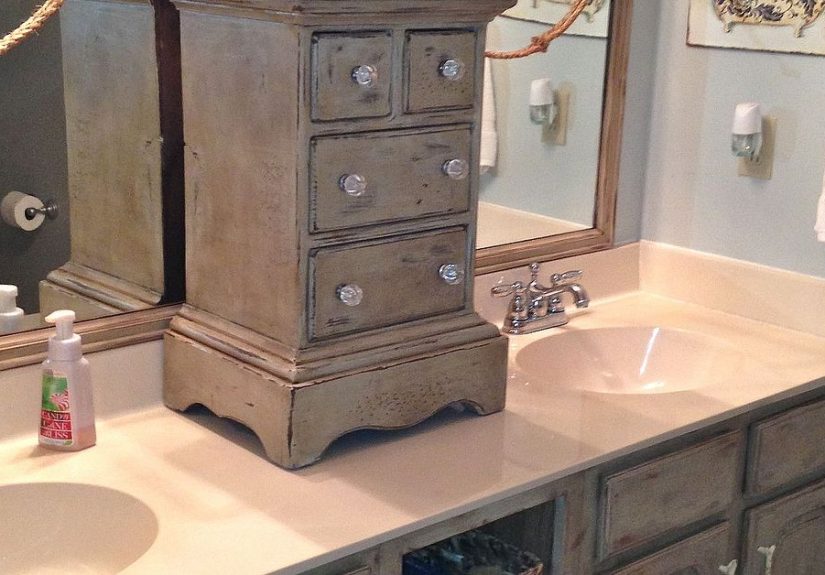
Use a softer color, paint with visible brush movement, and lightly distress edges where natural wear would happen. Finish with clear wax, and add dark wax only in crevices if you want an antique effect. The key is restraint. Distressing should look like age, not like the cabinet lost a fight with sandpaper.
For a bold designer look
Try a deeper shade such as navy, charcoal, deep green, or black. Pair it with brass, matte black, or polished nickel hardware. A dark vanity can make even a small bathroom feel intentional and stylish, especially when the walls and countertop are lighter.
Supplies You Will Need
Gathering supplies first keeps the project moving smoothly. Nobody wants to run to the hardware store mid-project with paint on their elbow and one cabinet door drying on the kitchen table.
- Annie Sloan Chalk Paint in your chosen color
- Annie Sloan Clear Chalk Paint Wax or Chalk Paint Lacquer
- Quality paintbrush or chalk paint brush
- Small foam roller for flat panels, if you want a smoother finish
- Painter’s tape
- Drop cloth
- Screwdriver or drill
- Plastic bags or cups for screws and hardware
- Mild cleaner or degreaser
- Lint-free cloths
- Fine-grit sandpaper or sanding sponge
- Wood filler, if changing hardware or repairing dents
- New cabinet knobs or pulls, optional but highly recommended
Step 1: Remove Doors, Drawers, and Hardware
Start by removing the cabinet doors, drawer fronts if possible, knobs, pulls, and hinges. Labeling is your best friend here. Place screws in small bags and mark which door they belong to. Bathroom vanities are usually smaller than kitchen cabinets, but hardware still has a way of mysteriously multiplying and disappearing.
Removing the doors allows you to paint edges cleanly and avoid awkward brush angles. It also helps the finish dry evenly. If the drawer fronts cannot be removed, pull out the whole drawer and paint the front carefully.
Step 2: Clean the Vanity Thoroughly
This is the least glamorous step, but it may be the most important. Bathroom cabinets collect hand lotion, soap residue, hairspray mist, toothpaste dots, dust, and mystery smudges that nobody wants to investigate too closely. Paint does not bond well to grime.
Wipe every surface with a mild cleaner or degreaser. Pay extra attention around handles, drawer edges, and the area near the sink. After cleaning, wipe again with a damp cloth to remove residue, then let the cabinet dry completely. Chalk paint is forgiving, but it is not magic. A clean surface is the difference between a finish that lasts and a finish that peels when you look at it sternly.
Step 3: Lightly Sand Glossy Surfaces
Annie Sloan Chalk Paint is famous for requiring minimal prep, but bathroom vanities often have slick factory finishes. If your cabinet has a glossy polyurethane coating, laminate-like surface, or shiny old paint, lightly sand it with fine-grit sandpaper. You are not trying to remove the entire finish. You are simply dulling the shine so the paint has something to grip.
After sanding, remove dust with a lint-free cloth. Do not leave powdery residue behind, because it can create bumps in the paint. If the vanity has deep scratches, dents, or old hardware holes, fill them with wood filler, let it dry, sand smooth, and wipe clean.
Step 4: Tape and Protect the Bathroom
Use painter’s tape around the vanity top, wall edges, floor, and inside cabinet areas you do not want painted. Lay down a drop cloth. Paint splatters may be small, but they have excellent aim, especially near tile grout.
If your vanity is attached to the wall, paint the cabinet frame in place and paint the doors separately on a flat surface. Set doors on painter’s pyramids, blocks, or cups so the edges are easier to reach. Work in a well-ventilated area and keep the bathroom fan running if needed.
Step 5: Stir the Chalk Paint Well
Chalk paint is thicker than many standard paints, and pigments can settle. Stir the paint thoroughly before you begin. If you want a smoother finish, you can lightly dampen the brush or thin the paint slightly with water, but do not overdo it. Thin coats are better than one heavy coat that looks like frosting on a cabinet-shaped cake.
Step 6: Apply the First Coat
Apply the first coat of Annie Sloan Chalk Paint using a brush, moving in different directions for full coverage. For flat cabinet panels, you may use a small foam roller after brushing corners and edges. The first coat may look streaky or uneven. Do not panic. First coats are allowed to have an awkward phase.
Let the first coat dry until it is touch dry. Drying time depends on humidity, temperature, and coat thickness. Bathrooms can be humid, so allow extra time if the room feels damp. Avoid rushing into the second coat while the first is still soft.
Step 7: Apply the Second Coat
The second coat is where the transformation really appears. Apply it evenly and watch the color become richer and more solid. If you are painting a dark cabinet a light color, you may need a third thin coat. If you are painting a light vanity a deep shade, two coats may be enough.
For a smooth finish, use lighter brush pressure and avoid overworking the paint as it begins to dry. For a textured finish, embrace visible brush marks. Annie Sloan Chalk Paint is flexible enough to look polished or hand-crafted depending on your technique.
Step 8: Distress, If Desired
If you want a vintage finish, wait until the paint is dry, then lightly sand edges, corners, and raised details. Focus on areas where natural wear would happen: around knobs, outer corners, drawer edges, and decorative trim. Avoid random sanding in the middle of flat panels unless you want the vanity to look accidentally attacked.
Distressing is optional. Many bathroom vanity makeovers look best with a clean, solid color and updated hardware. If your bathroom already has patterned tile or a busy countertop, a simple painted vanity can balance the space beautifully.
Step 9: Seal the Vanity for Bathroom Durability
Sealing is not the step to skip. Chalk paint needs protection, especially on a bathroom vanity. Annie Sloan Clear Chalk Paint Wax creates a soft, hand-finished look and can be built up in multiple coats. Chalk Paint Lacquer creates a harder-wearing protective surface and may be the better choice for busy bathrooms, kids’ bathrooms, or vanities that see frequent splashing.
Using wax
Apply clear wax with a wax brush or lint-free cloth, working it into the painted surface. Remove excess wax as you go. The surface should feel smooth, not sticky. For cabinets, multiple thin coats are stronger than one thick coat. Allow time between coats and be gentle with the finish while it cures.
Using lacquer
Apply lacquer in thin, even coats with a brush or roller. Avoid heavy application, which can create cloudy areas or drips. Two coats are generally preferred for better protection. Let the finish dry according to product instructions and avoid hard use while it cures.
Whether you choose wax or lacquer, remember that curing is different from drying. A surface may feel dry quickly but still need days or up to two weeks to fully harden. During that period, avoid harsh cleaning, standing water, and aggressive scrubbing.
Step 10: Reassemble and Add New Hardware
Once the finish is dry enough to handle, reinstall doors and drawers. Add your hardware last. New knobs or pulls can make the makeover look far more expensive than it was. A painted vanity with old hardware is fine; a painted vanity with fresh hardware looks intentional.
Brass hardware warms up navy, green, charcoal, and black. Matte black looks crisp on white, gray, or natural wood accents. Polished nickel works well for classic bathrooms. If your new hardware has a different hole spacing, fill the old holes before painting and drill new ones carefully after the finish has cured enough to handle.
Color Ideas for an Annie Sloan Bathroom Vanity
Color is where this project becomes personal. A bathroom vanity is small enough to take a design risk but large enough to change the room’s mood.
Classic neutral
French Linen, Old White, and Country Grey create calm, flexible looks that pair well with marble, white tile, brushed nickel, and woven baskets. These shades are great if you want the bathroom to feel fresh without shouting for attention.
Moody and modern
Graphite or a deep custom mix can create a dramatic vanity that feels high-end. This look works especially well with a white countertop, round mirror, and warm metal hardware.
Soft vintage
Duck Egg Blue, Antoinette, or Paris Grey can give a powder room a romantic, cottage-inspired feel. Keep the accessories simple so the color looks charming rather than overly themed.
Bold boutique
Deep green, inky blue, or warm earthy colors can turn a basic vanity into the star of the bathroom. In a small powder room, bold color often works better than expected because the space is already compact and defined.
Common Mistakes to Avoid
The biggest mistake is painting over dirt or gloss without proper cleaning and light sanding. Even the best paint cannot perform well on a greasy or slick surface. Another mistake is applying wax too thickly. Wax should be worked in and wiped back, not spread like peanut butter.
Skipping cure time is another common problem. It is tempting to reinstall everything immediately and celebrate with a full sink-area cleaning session. Resist. Let the finish harden. During the first couple of weeks, wipe water quickly, avoid chemical cleaners, and treat the vanity like a freshly painted piece of furniture, because that is exactly what it is.
Finally, do not paint over hinges, knobs, faucets, or functional hardware unless the product is specifically designed for that purpose. Painted hardware often chips quickly. Replacing hardware usually gives a cleaner and longer-lasting result.
How to Care for a Chalk Painted Bathroom Vanity
Once cured, maintain your vanity with gentle cleaning. Use a soft damp cloth for everyday wipe-downs. Avoid abrasive sponges, harsh bathroom sprays, and standing puddles around the sink. If you used wax, you may need to refresh the wax over time in high-touch areas. If you used lacquer, inspect edges occasionally for wear and touch up when needed.
The goal is not to treat the vanity like fragile museum furniture. It should be usable. But a little care helps keep the finish beautiful for years.
Real-Life Experience: What This Makeover Feels Like from Start to Finish
A bathroom vanity makeover with Annie Sloan Chalk Paint often begins with one innocent thought: “This cabinet could look better.” Then suddenly the doors are off, the knobs are in a sandwich bag, and the bathroom looks like it is preparing for minor surgery. That is normal. Every good DIY project has a middle stage where the room looks worse and you briefly question your life choices.
The cleaning stage is usually more revealing than expected. Around the handles, you may find a polished shadow where years of hands have touched the finish. Near the sink, there may be tiny water marks or old toothpaste freckles. Once everything is cleaned and lightly sanded, the vanity already feels less tired, even before paint. This is the moment when the project starts to feel possible.
The first coat of chalk paint can be emotionally confusing. It may look streaky, thin in spots, and slightly alarming. Many beginners think they have ruined the cabinet. They have not. Chalk paint often comes alive on the second coat. The color deepens, the brush marks settle into a handmade texture, and the old cabinet starts looking like something chosen on purpose instead of something inherited from a previous decade.
One useful experience is to paint the back of a door first. This gives you a private practice area where you can test brush pressure, roller texture, and drying time. If you are using a dark color, check it in both daylight and evening light. Bathroom lighting can change a color dramatically. A gray that looks soft at noon may look blue at night. A green that looks elegant in natural light may become very bold under warm bulbs.
Sealing is where patience pays off. Wax gives the vanity a mellow, furniture-like finish that feels soft and classic. Lacquer feels more practical for a busy family bathroom. In either case, thin layers are better. The finish should not feel tacky or heavy. During curing, it helps to keep a small towel near the sink and wipe splashes quickly. This is not forever; it is just the “be nice to the vanity” phase.
The most satisfying part is reassembly. Once the doors go back on and the new hardware is installed, the bathroom suddenly looks updated. Not “I bought a new house” updated, but “I have my life together and maybe I also own matching storage baskets” updated. The vanity becomes the anchor of the room. Old tile looks less offensive. The mirror seems more stylish. Even the soap dispenser appears more confident.
For the best final result, style lightly after painting. Add a clean tray, a small plant, fresh towels, or a framed print. Do not overcrowd the counter. The painted vanity should have room to shine. If the makeover color is bold, keep accessories simple. If the vanity is neutral, bring in texture through baskets, wood, linen, or warm metal accents.
The biggest lesson from this kind of project is that small changes can have a huge visual payoff. A bathroom vanity is not a giant piece of furniture, but it sits at eye level and gets used every day. Painting it with Annie Sloan Chalk Paint can make the whole bathroom feel warmer, fresher, and more personal. Best of all, it is a project that rewards care more than perfection. A slightly imperfect hand-painted finish often adds charm, and that is the beauty of chalk paint: it lets a real person create a real home, brush marks and all.
Conclusion
A bathroom vanity makeover with Annie Sloan Chalk Paint is one of the most satisfying DIY upgrades because it combines affordability, creativity, and high visual impact. The process is simple enough for beginners but flexible enough for experienced DIYers who want a custom finish. Clean well, lightly sand glossy surfaces, apply thin coats, seal carefully, and allow the finish to cure before putting it through daily bathroom life.
Whether you choose a soft neutral, a vintage blue-gray, a dramatic charcoal, or a rich green, the right paint and protective finish can turn a dated vanity into a standout feature. Add fresh hardware, a few thoughtful accessories, and a little patience, and your bathroom can look renewed without a full remodel. In other words, the vanity gets a glow-up, the budget survives, and the bathroom finally stops whispering, “Remember the old owners?”