Table of Contents >> Show >> Hide
- Why “Rehired” Is Even a Thing for the Fed Chair
- The Fed’s Job in One Sentence (and Why Inflation Keeps Stealing the Microphone)
- What the Fed Chair Can Actually Do to Fight Inflation
- The Inflation Backdrop: Cooler Than the Peak, Still Not Mission Accomplished
- Where Rates Were in January 2026and Why That Matters
- The Pledge, Translated: What “Fight Inflation if Rehired” Usually Signals
- Independence Isn’t a BuzzwordIt’s an Inflation Tool
- Rehired or Replaced: The Two Scenarios Markets Care About
- What This Means for Regular People (Yes, Even If You Don’t Own Stocks)
- Common Misunderstandings (and a Few Quick Reality Checks)
- Conclusion: What the Pledge Really Means in 2026
The Federal Reserve chair is not supposed to campaign for the job like it’s a reality show (“America’s Next Top Central Banker”).
But every few years, the calendar forces the question anyway: will the sitting chair get “rehired,” or will the White House pick someone new?
Either way, markets, mortgage rates, and your grocery bill all lean in like they just heard a plot twist.
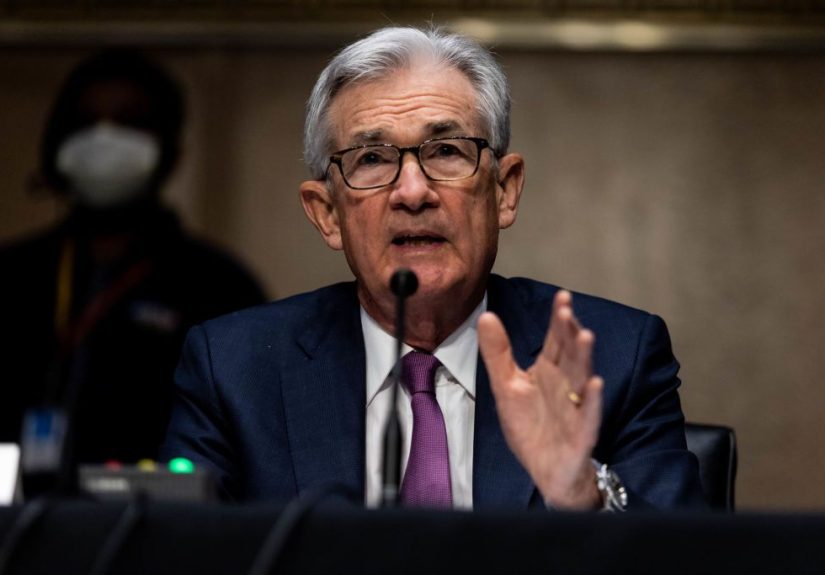
In early 2026, that question got extra spicy. Fed Chair Jerome Powell’s term as chair is set to end on May 15, 2026.
And while a chair change is normally a wonky Washington process, this time it’s happening amid renewed political pressure, public debates over Fed independence,
and inflation that’s cooler than it wasyet still not perfectly aligned with the Fed’s long-run goal.
So what does it actually mean when a Fed chair pledges to keep fighting inflation “if rehired”?
Is it a promise to keep rates high forever? A vow to crush price increases with a giant interest-rate hammer?
Or, more realistically, a commitment to keep making data-driven decisionseven when everyone is yelling from the stands?
Let’s unpack it in plain English, with enough detail to satisfy your inner nerd and enough humor to keep your outer human awake.
Why “Rehired” Is Even a Thing for the Fed Chair
The Fed chair isn’t elected. The chair is selected from the Federal Reserve’s Board of Governors through a nomination by the president and confirmation by the Senate.
The job comes with a leadership term (commonly four years), and that term can be renewedhence the “rehired” framing that pops up in headlines.
Importantly, the chair can be replaced as chair while still remaining a governor, depending on the timing of their underlying Board term.
In Powell’s case, the chair term ending in mid-May 2026 does not automatically end his ability to remain on the Fed’s Board.
That distinction matters because the Fed’s policy decisions are made by a committee, not one person with a rate-setting wand.
A chair is influential, but not a monarch.
The Fed’s Job in One Sentence (and Why Inflation Keeps Stealing the Microphone)
Congress assigned the Fed a “dual mandate”: pursue maximum employment and stable prices.
In modern practice, “stable prices” is commonly expressed as 2% inflation over the longer run.
When inflation is high, it’s not just an economic statisticit’s a pay-cut-in-disguise, especially for households that spend a larger share of income on essentials.
That’s why you’ll hear Fed officials talk about “price stability” with the seriousness of a surgeon and the repetition of a dad explaining how the thermostat works.
(Yes, it’s annoying. No, they are not going to stop.)
What the Fed Chair Can Actually Do to Fight Inflation
The Fed doesn’t set your rent, your egg prices, or whether your favorite burrito place adds a mysterious “service fee.”
What it can do is influence the overall cost of borrowing and the availability of credit, which affects demand across the economy.
The main tool is the federal funds rate target range.
The “Big Lever”: Interest Rates
When the Fed raises rates, it becomes more expensive to borrow for homes, cars, and business investment.
That tends to cool spending and hiring over time, easing pressure on prices. When the Fed cuts rates, it does the opposite.
The catch: monetary policy works with lags. Think slow cooker, not microwave.
The “Supporting Cast”: Balance Sheet and Communication
The Fed also uses other tools, including large-scale asset purchases (often called quantitative easing), balance sheet reduction,
and “forward guidance” (signaling how policymakers are thinking so markets don’t have to guess via interpretive dance).
These tools can shape financial conditions even without dramatic rate moves.
The Inflation Backdrop: Cooler Than the Peak, Still Not Mission Accomplished
If you remember the early-2020s inflation surge, you’re not aloneyour bank account remembers too.
But by late 2025, inflation looked far less overheated than it did at the peak.
The Consumer Price Index showed 2.7% inflation over the prior 12 months in December 2025, with core CPI (excluding food and energy) around 2.6%.
That’s close to “normal-ish,” but the Fed’s preferred inflation gauge is often the PCE index, and the Fed’s stated longer-run objective remains 2%.
So the chair’s inflation pledge in 2026 is less about panicking and more about staying disciplined:
don’t declare victory too early, and don’t let political pressure turn monetary policy into a short-term popularity contest.
Where Rates Were in January 2026and Why That Matters
As of mid-January 2026, the upper limit of the federal funds target range was 3.75% (with the range commonly discussed as 3.50%–3.75%).
That level suggests policy was still meaningfully restrictive compared with the ultra-low-rate erayet lower than the highest point of the tightening cycle.
In other words: the Fed was no longer standing on the brakes as hard as it once did, but it wasn’t exactly handing out free money either.
For households, that shows up in borrowing costs; for businesses, it shows up in financing decisions; for investors, it shows up in valuation math.
(If you’ve ever watched a market move 2% because a comma in a Fed statement looked “hawkish,” you know the vibe.)
The Pledge, Translated: What “Fight Inflation if Rehired” Usually Signals
A pledge like this is best read as a commitment to the Fed’s mandate and process, not a guarantee of one specific rate path.
Here’s what it typically implies in practice:
- Stay anchored to the 2% goal: even if inflation is improving, don’t treat 2.7% as “close enough, ship it.”
- Make decisions based on data: inflation, jobs, wage growth, financial conditions, and inflation expectations all matter.
- Accept trade-offs: tighter policy can soften hiring and growth, but letting inflation drift can be worse long term.
- Protect credibility: once people believe the Fed won’t do what it says, inflation can become stickier and harder to tame.
In 2026, that credibility issue was not abstract. Public pressure campaigns around interest rates and a highly visible dispute over independence
made the “we follow evidence, not intimidation” message a central part of Powell’s public posture.
Independence Isn’t a BuzzwordIt’s an Inflation Tool
The Fed’s ability to keep inflation low depends in large part on whether households and businesses believe it will do the hard thing when necessary.
Economists often warn that direct political control over interest rates creates a temptation to juice growth in the short termat the risk of higher inflation later.
That’s why central bank independence has long been treated as a feature, not a bug.
In January 2026, Powell publicly framed the stakes in unusually blunt terms:
monetary policy, he argued, should be set based on evidence and economic conditions, not political pressure.
At roughly the same time, other Fed officials defended the importance of independence as essential to controlling inflation.
Rehired or Replaced: The Two Scenarios Markets Care About
Scenario 1: The Chair Is Rehired (or Effectively Kept in Place)
If the sitting chair is renewed, markets often interpret it as continuity: the same inflation framework, similar communication style,
and a familiar reaction function (“if inflation re-accelerates, we tighten; if the economy weakens sharply, we ease”).
Continuity can reduce uncertainty, which is basically financial markets’ love language.
Scenario 2: A New Chair Takes Over
A new chair can mean a different emphasismore hawkish (prioritizing inflation control), more dovish (prioritizing growth and jobs),
or simply different communication and coalition-building inside the Fed.
Even if the Fed’s mandate doesn’t change, markets may reprice expectations because style and strategy matter.
In early 2026 reporting, possible successors were publicly discussed, and the nomination process itself was treated as market-relevant news.
That’s because a chair can shape how aggressively the Fed leans against inflation when the data get messy.
What This Means for Regular People (Yes, Even If You Don’t Own Stocks)
Inflation and interest rates show up in daily life in a bunch of unglamorous ways:
- Mortgages: higher rates typically mean higher monthly payments for new buyers (and fewer refinancing wins).
- Credit cards: variable APRs can stay painfully high when policy is restrictive.
- Car loans and financing: monthly payments often jump even when the sticker price doesn’t.
- Savings: higher rates can be good news for saversif your bank actually passes them along.
- Jobs: tight policy can cool hiring; looser policy can support growth but risks inflation returning.
The chair’s “fight inflation” pledge is, at its core, a promise to protect purchasing power over timeeven if it’s unpopular in the short run.
Because the most damaging inflation isn’t just “prices rose.” It’s “prices rose and people stopped trusting that they’ll come back under control.”
Common Misunderstandings (and a Few Quick Reality Checks)
“If inflation is 2.7%, why not just declare victory?”
Because inflation can re-accelerate, and because the Fed targets inflation over timenot a single month’s headline number.
Also, some categories (like housing or services) can remain sticky even when the overall index cools.
“The chair alone sets rates, right?”
Nope. The Fed’s rate decisions come from the Federal Open Market Committee (FOMC), which includes governors and regional Fed bank presidents.
The chair is the most prominent voice, but policy is a committee decision.
“Higher rates always fix inflation fast.”
Rate changes work with lags, and inflation drivers vary. Supply shocks, energy prices, labor market tightness, and expectations all play roles.
Monetary policy can’t manufacture oil or unclog a supply chain, but it can cool demand enough to reduce broad pressure.
Conclusion: What the Pledge Really Means in 2026
“Fed Chair Pledges To Fight Inflation if Rehired” is a headline-sized summary of a bigger message:
the Fed’s credibility matters, and the chair wants the public (and markets) to know that the inflation mission doesn’t end because the politics get loud.
With inflation running around the high-2% range and the policy rate still restrictive by recent standards, the question isn’t whether the Fed cares about inflation.
It’s how firmly it will hold the line if inflation stalls above targetor if new shocks hit.
If the chair is rehired, the likely takeaway is continuity: steady communication, a familiar framework, and a “data first” stance.
If a new chair arrives, the mandate stays the samebut the style, priorities, and risk tolerance could shift at the margins.
Either way, the fight against inflation is less about dramatic speeches and more about consistent, boring discipline.
And yes, boring can be beautiful when the alternative is your paycheck losing a little more meaning every month.
Experiences: Living Through the Fed’s Inflation Fight (An Extra )
Most people don’t experience “inflation” as a line on a chart. They experience it as a slow-motion budget ambush.
One week you’re buying the same groceries you always buy; the next week the total is higher and you’re staring at the receipt like it just insulted you.
That’s why the Fed’s inflation fight feels personal even when the language is technical. It’s not really about “CPI prints.”
It’s about whether your money still does what it used to do.
During the tightening years, the experience was uneven. Renters often felt squeezed first because leases reset while wages took time to catch up.
Homeowners with fixed-rate mortgages sometimes felt insulateduntil they tried to move, upgrade, or refinance and discovered that “today’s rates”
were not the same as “2021’s rates.” Car buyers learned that even when inventory improved, financing costs could turn a “reasonable” purchase into
a monthly-payment regret spiral. Small businesses felt it through credit lines and expansion plans: projects that penciled out at low rates suddenly
looked less profitable when borrowing costs rose.
Then came the weird emotional whiplash of cooling inflation. When inflation falls from “yikes” to “manageable,” people often expect prices to go back
down. But disinflation is not deflation. Slower price increases still mean prices are risingjust not rising as fast. That can create a psychological lag:
the data look better, but the lived experience still feels expensive. Food and housing are especially influential here because they’re frequent purchases.
Even if inflation is 2.7% year over year, a household’s personal inflation rate can feel higher depending on what they buy and where they live.
Higher interest rates also create a split-screen reality: borrowers suffer, savers benefit. If you carry credit card debt, a restrictive policy environment
can feel punishing. If you have cash in a savings account, higher yields can feel like a long-overdue apologyassuming your bank actually pays it.
In the middle are people who do both: they might earn more on savings while paying more on a car loan, which is a financial version of “I’m happy for you,
but I’m also stressed.”
The most important “experience” is uncertainty. When the public doubts the Fed’s independence or resolve, people behave differently.
Businesses may raise prices sooner “just in case.” Workers may demand higher wage increases to keep up. Consumers may buy now to avoid higher prices later.
Those behaviors can make inflation more persistent. That’s why a chair’s pledge matters: it’s not only about the next meeting’s rate decision; it’s about
reinforcing the idea that someone is minding the store.
Bottom line: you can live through a Fed inflation fight without ever reading an FOMC statement. You feel it in the checkout line, the rent renewal,
the loan offer, the job market, and the tiny decisions you make every day. The pledge to keep fighting inflationrehired or notis really a pledge
to keep those everyday choices from getting harder than they have to be.